
基于 HINODE 除颤器患者生理传感器数据预测心力衰竭事件。
Prediction of heart failure events based on physiologic sensor data in HINODE defibrillator patients.
机构信息
Department of Cardiovascular Medicine, Okayama University Graduate School of Medicine, Dentistry and Pharmaceutical Sciences, Okayama, Japan.
Department of Cardiovascular Medicine, Osaka University Graduate School of Medicine, Osaka, Japan.
出版信息
ESC Heart Fail. 2024 Oct;11(5):3322-3331. doi: 10.1002/ehf2.14890. Epub 2024 Jul 2.
AIMS
Hospitalizations are common in patients with heart failure and are associated with high mortality, readmission and economic burden. Detecting early signs of worsening heart failure may enable earlier intervention and reduce hospitalizations. The HeartLogic algorithm is designed to predict worsening heart failure using diagnostic data from multiple device sensors. The main objective of this analysis was to evaluate the sensitivity of the HeartLogic alert calculation in predicting worsening heart failure events (HFEs). We also evaluated the false positive alert rate (FPR) and compared the incidence of HFEs occurring in a HeartLogic alert state to those occurring out of an alert state.
METHODS
The HINODE study enrolled 144 patients (81 ICD and 63 CRT-D) with device sensor data transmitted via a remote monitoring system. HeartLogic alerts were then retrospectively simulated using relevant sensor data. Clinicians and patients were blinded to calculated alerts. Reported adverse events with HF symptoms were adjudicated and classified by an independent HFE committee. Sensitivity was defined as the ratio of the number of detected usable HFEs (true positives) to the total number of usable HFEs. A false positive alert was defined as an alert with no usable HFE between the alert onset date and the alert recovery date plus 30 days. The patient follow-up period was categorized as in alert state or out of alert state. The event rate ratio was the HFE rate calculated in alert to out of alert.
RESULTS
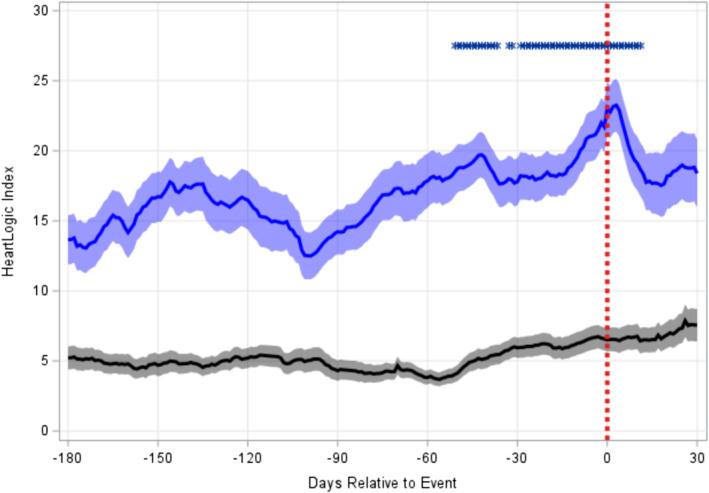
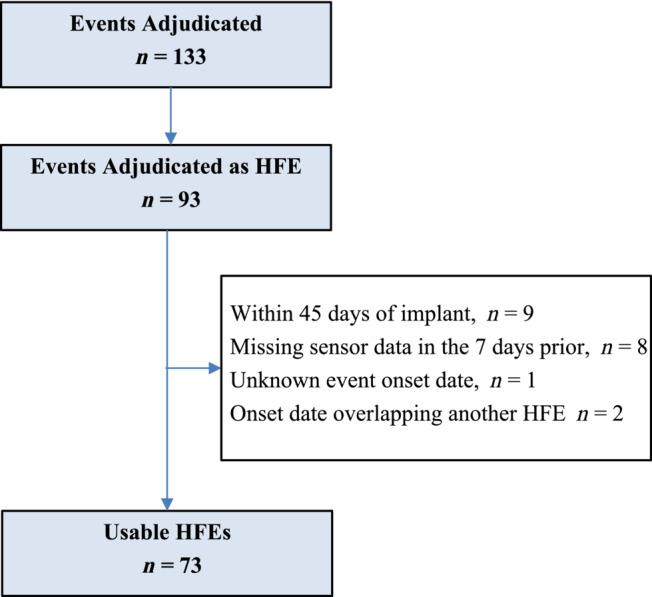
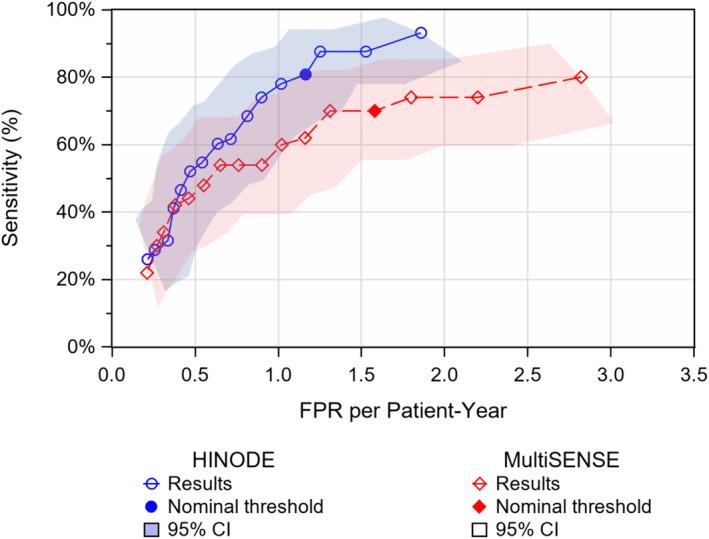
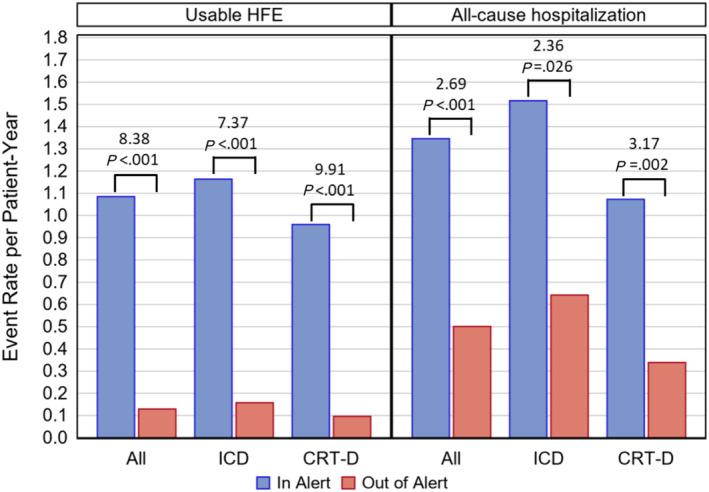
The patient cohort was 79% male and had an average age of 68 ± 12 years. This analysis yielded 244 years of follow-up data with 73 HFEs from 37 patients. A total of 311 HeartLogic alerts at the nominal threshold (16) occurred across 106 patients providing an alert rate of 1.27 alerts per patient-year. The HFE rate was 8.4 times greater while in alert compared with out of alert (1.09 vs. 0.13 events per patient-year; P < 0.001). At the nominal alert threshold, 80.8% of HFEs were detected by a HeartLogic alert [95% confidence interval (CI): 69.9%-89.1%]. The median time from first true positive alert to an adjudicated clinical HFE was 53 days. The FPR was 1.16 (95% CI: 0.98-1.38) alerts per patient-year.
CONCLUSIONS
Results suggest that signs of worsening HF can be detected successfully with remote patient follow-up. The use of HeartLogic may predict periods of increased risk for HF or clinically significant events, allowing for early intervention and reduction of hospitalization in a vulnerable patient population.
目的
心力衰竭患者常住院治疗,其死亡率、再入院率和经济负担均较高。早期发现心力衰竭恶化的迹象可能有助于更早地进行干预,从而减少住院治疗。HeartLogic 算法旨在使用来自多个设备传感器的诊断数据预测心力衰竭恶化。本分析的主要目的是评估 HeartLogic 警报计算预测心力衰竭恶化事件(HFEs)的灵敏度。我们还评估了假阳性警报率(FPR),并比较了 HeartLogic 警报状态下发生的 HFEs 与非警报状态下发生的 HFEs 的发生率。
方法
HINODE 研究纳入了 144 名患者(81 名 ICD 和 63 名 CRT-D),这些患者的设备传感器数据通过远程监测系统传输。然后使用相关传感器数据回顾性模拟 HeartLogic 警报。临床医生和患者对计算出的警报均不知情。有 HF 症状的报告不良事件由独立的 HFE 委员会裁定和分类。灵敏度定义为检测到的可用 HFEs(真阳性)数量与可用 HFEs 总数的比值。假阳性警报定义为在警报开始日期和警报恢复日期加 30 天之间没有可用 HFE 的警报。患者随访期分为警报状态和非警报状态。事件率比为警报状态下的 HFE 率与非警报状态下的 HFE 率之比。
结果
患者队列中 79%为男性,平均年龄为 68±12 岁。本分析共获得 244 年的随访数据,37 名患者发生 73 例 HFEs。106 名患者共发生 311 次 HeartLogic 警报(名义阈值为 16),警报发生率为每位患者每年 1.27 次。在警报状态下的 HFE 发生率比非警报状态下高 8.4 倍(1.09 比 0.13 事件/患者/年;P<0.001)。在名义警报阈值下,80.8%的 HFEs 可通过 HeartLogic 警报检测到[95%置信区间(CI):69.9%-89.1%]。从首次真正阳性警报到有临床意义的 HFEs 的中位时间为 53 天。FPR 为每年每位患者 1.16 次(95%CI:0.98-1.38)警报。
结论
结果表明,通过远程患者随访可以成功检测到心力衰竭恶化的迹象。使用 HeartLogic 可能预测心力衰竭或有临床意义的事件风险增加期,从而有助于在易受影响的患者群体中进行早期干预和减少住院治疗。

 Zotero 插件