
一种具有芴磷分子结构的新型荧光探针,用于活细胞中硫化氢的选择性检测。
A novel fluorescent probe with a phosphofluorene molecular structure for selective detection of hydrogen sulfide in living cells.
作者信息
Zhang Shuntao, Liu Xingyong, Chen Xiangjun, Tang Jiefeng, Wang Juan
机构信息
College of Chemical Engineering, Sichuan University of Science & Engineering Zigong 643000 China
出版信息
RSC Adv. 2024 Jul 2;14(29):20966-20973. doi: 10.1039/d4ra02979h. eCollection 2024 Jun 27.
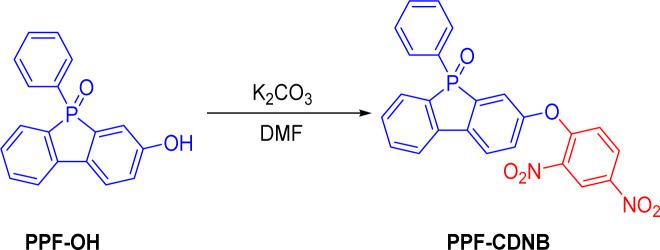
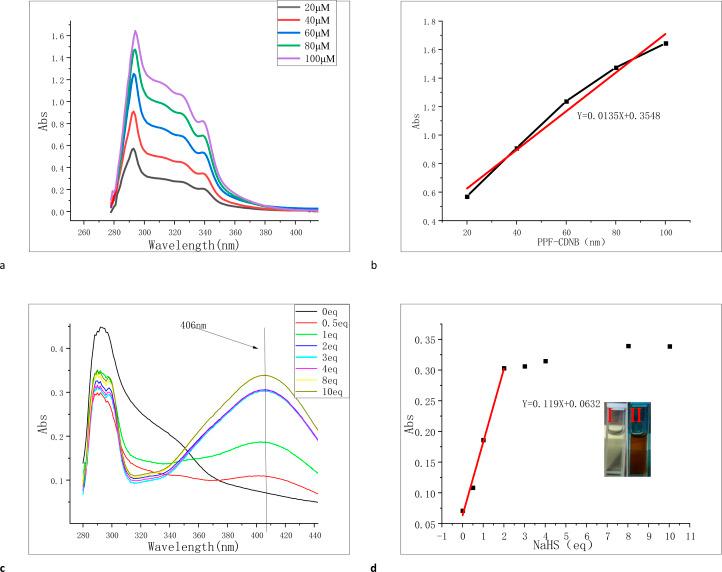
Hydrogen sulfide (HS) gas plays a significant role in biological regulation. With advancements in technology, HS has been discovered across diverse fields, necessitating a comprehensive understanding of its physiological functions through monitoring changes in HS within complex environments and physiological processes. In this study, we designed a phosphofluorene-based conjugate probe PPF-CDNB with an asymmetric π-conjugated phosphine structure and utilized dinitrophenyl ether as the recognition site for HS. PPF-CDNB exhibited exceptional resistance to interference and demonstrated stability over a broad pH range (3.0-10.0), making it suitable for various environmental conditions. Intracellular experiments revealed that PPF-CDNB effectively monitored both endogenous and exogenous levels of HS.
硫化氢(HS)气体在生物调节中发挥着重要作用。随着技术的进步,HS已在多个领域被发现,因此有必要通过监测复杂环境和生理过程中HS的变化来全面了解其生理功能。在本研究中,我们设计了一种具有不对称π共轭膦结构的基于芴的共轭探针PPF-CDNB,并利用二硝基苯醚作为HS的识别位点。PPF-CDNB表现出优异的抗干扰能力,并在较宽的pH范围(3.0-10.0)内具有稳定性,适用于各种环境条件。细胞内实验表明,PPF-CDNB能够有效监测HS的内源性和外源性水平。



 Zotero 插件