
利用改变的脂质代谢治疗 B 细胞恶性肿瘤。
Leveraging altered lipid metabolism in treating B cell malignancies.
机构信息
School of Biosystems and Biomedical Sciences, College of Health Science, Korea University, Seoul 02841, Republic of Korea; Department of Integrated Biomedical and Life Science, Korea University, Seoul 02841, Republic of Korea; Interdisciplinary Program in Precision Public Health, Korea University, Seoul 02841, Republic of Korea; Center of Molecular and Cellular Oncology, Yale University, New Haven, CT 06511, USA.
Department of Internal Medicine, Section of Cardiovascular Medicine, Yale University, New Haven, CT 06511, USA; Department of Genetics, Yale University, New Haven, CT 06511, USA.
出版信息
Prog Lipid Res. 2024 Jul;95:101288. doi: 10.1016/j.plipres.2024.101288. Epub 2024 Jul 2.
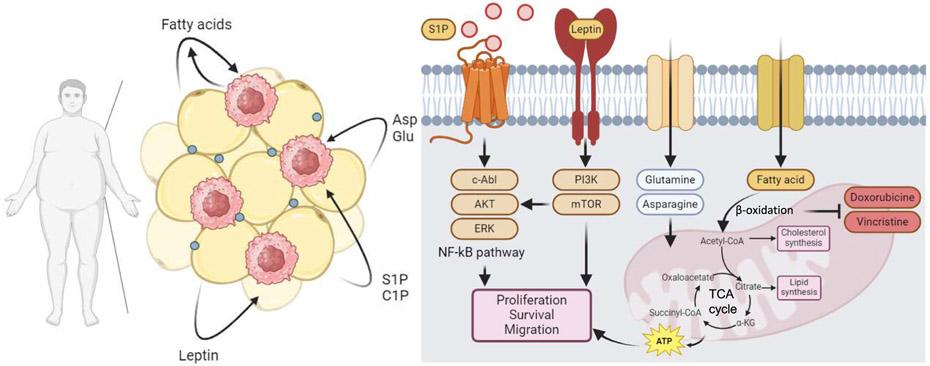
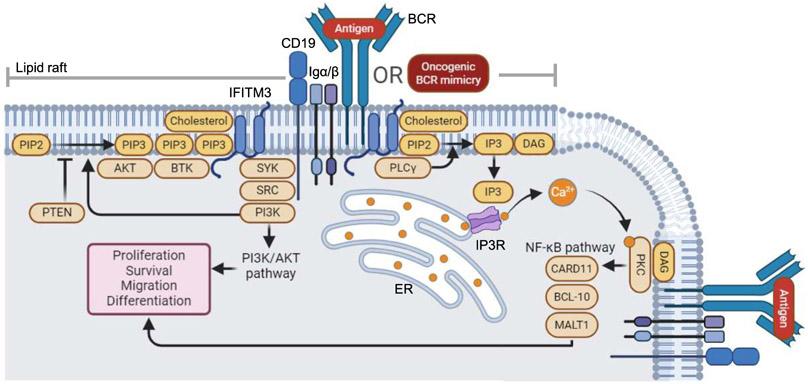
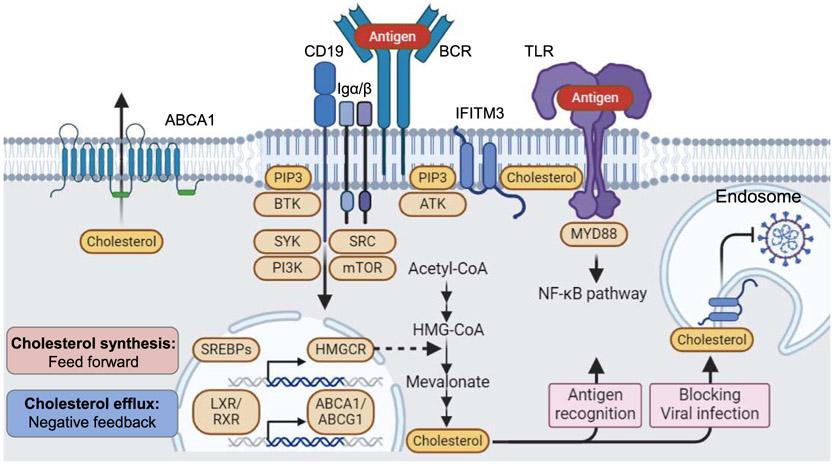
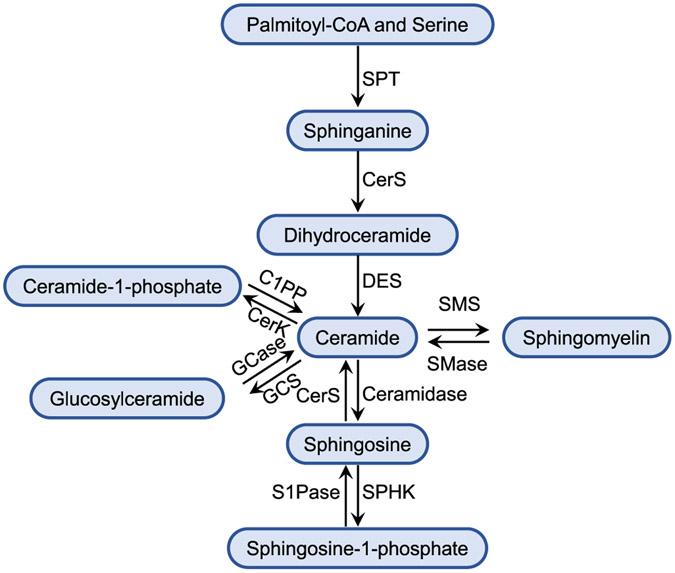
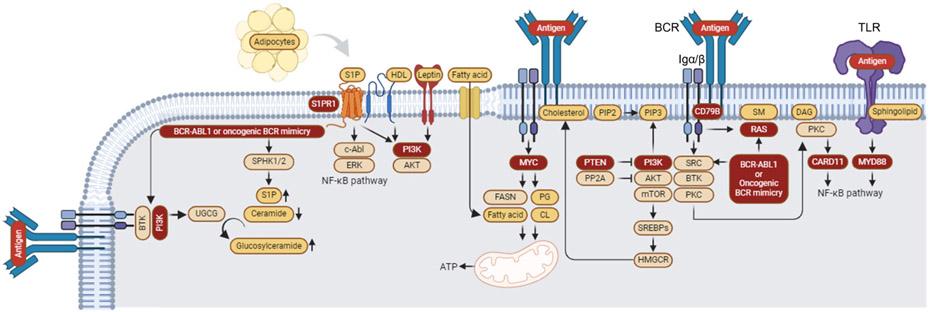
B cell malignancies, comprising over 80 heterogeneous blood cancers, pose significant prognostic challenges due to intricate oncogenic signaling. Emerging evidence emphasizes the pivotal role of disrupted lipid metabolism in the development of these malignancies. Variations in lipid species, such as phospholipids, cholesterol, sphingolipids, and fatty acids, are widespread across B cell malignancies, contributing to uncontrolled cell proliferation and survival. Phospholipids play a crucial role in initial signaling cascades leading to B cell activation and malignant transformation through constitutive B cell receptor (BCR) signaling. Dysregulated cholesterol and sphingolipid homeostasis support lipid raft integrity, crucial for propagating oncogenic signals. Sphingolipids impact malignant B cell stemness, proliferation, and survival, while glycosphingolipids in lipid rafts modulate BCR activation. Additionally, cancer cells enhance fatty acid-related processes to meet heightened metabolic demands. In obese individuals, the obesity-derived lipids and adipokines surrounding adipocytes rewire lipid metabolism in malignant B cells, evading cytotoxic therapies. Genetic drivers such as MYC translocations also intrinsically alter lipid metabolism in malignant B cells. In summary, intrinsic and extrinsic factors converge to reprogram lipid metabolism, fostering aggressive phenotypes in B cell malignancies. Therefore, targeting altered lipid metabolism has translational potential for improving risk stratification and clinical management of diverse B cell malignancy subtypes.
B 细胞恶性肿瘤包含超过 80 种异质性血液癌症,由于复杂的致癌信号,对其预后构成重大挑战。新出现的证据强调了脂质代谢紊乱在这些恶性肿瘤发展中的关键作用。脂质种类的变化,如磷脂、胆固醇、鞘脂和脂肪酸,在 B 细胞恶性肿瘤中普遍存在,导致不受控制的细胞增殖和存活。磷脂在导致 B 细胞激活和恶性转化的初始信号级联中起着至关重要的作用,通过组成性 B 细胞受体 (BCR) 信号传导。胆固醇和鞘脂代谢平衡的失调支持脂筏的完整性,这对于传递致癌信号至关重要。鞘脂影响恶性 B 细胞干性、增殖和存活,而脂筏中的糖脂调节 BCR 激活。此外,癌细胞增强与脂肪酸相关的过程以满足更高的代谢需求。在肥胖个体中,脂肪细胞周围的肥胖衍生脂质和脂肪因子会重新编程恶性 B 细胞中的脂质代谢,从而逃避细胞毒性治疗。MYC 易位等遗传驱动因素也会内在地改变恶性 B 细胞中的脂质代谢。总之,内在和外在因素共同作用,重新编程脂质代谢,促进 B 细胞恶性肿瘤的侵袭性表型。因此,靶向改变的脂质代谢具有改善不同 B 细胞恶性肿瘤亚型的风险分层和临床管理的转化潜力。

 Zotero 插件