
评估入住重症监护病房的COVID-19患者临床和影像组学特征的预后效用:挑战与经验教训。
Assessing the prognostic utility of clinical and radiomic features for COVID-19 patients admitted to ICU: challenges and lessons learned.
作者信息
Sun Yuming, Salerno Stephen, Pan Ziyang, Yang Eileen, Sujimongkol Chinakorn, Song Jiyeon, Wang Xinan, Han Peisong, Zeng Donglin, Kang Jian, Christiani David C, Li Yi
机构信息
Biostatistics, University of Michigan, Ann Arbor, MI.
Environmental Health, Harvard T. H. Chan School of Public Health, Boston, MA.
出版信息
Harv Data Sci Rev. 2024 Winter;6(1). doi: 10.1162/99608f92.9d86a749. Epub 2024 Jan 31.
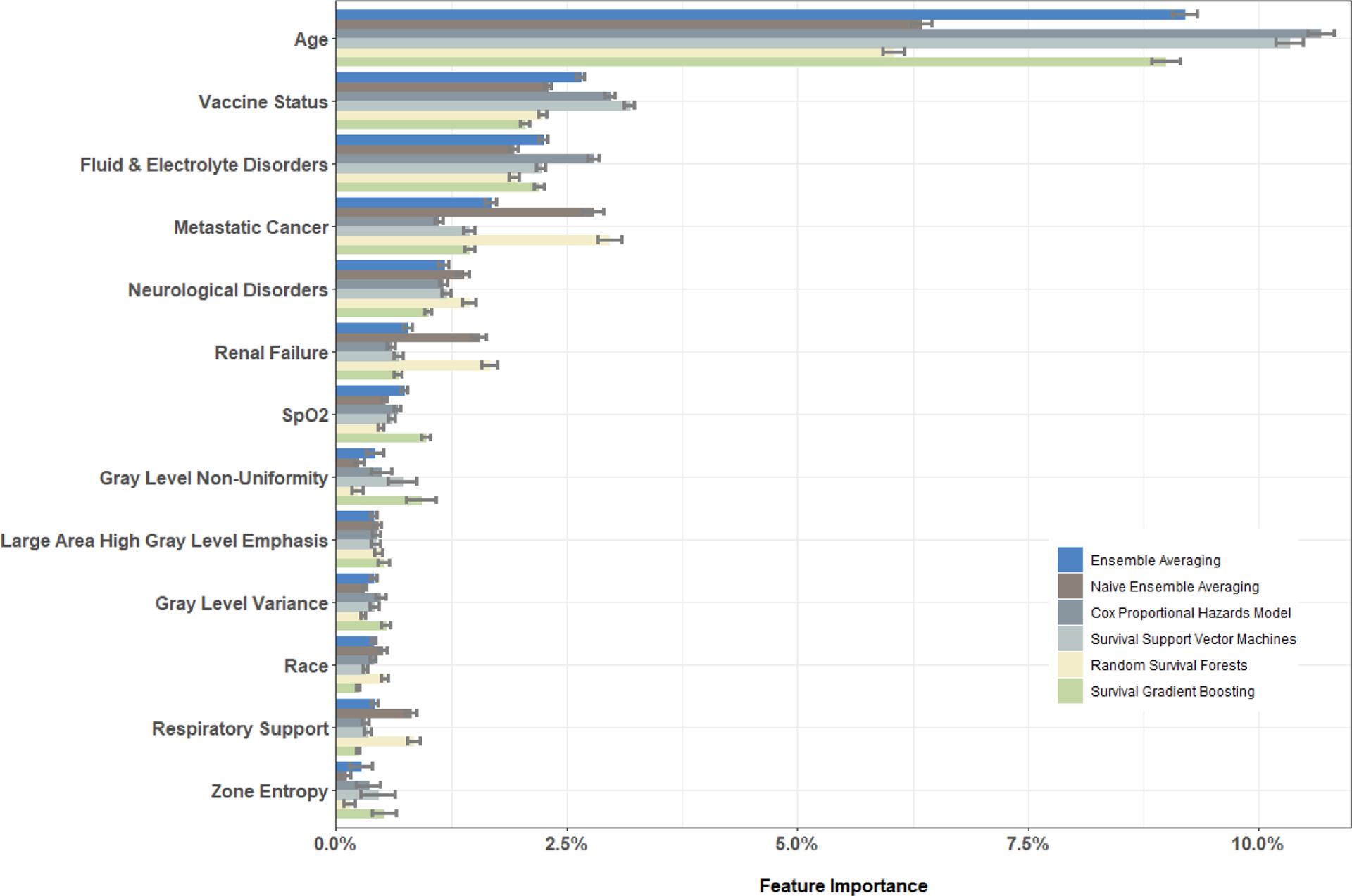
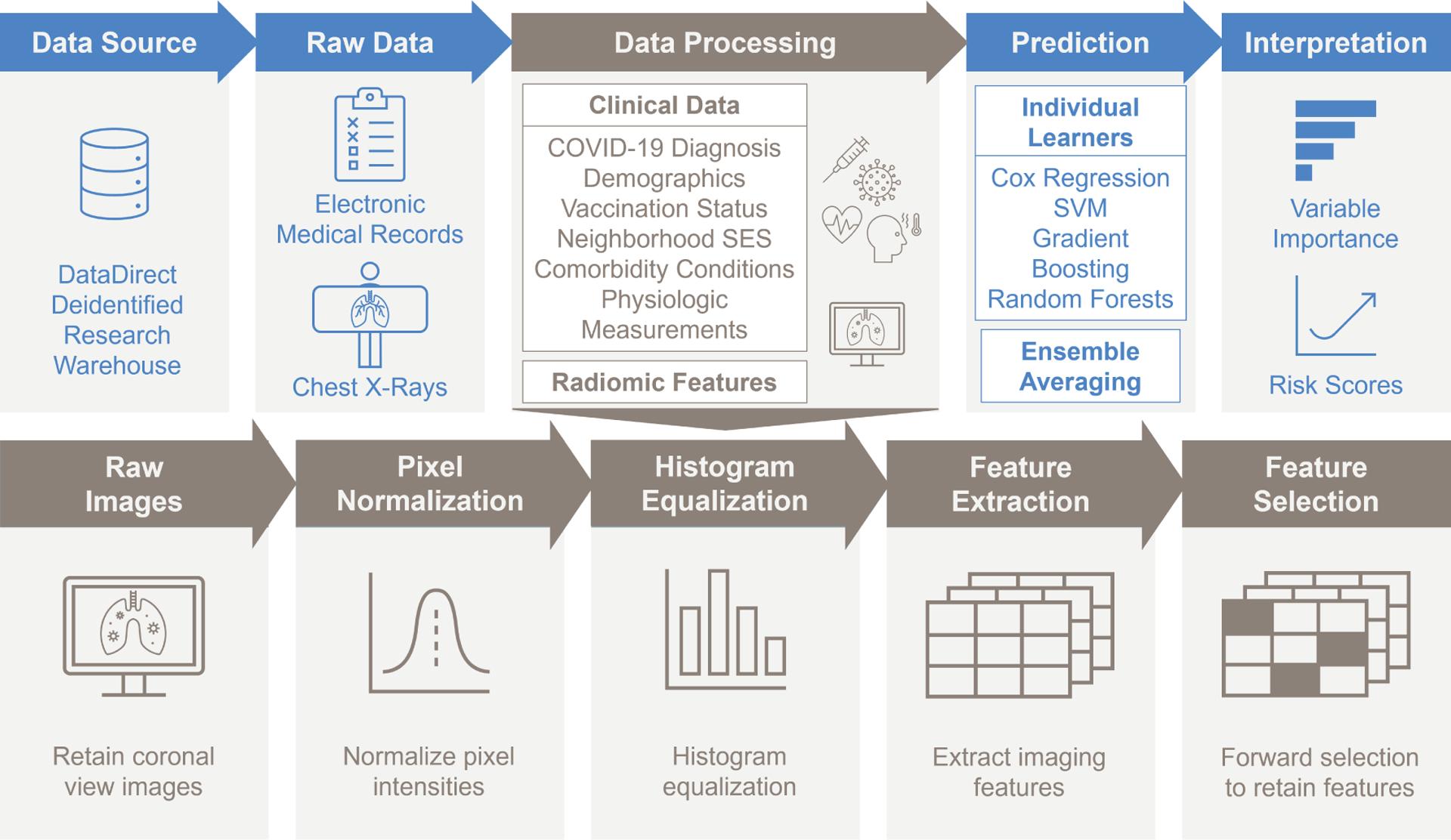
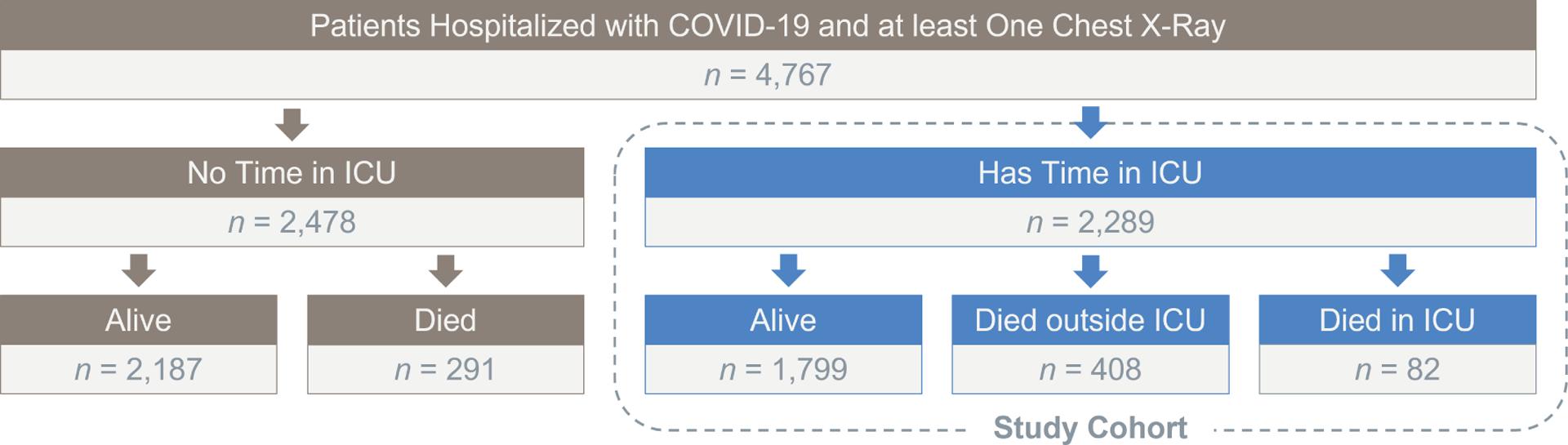
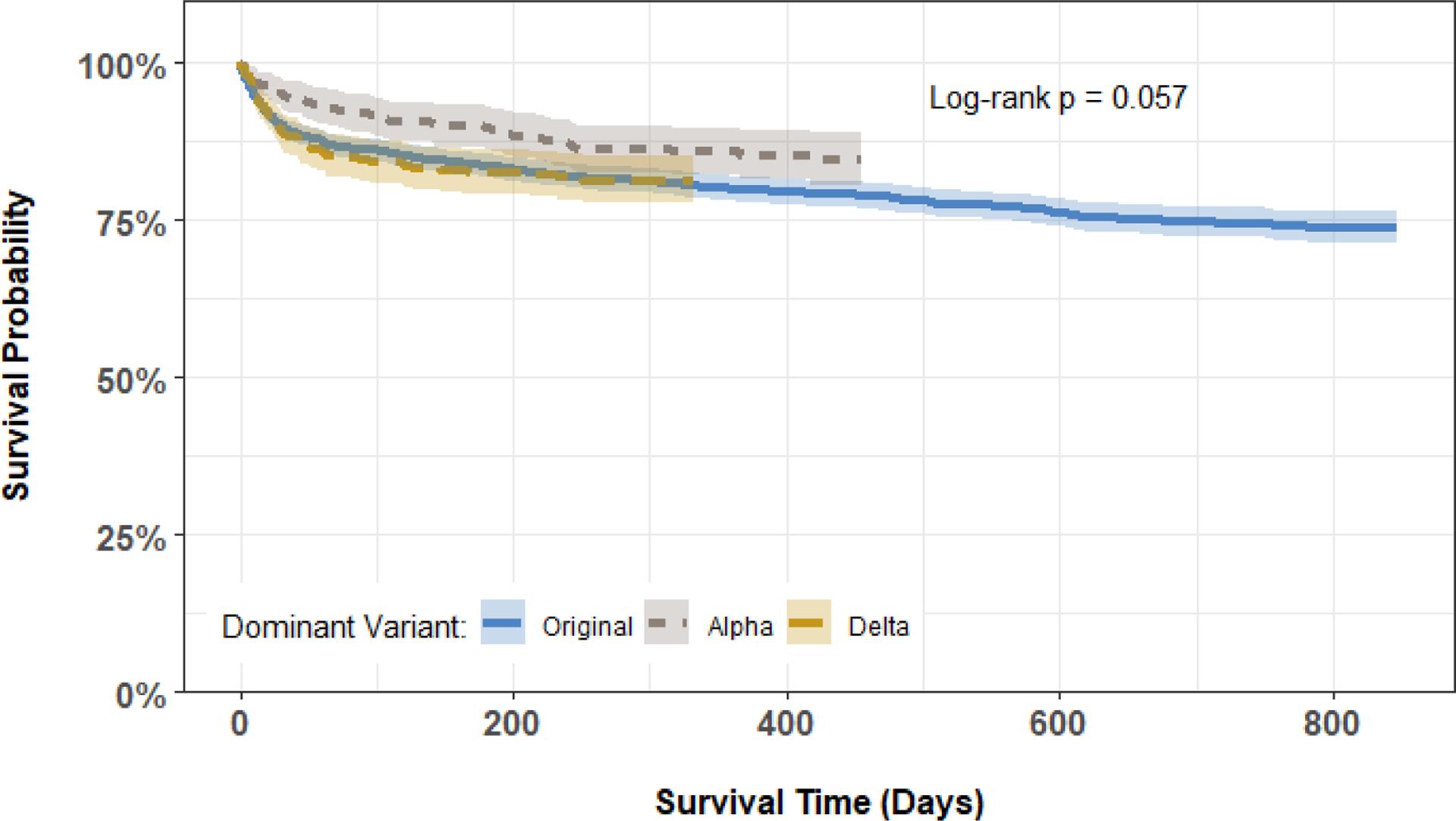
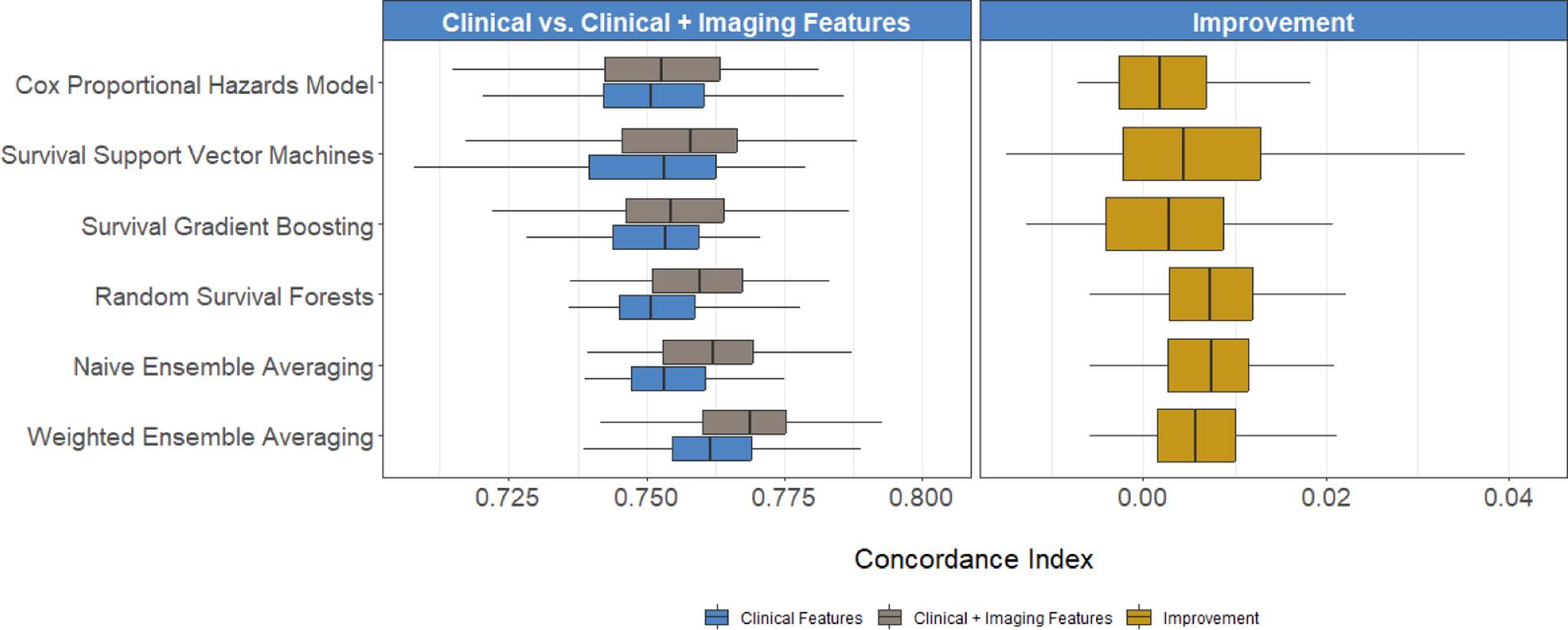
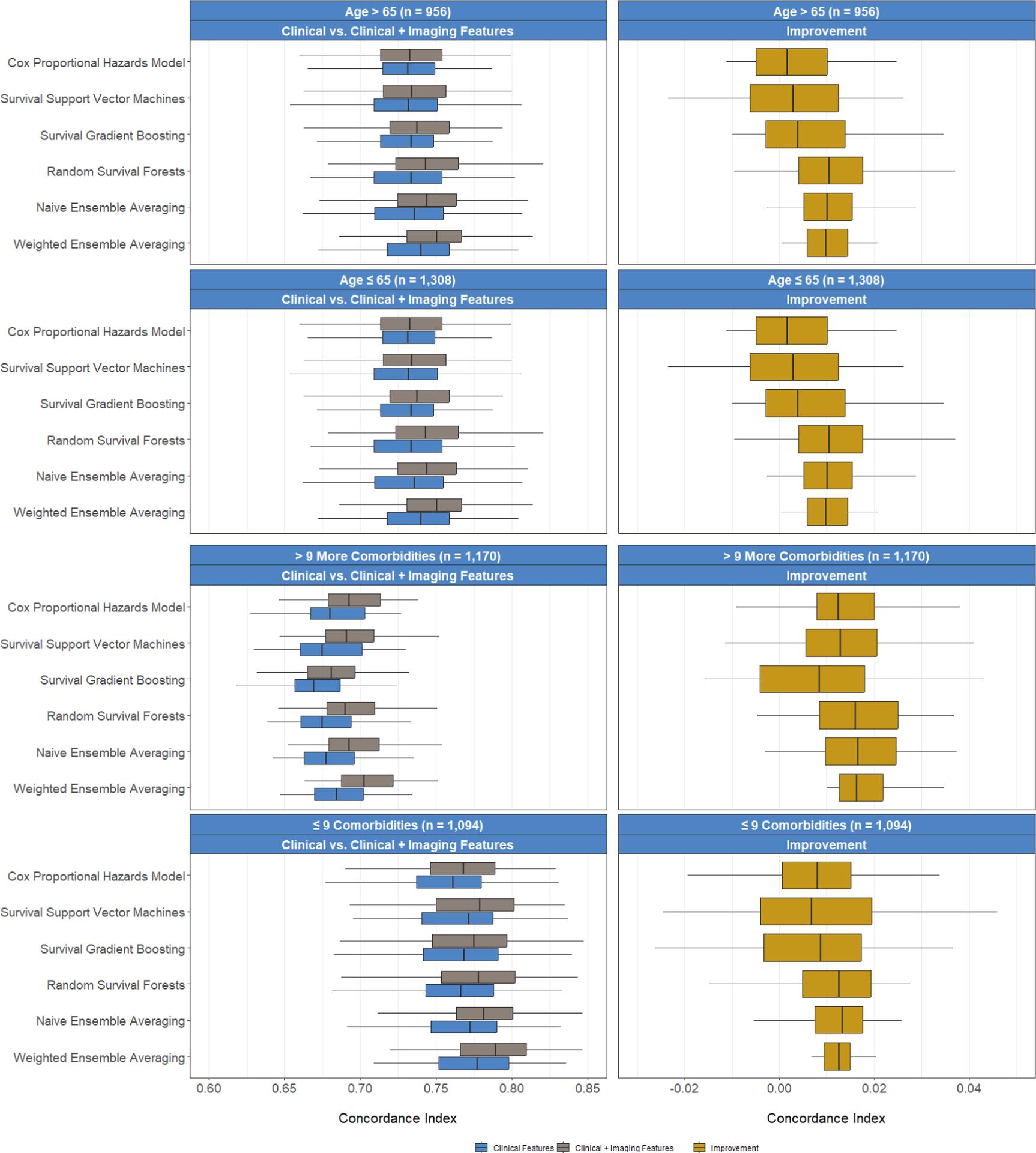
Severe cases of COVID-19 often necessitate escalation to the Intensive Care Unit (ICU), where patients may face grave outcomes, including mortality. Chest X-rays play a crucial role in the diagnostic process for evaluating COVID-19 patients. Our collaborative efforts with Michigan Medicine in monitoring patient outcomes within the ICU have motivated us to investigate the potential advantages of incorporating clinical information and chest X-ray images for predicting patient outcomes. We propose an analytical workflow to address challenges such as the absence of standardized approaches for image pre-processing and data utilization. We then propose an ensemble learning approach designed to maximize the information derived from multiple prediction algorithms. This entails optimizing the weights within the ensemble and considering the common variability present in individual risk scores. Our simulations demonstrate the superior performance of this weighted ensemble averaging approach across various scenarios. We apply this refined ensemble methodology to analyze post-ICU COVID-19 mortality, an occurrence observed in 21% of COVID-19 patients admitted to the ICU at Michigan Medicine. Our findings reveal substantial performance improvement when incorporating imaging data compared to models trained solely on clinical risk factors. Furthermore, the addition of radiomic features yields even larger enhancements, particularly among older and more medically compromised patients. These results may carry implications for enhancing patient outcomes in similar clinical contexts.
新冠肺炎重症病例往往需要转入重症监护病房(ICU),在那里患者可能面临包括死亡在内的严重后果。胸部X光在评估新冠肺炎患者的诊断过程中起着关键作用。我们与密歇根医学中心在监测ICU内患者预后方面的合作促使我们研究纳入临床信息和胸部X光图像以预测患者预后的潜在优势。我们提出了一种分析流程,以应对诸如缺乏图像预处理和数据利用的标准化方法等挑战。然后,我们提出了一种集成学习方法,旨在最大化从多种预测算法中获得的信息。这需要优化集成中的权重,并考虑个体风险评分中存在的共同变异性。我们的模拟结果表明,这种加权集成平均方法在各种情况下都具有卓越的性能。我们应用这种改进的集成方法来分析ICU后新冠肺炎死亡率,这在密歇根医学中心收治的ICU新冠肺炎患者中占21%。我们的研究结果显示,与仅基于临床风险因素训练的模型相比,纳入影像数据时性能有显著提升。此外,添加放射组学特征可带来更大的提升,尤其是在老年患者和医疗状况较差的患者中。这些结果可能对改善类似临床情况下的患者预后具有启示意义。


 Zotero 插件