
从食用贻贝中提取微塑料的拟验证阶段()。
Proposed validation stages for MPs extraction from edible mussels ().
作者信息
Rosales G García, Oberhaensli F, Alonso-Hernández C M, Longoria-Gándara L C
机构信息
IAEA Environment Laboratoires, 4 Quai Antoine 1er B.P. 800, MC-98000, Monaco.
TECNM/Instituto Tecnológico de Toluca-DEPI. Av. Tecnológico s/n. Colonia Agrícola Bellavista Metepec, C. P. 52149, Mexico.
出版信息
Heliyon. 2024 Jun 6;10(12):e32212. doi: 10.1016/j.heliyon.2024.e32212. eCollection 2024 Jun 30.
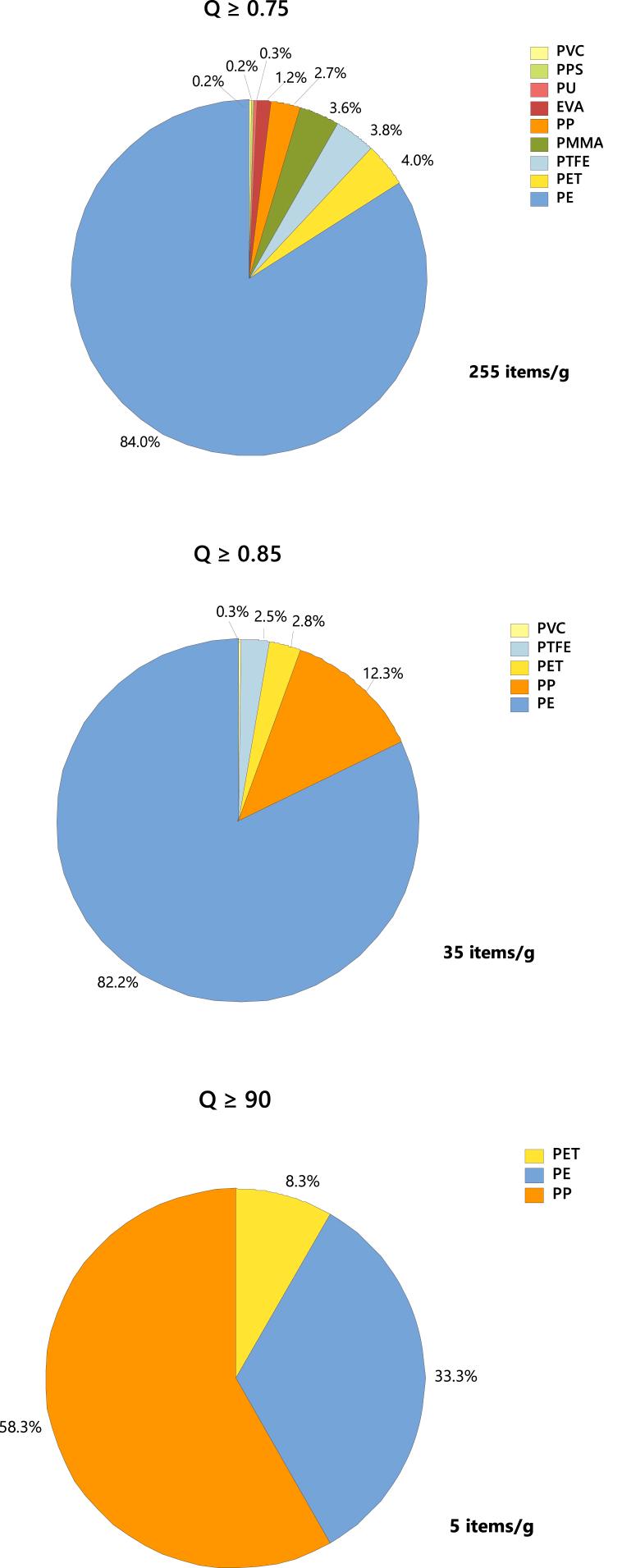
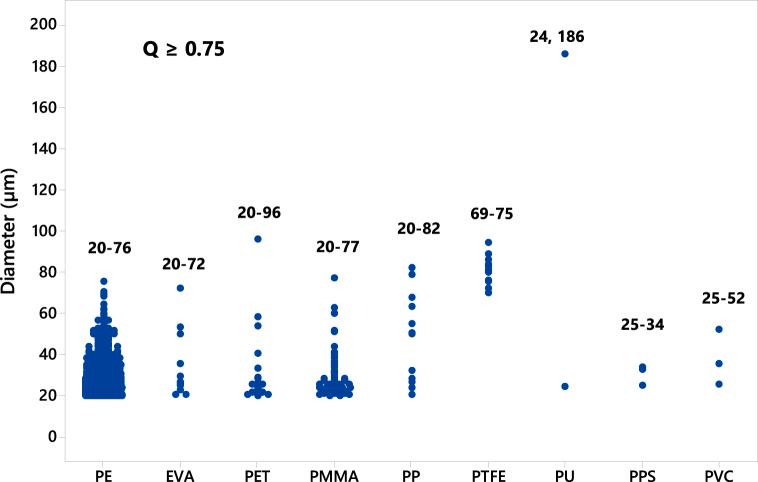
The potential presence of microplastics (MPs) in seafood products presents significant health concerns, demanding the adoption of standardized and validated methodologies. In this study, we introduce a validated method and an innovative technique for extracting MPs from mussels using an oxidizing agent, Corolase enzyme, and a surfactant, thus eliminating the need for mechanical agitation. Evaluation of the extraction process focused on three critical parameters: recovery percentage, repeatability, and chemical integrity, along with color stability. To ensure precision and reliability, low-density infrared spectroscopy (LDIR) was employed to analyze the effect of spectrum quality (Q). Ultimately, this methodology was applied to identify MPs in commercial mussels, with results showcasing the viability of the proposed validation stages for MPs extraction, maintaining MPs integrity with high recovery percentages.
海产品中微塑料(MPs)的潜在存在引发了重大的健康问题,这就需要采用标准化且经过验证的方法。在本研究中,我们介绍了一种经过验证的方法和一种创新技术,该技术使用氧化剂、Corolase酶和一种表面活性剂从贻贝中提取微塑料,从而无需进行机械搅拌。对提取过程的评估集中在三个关键参数上:回收率、重复性和化学完整性,以及颜色稳定性。为确保准确性和可靠性,采用了低密度红外光谱(LDIR)来分析光谱质量(Q)的影响。最终,该方法被应用于识别商业贻贝中的微塑料,结果表明所提出的微塑料提取验证阶段是可行的,能够以高回收率保持微塑料的完整性。


 Zotero 插件