
暴力死亡监测-2021 年全国暴力死亡报告系统,48 个州、哥伦比亚特区和波多黎各。
Surveillance for Violent Deaths - National Violent Death Reporting System, 48 States, the District of Columbia, and Puerto Rico, 2021.
机构信息
Division of Violence Prevention, National Center for Injury Prevention and Control, CDC.
出版信息
MMWR Surveill Summ. 2024 Jul 11;73(5):1-44. doi: 10.15585/mmwr.ss7305a1.
PROBLEM/CONDITION: In 2021, approximately 75,000 persons died of violence-related injuries in the United States. This report summarizes data from CDC's National Violent Death Reporting System (NVDRS) on violent deaths that occurred in 48 states, the District of Columbia, and Puerto Rico in 2021. Results are reported by sex, age group, race and ethnicity, method of injury, type of location where the injury occurred, circumstances of injury, and other selected characteristics. This report introduces additional incident and circumstance variables, which now include child victim-specific circumstance information. This report also incorporates new U.S. Census Bureau race and ethnicity categories, which now account for more than one race and Native Hawaiian or other Pacific Islander categories and include updated denominators to calculate rates for these populations.
PERIOD COVERED
DESCRIPTION OF SYSTEM
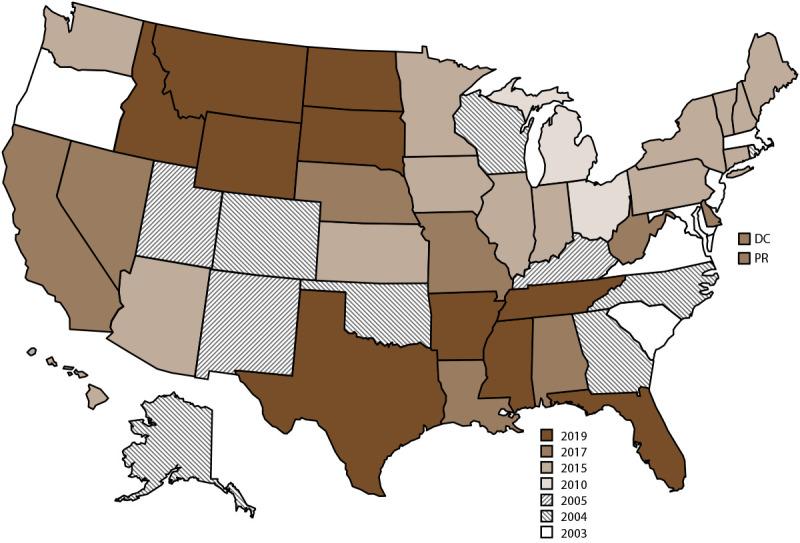
NVDRS collects data regarding violent deaths from death certificates, coroner and medical examiner records, and law enforcement reports. This report includes data collected for violent deaths that occurred in 2021. Data were collected from 48 states (all states with exception of Florida and Hawaii), the District of Columbia, and Puerto Rico. Forty-six states had statewide data, two additional states had data from counties representing a subset of their population (31 California counties, representing 64% of its population, and 13 Texas counties, representing 63% of its population), and the District of Columbia and Puerto Rico had jurisdiction-wide data. NVDRS collates information for each violent death and links deaths that are related (e.g., multiple homicides, homicide followed by suicide, or multiple suicides) into a single incident.
RESULTS
For 2021, NVDRS collected information on 68,866 fatal incidents involving 70,688 deaths that occurred in 48 states (46 states collecting statewide data, 31 California counties, and 13 Texas counties), and the District of Columbia. The deaths captured in NVDRS accounted for 86.5% of all homicides, legal intervention deaths, suicides, unintentional firearm injury deaths, and deaths of undetermined intent in the United States in 2021. In addition, information was collected for 816 fatal incidents involving 880 deaths in Puerto Rico. Data for Puerto Rico were analyzed separately. Of the 70,688 deaths, the majority (58.2%) were suicides, followed by homicides (31.5%), deaths of undetermined intent that might be due to violence (8.2%), legal intervention deaths (1.3%) (i.e., deaths caused by law enforcement and other persons with legal authority to use deadly force acting in the line of duty, excluding legal executions), and unintentional firearm injury deaths (<1.0%). The term "legal intervention" is a classification incorporated into the International Classification of Diseases, Tenth Revision, and does not denote the lawfulness or legality of the circumstances surrounding a death caused by law enforcement.Demographic patterns and circumstances varied by manner of death. The suicide rate was higher for males than for females. Across all age groups, the suicide rate was highest among adults aged ≥85 years. In addition, non-Hispanic American Indian or Alaska Native (AI/AN) persons had the highest suicide rates among all racial and ethnic groups. Among both males and females, the most common method of injury for suicide was a firearm. Among all suicide victims, when circumstances were known (84.4%), suicide was most often preceded by a mental health, intimate partner, or physical health problem or by a recent or impending crisis during the previous or upcoming 2 weeks. The homicide rate was higher for males than for females. Among all homicide victims, the homicide rate was highest among persons aged 20-24 years compared with other age groups. Non-Hispanic Black or African American (Black) males experienced the highest homicide rate of any racial or ethnic group. Among all homicide victims, the most common method of injury was a firearm. When the relationship between a homicide victim and a suspect was known, the suspect was most frequently an acquaintance or friend for male victims and a current or former intimate partner for female victims. Homicide most often was precipitated by an argument or conflict, occurred in conjunction with another crime, or, for female victims, was related to intimate partner violence. Nearly all victims of legal intervention deaths were male, and the legal intervention death rate was highest among men aged 30-34 years. The legal intervention death rate was highest among AI/AN males, followed by Black males. A firearm was used in the majority of legal intervention deaths. When circumstances were known, the most frequent circumstances reported for legal intervention deaths were as follows: the victim used a weapon in the incident and the victim had a substance use problem (other than alcohol use). Other causes of death included unintentional firearm injury deaths and deaths of undetermined intent. Unintentional firearm injury deaths were most frequently experienced by males, non-Hispanic White (White) persons, and persons aged 15-24 years. These deaths most frequently occurred while the shooter was playing with a firearm and were precipitated by a person unintentionally pulling the trigger. The rate of deaths of undetermined intent was highest among males, particularly among AI/AN and Black males, and among adults aged 30-54 years. Poisoning was the most common method of injury in deaths of undetermined intent, and opioids were detected in nearly 80% of decedents tested for those substances.
INTERPRETATION
This report provides a detailed summary of data from NVDRS on violent deaths that occurred in 2021. The suicide rate was highest among AI/AN and White males, whereas the homicide rate was highest among Black males. Intimate partner violence precipitated a large proportion of homicides for females. Mental health problems, intimate partner problems, interpersonal conflicts, and acute life stressors were primary precipitating circumstances for multiple types of deaths examined.
PUBLIC HEALTH ACTION
Violence is preventable, and data can guide public health action. NVDRS data are used to monitor the occurrence of violence-related fatal injuries and assist public health authorities in developing, implementing, and evaluating programs, policies, and practices to reduce and prevent violent deaths. NVDRS data can be used to enhance prevention efforts into actionable strategies. States or jurisdictions have used their Violent Death Reporting System (VDRS) data to guide suicide prevention efforts and highlight where additional focus is needed. For example, North Carolina VDRS program data have played a significant role in expanding activities related to firearm safety and injury prevention. The program served as a primary data source for partners, which led to the creation of the Office of Violence Prevention in the state, focusing on combatting firearm-related deaths. In Maine, the VDRS provided data on law enforcement officer suicides that were used to help support a bill mandating mental health resiliency and awareness training in the state's law enforcement training academy, along with plans for similar training addressing mental health, substance use, and alcohol problems among corrections officers. In addition, states and jurisdictions have also used their VDRS data to examine factors related to homicide in their state or jurisdiction. For example, Georgia VDRS collaborated with the City of Atlanta Mayor's Office of Violence Reduction to develop two public dashboards that not only offer comprehensive data on violent deaths but also present data on the geographic distribution of populations disproportionately affected by violence to help inform violence prevention interventions.
问题/状况:2021 年,美国约有 75000 人死于与暴力相关的伤害。本报告总结了美国疾病控制与预防中心(CDC)国家暴力死亡报告系统(NVDRS)收集的关于 2021 年在 48 个州、哥伦比亚特区和波多黎各发生的暴力死亡数据。报告按性别、年龄组、种族和族裔、伤害方式、发生伤害的地点类型、伤害情况和其他选定特征进行了分类。本报告引入了其他新增的事件和情况变量,包括特定于儿童受害者的情况信息。本报告还采用了新的美国人口普查局种族和族裔类别,这些类别现在包括超过一种种族和夏威夷原住民或其他太平洋岛民类别,并更新了计算这些人群比率的分母。
覆盖时期
2021 年。
系统描述
NVDRS 从死亡证明、验尸官和法医记录以及执法报告中收集有关暴力死亡的数据。本报告包含了 2021 年发生的暴力死亡数据。数据来自 48 个州(除佛罗里达州和夏威夷州外的所有州)、哥伦比亚特区和波多黎各。46 个州有全州范围的数据,另外两个州有代表其部分人口的县的数据(加利福尼亚州的 31 个县,占其人口的 64%,德克萨斯州的 13 个县,占其人口的 63%),哥伦比亚特区和波多黎各则有全辖区的数据。NVDRS 对每个暴力死亡事件进行信息收集,并将相关的死亡事件(如,多人凶杀案、凶杀后自杀或多人自杀)链接到一个单一的事件中。
结果
2021 年,NVDRS 收集了涉及 68866 起致命事件的信息,这些事件导致 70688 人死亡,发生在 48 个州(46 个州收集全州范围的数据、加利福尼亚州的 31 个县和德克萨斯州的 13 个县)和哥伦比亚特区。NVDRS 收集的数据占美国 2021 年所有凶杀案、合法干预死亡、自杀、非故意枪支伤害死亡和未确定意图死亡的 86.5%。此外,还收集了波多黎各 816 起致命事件中涉及 880 人死亡的数据。波多黎各的数据是单独分析的。在 70688 例死亡中,大多数(58.2%)是自杀,其次是凶杀(31.5%)、死因可能是暴力的未确定意图(8.2%)、合法干预死亡(1.3%)(即,由执法人员和其他具有合法使用致命武力权力的人在执行公务时造成的死亡,不包括合法处决)和非故意枪支伤害死亡(<1.0%)。术语“合法干预”是纳入国际疾病分类第十版的一个分类,并不表示执法人员死亡的情况是否合法或合法。人口统计学模式和情况因死亡方式而异。男性的自杀率高于女性。在所有年龄组中,85 岁及以上成年人的自杀率最高。此外,非西班牙裔美国印第安人或阿拉斯加原住民(AI/AN)的自杀率在所有种族和族裔群体中最高。在男性和女性中,自杀最常见的方式是使用枪支。在所有自杀者中,当情况已知(84.4%)时,自杀通常发生在心理健康、亲密伴侣或身体健康问题之前,或在之前或即将到来的两周内发生了近期或即将发生的危机。男性的凶杀率高于女性。在所有凶杀案受害者中,20-24 岁人群的凶杀率最高,而其他年龄组的凶杀率则较低。非西班牙裔黑人或非洲裔美国人(黑人)男性的凶杀率是任何种族或族裔群体中最高的。在所有凶杀案受害者中,最常见的伤害方式是使用枪支。在已知凶杀案受害者和嫌疑人之间的关系时,男性受害者的嫌疑人最常是熟人或朋友,而女性受害者的嫌疑人则是现任或前任亲密伴侣。凶杀案通常是由争吵或冲突引发的,与另一起犯罪同时发生,或者是针对女性受害者的亲密伴侣暴力事件。几乎所有合法干预死亡的受害者都是男性,30-34 岁男性的合法干预死亡率最高。合法干预死亡率最高的是 AI/AN 男性,其次是黑人男性。大多数合法干预死亡是由枪支造成的。当情况已知时,报告的合法干预死亡的最常见情况如下:受害者在事件中使用了武器,且受害者有药物使用问题(除了酒精使用)。其他死因包括非故意枪支伤害死亡和未确定意图的死亡。非故意枪支伤害死亡最常发生在男性、非西班牙裔白人(白人)和 15-24 岁的人群中。这些死亡最常发生在射手无意扣动扳机时,且与枪支玩耍有关。未确定意图的死亡率在男性中最高,特别是在 AI/AN 和黑人男性中,以及 30-54 岁的成年人中。中毒是未确定意图死亡中最常见的伤害方式,在接受这些物质检测的死者中,近 80%的人检测出了阿片类药物。
解释
本报告提供了 NVDRS 关于 2021 年发生的暴力死亡数据的详细摘要。自杀率在 AI/AN 和白人男性中最高,而凶杀率在黑人男性中最高。亲密伴侣暴力事件导致大多数女性凶杀案的发生。心理健康问题、亲密伴侣问题、人际冲突和急性生活压力是所研究的多种死亡类型的主要诱发因素。
公共卫生行动
暴力是可以预防的,数据可以指导公共卫生行动。NVDRS 数据用于监测与暴力相关的致命伤害的发生情况,并协助公共卫生当局制定、实施和评估预防和减少暴力死亡的计划、政策和实践。NVDRS 数据可用于增强预防工作,转化为可操作的策略。各州或辖区已利用其暴力死亡报告系统(VDRS)数据来指导自杀预防工作,并强调需要关注的地方。例如,北卡罗来纳州的 VDRS 项目数据在扩大与枪支安全和伤害预防相关的活动方面发挥了重要作用。该项目是该州预防办公室的主要数据来源,专注于打击与枪支有关的死亡事件。在缅因州,VDRS 提供的执法人员自杀数据被用于支持一项法案,该法案要求在该州的执法培训学院中开展心理健康弹性和意识培训,并计划对惩教人员开展类似的培训,以解决心理健康、药物使用和酒精问题。此外,各州和辖区还利用其 VDRS 数据研究其州或辖区内与凶杀案有关的因素。例如,佐治亚州的 VDRS 与亚特兰大市市长的减少暴力办公室合作,开发了两个公共仪表盘,不仅提供了有关暴力死亡的全面数据,还展示了人口分布的地理分布情况,这些人群受暴力影响的程度较高,有助于制定暴力预防干预措施。
 Zotero 插件