
间充质干细胞衍生的细胞外囊泡在改善青少年期暴饮暴食样乙醇治疗诱导的海马NLRP3炎症中的新作用。
The emerging role of mesenchymal stem cell-derived extracellular vesicles to ameliorate hippocampal NLRP3 inflammation induced by binge-like ethanol treatment in adolescence.
作者信息
Mellado Susana, Morillo-Bargues María José, Perpiñá-Clérigues Carla, García-García Francisco, Moreno-Manzano Victoria, Guerri Consuelo, Pascual María
机构信息
Department of Physiology, School of Medicine and Dentistry, University of Valencia, Valencia, Spain.
Bioinformatics and Biostatistics Unit, Príncipe Felipe Research Center, Valencia, Spain.
出版信息
Neural Regen Res. 2025 Apr 1;20(4):1153-1163. doi: 10.4103/NRR.NRR-D-23-01397. Epub 2024 Jun 24.
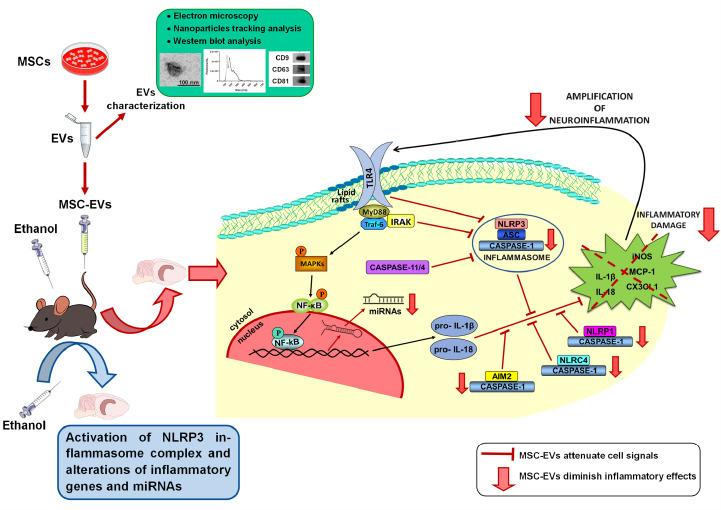
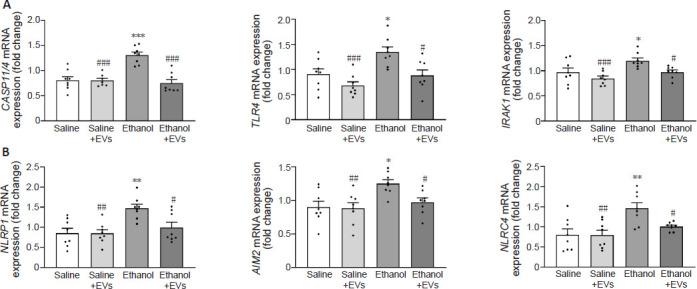
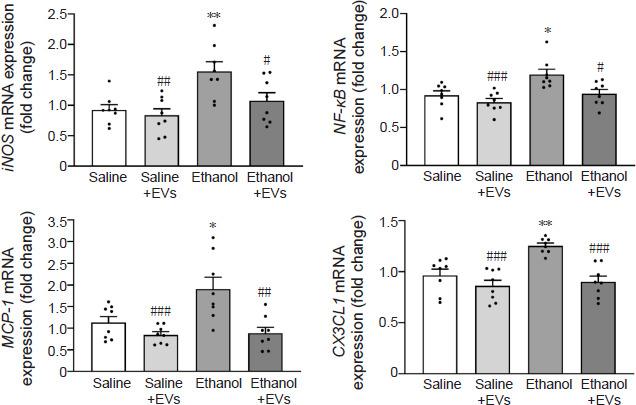
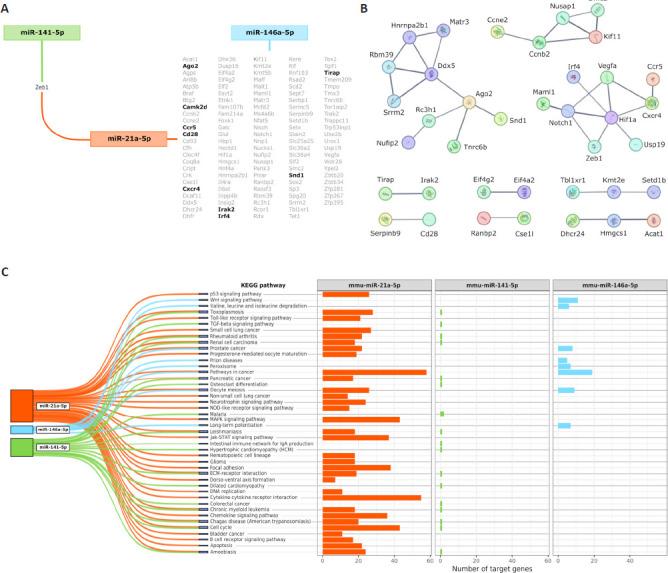
JOURNAL/nrgr/04.03/01300535-202504000-00030/figure1/v/2024-07-06T104127Z/r/image-tiff Our previous studies have reported that activation of the NLRP3 (NOD-, LRR- and pyrin domain-containing protein 3)-inflammasome complex in ethanol-treated astrocytes and chronic alcohol-fed mice could be associated with neuroinflammation and brain damage. Mesenchymal stem cell-derived extracellular vesicles (MSC-EVs) have been shown to restore the neuroinflammatory response, along with myelin and synaptic structural alterations in the prefrontal cortex, and alleviate cognitive and memory dysfunctions induced by binge-like ethanol treatment in adolescent mice. Considering the therapeutic role of the molecules contained in mesenchymal stem cell-derived extracellular vesicles, the present study analyzed whether the administration of mesenchymal stem cell-derived extracellular vesicles isolated from adipose tissue, which inhibited the activation of the NLRP3 inflammasome, was capable of reducing hippocampal neuroinflammation in adolescent mice treated with binge drinking. We demonstrated that the administration of mesenchymal stem cell-derived extracellular vesicles ameliorated the activation of the hippocampal NLRP3 inflammasome complex and other NLRs inflammasomes (e.g., pyrin domain-containing 1, caspase recruitment domain-containing 4, and absent in melanoma 2, as well as the alterations in inflammatory genes (interleukin-1β, interleukin-18, inducible nitric oxide synthase, nuclear factor-kappa B, monocyte chemoattractant protein-1, and C-X3-C motif chemokine ligand 1) and miRNAs (miR-21a-5p, miR-146a-5p, and miR-141-5p) induced by binge-like ethanol treatment in adolescent mice. Bioinformatic analysis further revealed the involvement of miR-21a-5p and miR-146a-5p with inflammatory target genes and NOD-like receptor signaling pathways. Taken together, these findings provide novel evidence of the therapeutic potential of MSC-derived EVs to ameliorate the hippocampal neuroinflammatory response associated with NLRP3 inflammasome activation induced by binge drinking in adolescence.
《期刊》/nrgr/04.03/01300535 - 202504000 - 00030/图1/v/2024 - 07 - 06T104127Z/图像 - tiff 我们之前的研究报道,在乙醇处理的星形胶质细胞和慢性酒精喂养的小鼠中,NLRP3(含核苷酸结合寡聚化结构域、富含亮氨酸重复序列和吡啉结构域的蛋白3)炎性小体复合物的激活可能与神经炎症和脑损伤有关。间充质干细胞衍生的细胞外囊泡(MSC - EVs)已被证明可恢复神经炎症反应,以及前额叶皮质中的髓鞘和突触结构改变,并减轻青春期小鼠因暴饮样乙醇处理诱导的认知和记忆功能障碍。考虑到间充质干细胞衍生的细胞外囊泡中所含分子的治疗作用,本研究分析了从脂肪组织分离的抑制NLRP3炎性小体激活的间充质干细胞衍生的细胞外囊泡的给药是否能够减轻暴饮酒精处理的青春期小鼠的海马神经炎症。我们证明,间充质干细胞衍生的细胞外囊泡的给药改善了海马NLRP3炎性小体复合物和其他NLRs炎性小体(例如含吡啉结构域1、含半胱天冬酶招募结构域4和黑色素瘤缺失2)的激活,以及青春期小鼠因暴饮样乙醇处理诱导的炎症基因(白细胞介素 - 1β、白细胞介素 - 18、诱导型一氧化氮合酶、核因子 - κB、单核细胞趋化蛋白 - 1和C - X3 - C基序趋化因子配体1)和微小RNA(miR - 21a - 5p, miR - 146a - 5p和miR - 141 - 5p)的改变。生物信息学分析进一步揭示了miR - 21a - 5p和miR - 146a - 5p与炎症靶基因和NOD样受体信号通路的关联。综上所述,这些发现为间充质干细胞衍生的细胞外囊泡改善青春期暴饮酒精诱导的与NLRP3炎性小体激活相关的海马神经炎症反应的治疗潜力提供了新的证据。

 Zotero 插件