
使用基于血红蛋白的氧载体进行逐步复温可提高大鼠肝脏循环性死亡后供肝的存活率。
Gradual rewarming with a hemoglobin-based oxygen carrier improves viability of donation after circulatory death in rat livers.
作者信息
Mahboub Paria, Aburawi Mohamed, Ozgur O Sila, Pendexter Casie, Cronin Stephanie, Lin Florence Min, Jain Rohil, Karabacak Murat N, Karimian Negin, Tessier Shannon N, Markmann James F, Yeh Heidi, Uygun Korkut
机构信息
Department of Surgery, University Medical Center Groningen, Groningen, Netherlands.
Center for Engineering in Medicine and Surgery, Massachusetts General Hospital and Harvard Medical School, Boston, MA, United States.
出版信息
Front Transplant. 2024 Jul 1;3:1353124. doi: 10.3389/frtra.2024.1353124. eCollection 2024.
BACKGROUND
Donation after circulatory death (DCD) grafts are vital for increasing available donor organs. Gradual rewarming during machine perfusion has proven effective in mitigating reperfusion injury and enhancing graft quality. Limited data exist on artificial oxygen carriers as an effective solution to meet the increasing metabolic demand with temperature changes. The aim of the present study was to assess the efficacy and safety of utilizing a hemoglobin-based oxygen carrier (HBOC) during the gradual rewarming of DCD rat livers.
METHODS
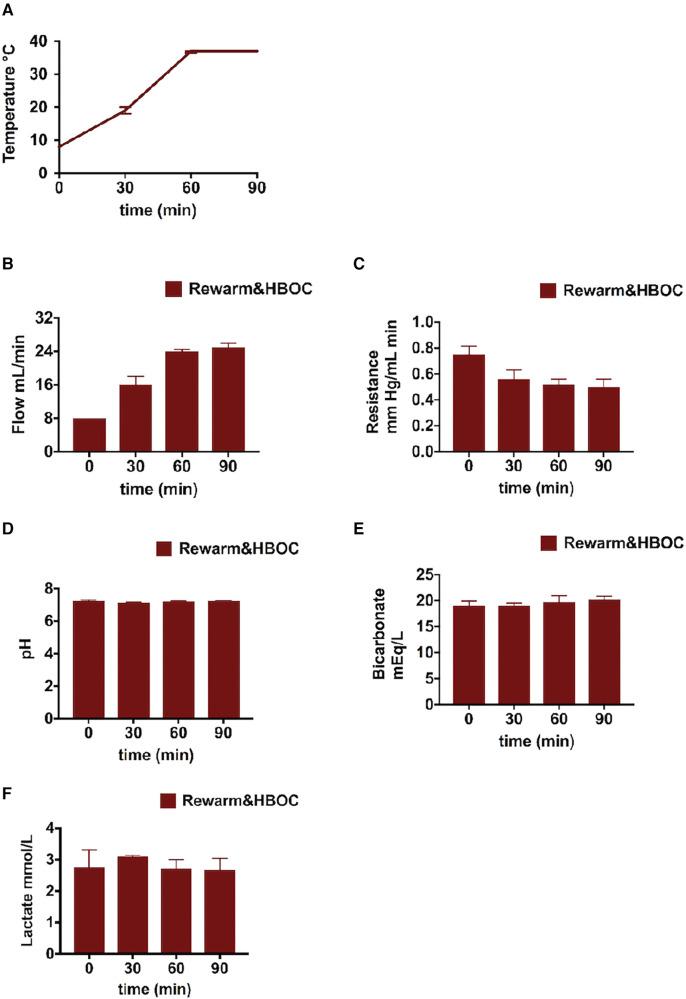
Liver grafts were procured after 30 min of warm ischemia. The effect of 90 min of oxygenated rewarming perfusion from ice cold temperatures (4 °C) to 37 °C with HBOC after cold storage was evaluated and the results were compared with cold storage alone. Reperfusion at 37 °C was performed to assess the post-preservation recovery.
RESULTS
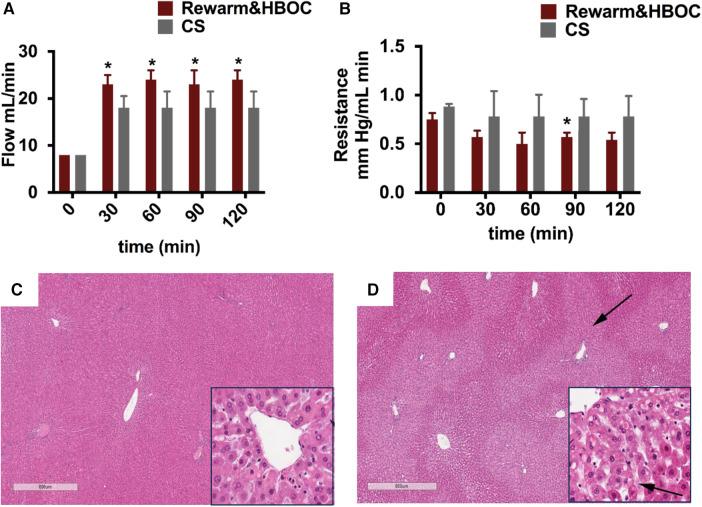
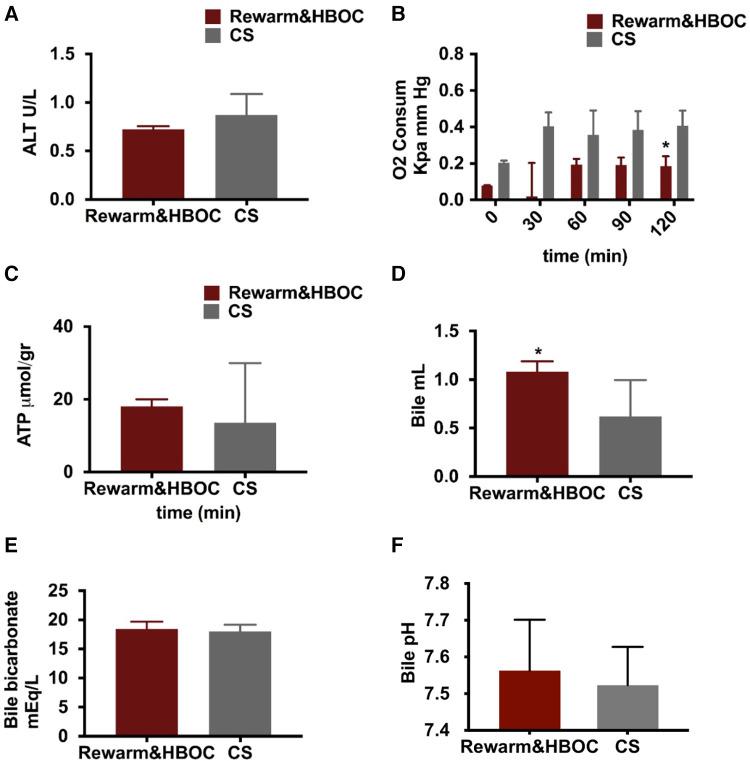
Gradual rewarming with HBOC significantly enhanced recovery, demonstrated by markedly lower lactate levels and reduced vascular resistance compared to cold-stored liver grafts. Increased bile production in the HBOC group was noted, indicating improved liver function and bile synthesis capacity. Histological examination showed reduced cellular damage and better tissue preservation in the HBOC-treated livers compared to those subjected to cold storage alone.
CONCLUSION
This study suggests the safety of using HBOC during rewarming perfusion of rat livers as no harmful effect was detected. Furthermore, the viability assessment indicated improvement in graft function.
背景
心脏死亡后器官捐献(DCD)移植物对于增加可用供体器官至关重要。机器灌注期间的逐步复温已被证明可有效减轻再灌注损伤并提高移植物质量。关于人工氧载体作为一种有效解决方案以满足随温度变化而增加的代谢需求的数据有限。本研究的目的是评估在DCD大鼠肝脏逐步复温过程中使用基于血红蛋白的氧载体(HBOC)的有效性和安全性。
方法
在热缺血30分钟后获取肝移植物。评估了在冷藏后使用HBOC从冰冷温度(4°C)到37°C进行90分钟的充氧复温灌注的效果,并将结果与单纯冷藏进行比较。在37°C进行再灌注以评估保存后的恢复情况。
结果
与冷藏的肝移植物相比,使用HBOC进行逐步复温显著提高了恢复情况,表现为乳酸水平明显降低和血管阻力降低。注意到HBOC组胆汁分泌增加,表明肝功能和胆汁合成能力得到改善。组织学检查显示,与仅进行冷藏的肝脏相比,经HBOC处理的肝脏细胞损伤减少,组织保存更好。
结论
本研究表明在大鼠肝脏复温灌注期间使用HBOC是安全的,未检测到有害影响。此外,活力评估表明移植物功能有所改善。


 Zotero 插件