
高血压对HELLP综合征孕妇母儿结局的影响——来自三级产科中心的回顾性研究
The Role of Hypertension for Maternal Outcomes of Women with HELLP Syndrome - a Retrospective Study from a Tertiary Obstetric Center.
作者信息
Müller Linda-Marie, Eveslage Maria, Köster Helen Ann, Willy Kevin, Möllers Mareike, Schmitz Ralf, Oelmeier Kathrin, Willy Daniela
机构信息
Department of Obstetrics and Gynecology, University Hospital Münster, Münster, Germany.
Institute of Biostatistics and Clinical Research, University of Münster, Münster, Germany.
出版信息
Geburtshilfe Frauenheilkd. 2024 May 17;84(7):635-645. doi: 10.1055/a-2308-9698. eCollection 2024 Jul.
INTRODUCTION
HELLP syndrome is a serious disorder that can occur in pregnancy; it has many possible complications and is associated with adverse maternal outcome. Due to the lack of predictive parameters for HELLP syndrome, finding the right time for delivery is challenging. In contrast to preeclampsia, hypertension is not an essential part of the diagnosis; nevertheless, many women with HELLP syndrome are hypertensive. The role and possible implications of hypertension in HELLP syndrome are not fully understood.
MATERIAL AND METHODS
In this retrospective cohort study, we analyzed the maternal outcomes of 59 patients diagnosed with HELLP syndrome. The patients were divided into three groups according to their blood pressure levels during their stay in hospital. These three groups were compared in terms of patient characteristics and maternal outcomes. A combined endpoint for adverse maternal outcome was defined which included blood pressure and antihypertensive medication at discharge from hospital, severe postpartum anemia, and eclampsia.
RESULTS
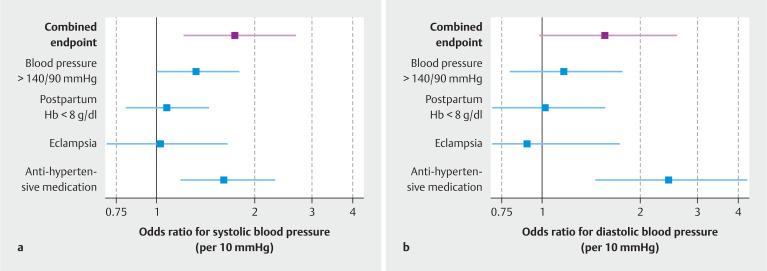
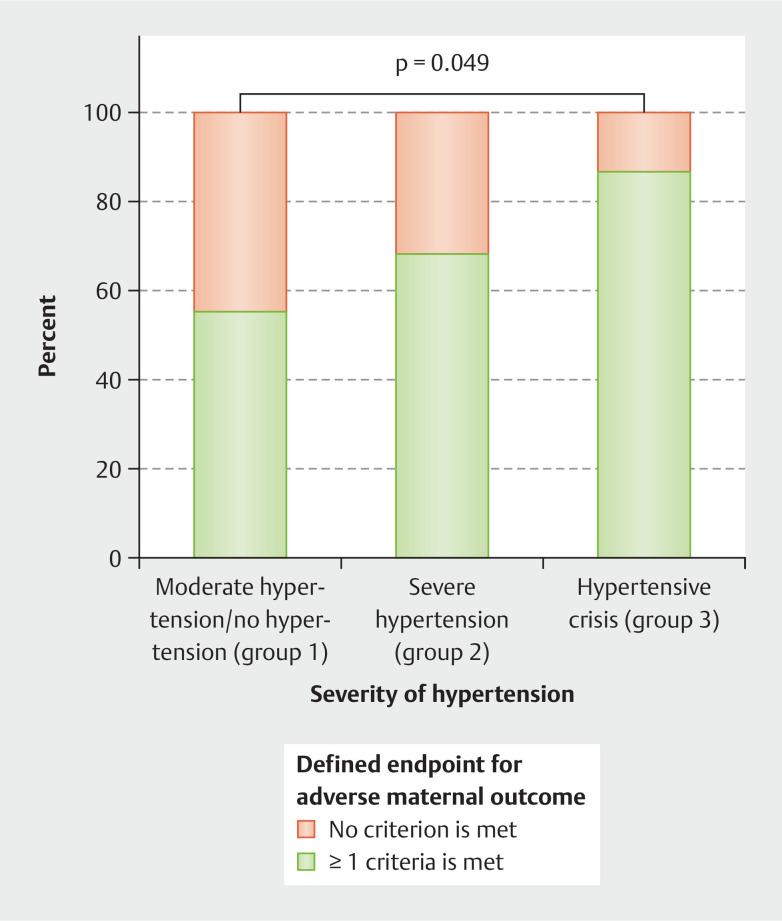
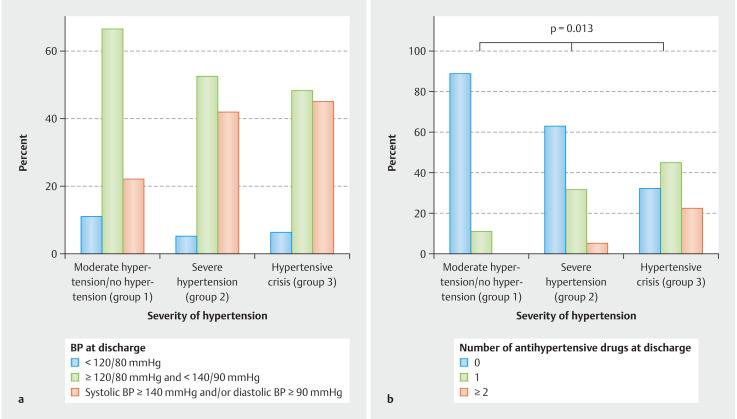
Women with hypertensive crises had an unfavorable outcome compared to women with lower blood pressure levels. Patients with higher blood pressure during pregnancy were more likely to be hypertensive at discharge and needed a combination of antihypertensive agents significantly more often. The risk of an adverse maternal outcome increased with the severity of hypertension. An increase in systolic blood pressure by 10 mmHg raised the risk of an adverse outcome by 74% (95% CI: 1.22-2.66).
CONCLUSION
Hypertension not only plays an important role in preeclampsia but also affects the outcomes of patients with HELLP syndrome. These patients need to be identified quickly and treated accordingly as they are at risk of cardiovascular impairment. Patients should be followed up closely after delivery to reduce cardiovascular morbidity.
引言
HELLP综合征是一种可发生于妊娠期的严重疾病;它有许多可能的并发症,并与不良孕产妇结局相关。由于缺乏HELLP综合征的预测参数,确定合适的分娩时机具有挑战性。与子痫前期不同,高血压并非诊断的必要组成部分;然而,许多HELLP综合征患者存在高血压。高血压在HELLP综合征中的作用及可能影响尚未完全明确。
材料与方法
在这项回顾性队列研究中,我们分析了59例诊断为HELLP综合征患者的孕产妇结局。根据患者住院期间的血压水平将其分为三组。对这三组患者的特征和孕产妇结局进行比较。定义了一个不良孕产妇结局的综合终点,包括出院时的血压和降压药物使用情况、严重产后贫血和子痫。
结果
与血压水平较低的女性相比,发生高血压危象的女性结局不佳。孕期血压较高的患者出院时更易患高血压,且更常需要联合使用降压药物。不良孕产妇结局的风险随高血压严重程度增加而升高。收缩压每升高10 mmHg,不良结局风险增加74%(95%CI:1.22 - 2.66)。
结论
高血压不仅在子痫前期中起重要作用,还影响HELLP综合征患者的结局。这些患者因有心血管损害风险,需要迅速识别并给予相应治疗。产后应密切随访患者以降低心血管疾病发病率。


 Zotero 插件