
神经元葡萄糖-6-磷酸酶是神经肽释放的调节剂,通过 FMRFamide 信号调节肌肉糖原储存。
neuronal Glucose-6-Phosphatase is a modulator of neuropeptide release that regulates muscle glycogen stores via FMRFamide signaling.
机构信息
Department of Cell Biology and Genetics, School of Medicine, Texas A&M University, Bryan, TX 77807.
出版信息
Proc Natl Acad Sci U S A. 2024 Jul 23;121(30):e2319958121. doi: 10.1073/pnas.2319958121. Epub 2024 Jul 15.
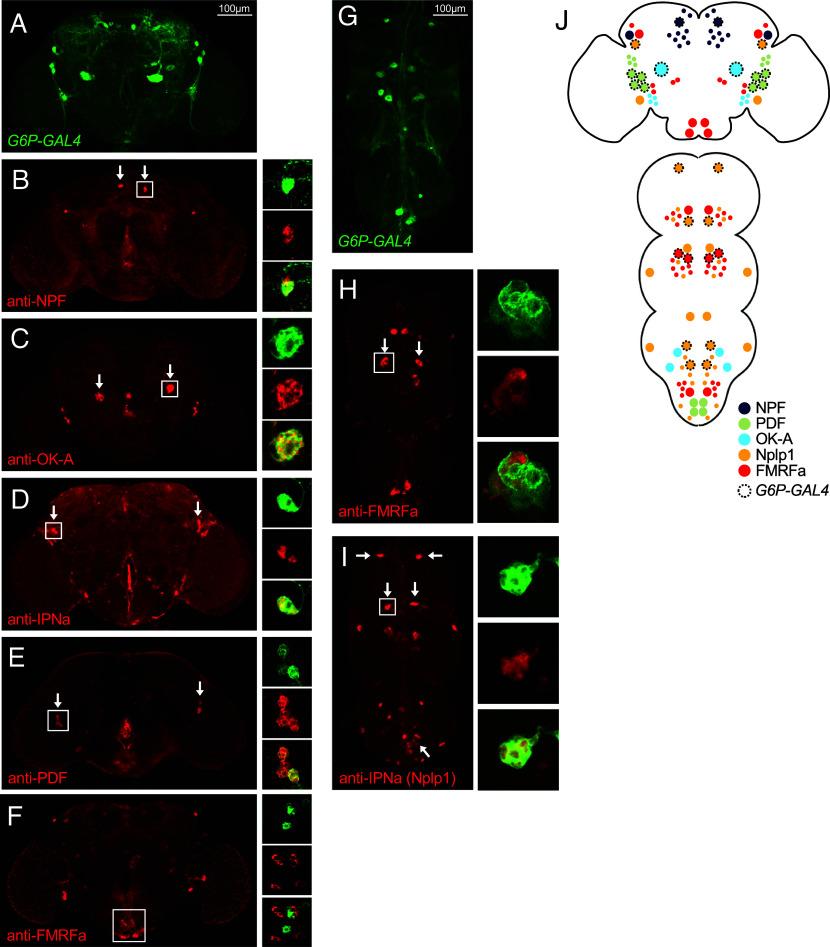
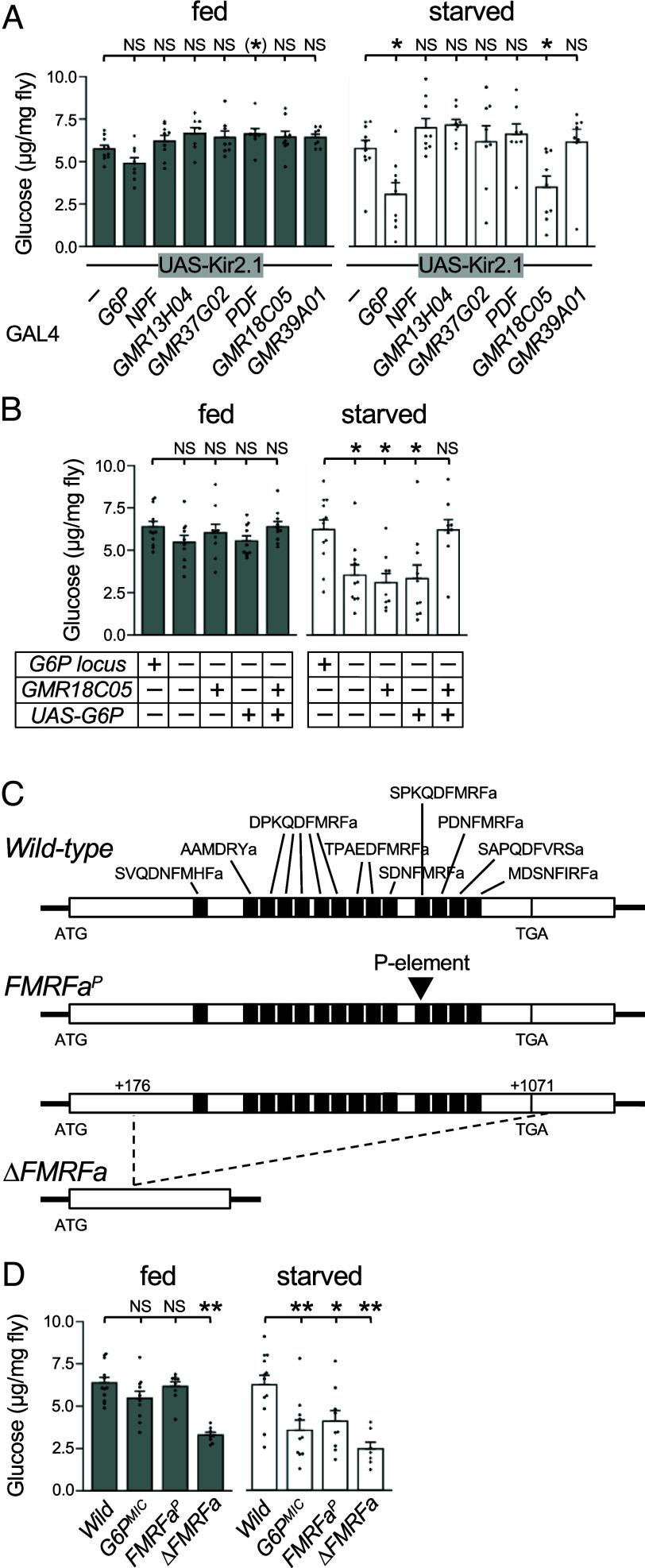
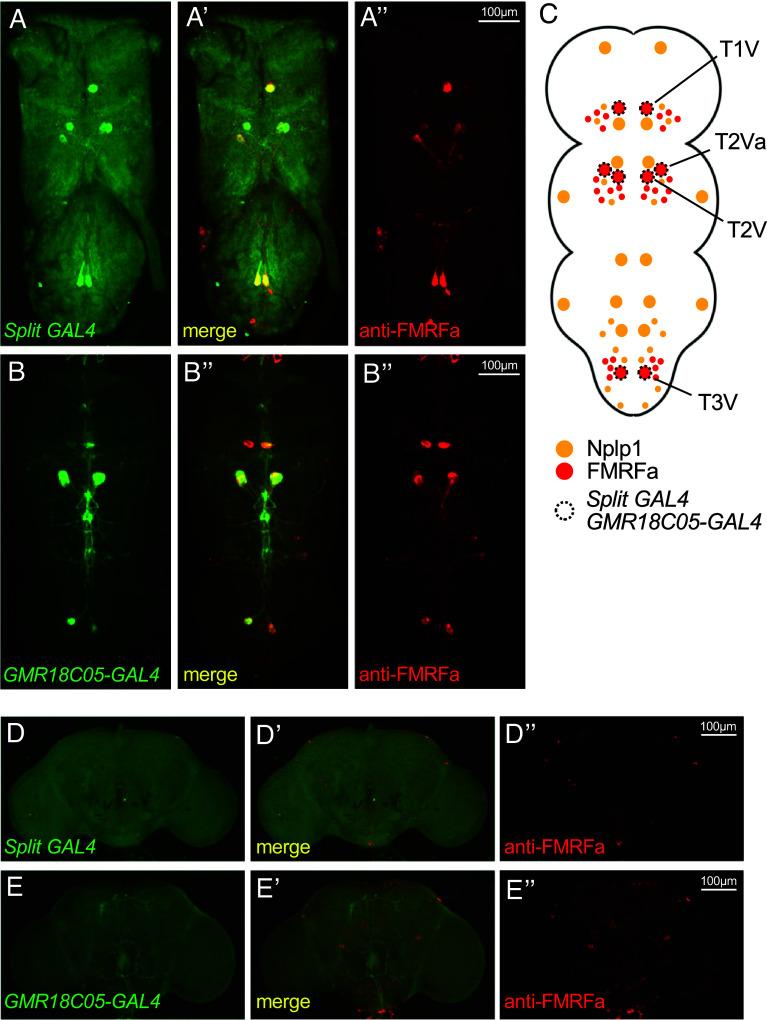
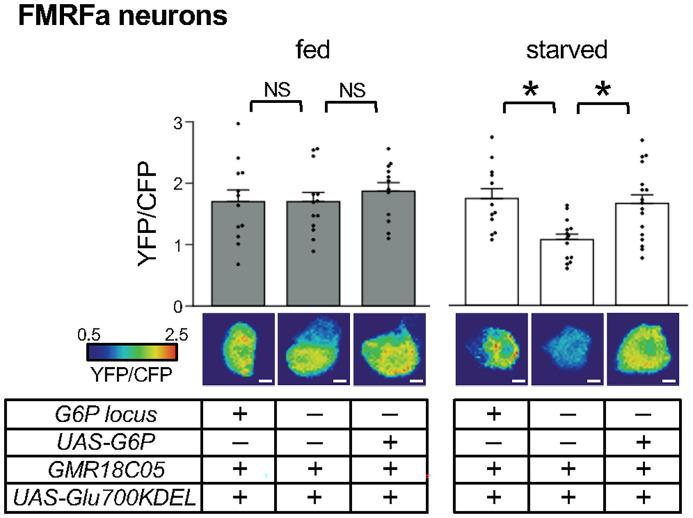
Neuropeptides (NPs) and their cognate receptors are critical effectors of diverse physiological processes and behaviors. We recently reported of a noncanonical function of the () gene in a subset of neurosecretory cells in the central nervous system that governs systemic glucose homeostasis in food-deprived flies. Here, we show that expressing neurons define six groups of NP-secreting cells, four in the brain and two in the thoracic ganglion. Using the glucose homeostasis phenotype as a screening tool, we find that neurons located in the thoracic ganglion expressing FMRFamide NPs ( neurons) are necessary and sufficient to maintain systemic glucose homeostasis in starved flies. We further show that is essential in neurons for attaining a prominent Golgi apparatus and secreting NPs efficiently. Finally, we establish that dependent FMRFa signaling is essential for the build-up of glycogen stores in the jump muscle which expresses the receptor for FMRFamides. We propose a general model in which the main role of is to counteract glycolysis in peptidergic neurons for the purpose of optimizing the intracellular environment best suited for the expansion of the Golgi apparatus, boosting release of NPs and enhancing signaling to respective target tissues expressing cognate receptors.
神经肽(NPs)及其同源受体是多种生理过程和行为的关键效应因子。我们最近报道了 ()基因在中枢神经系统中一组神经分泌细胞中的一种非典型功能,该功能控制饥饿状态下果蝇的全身葡萄糖稳态。在这里,我们表明表达神经元定义了六个 NP 分泌细胞群,四个在大脑中,两个在胸部神经节中。使用葡萄糖稳态表型作为筛选工具,我们发现位于胸部神经节中表达 FMRFamide NPs(神经元)的神经元对于维持饥饿果蝇的全身葡萄糖稳态是必要和充分的。我们进一步表明,在 神经元中,是获得明显的高尔基体和有效分泌 NPs 所必需的。最后,我们确定依赖于 的 FMRFa 信号对于在表达 FMRFamide 受体的跳跃肌肉中储存糖原的积累是必不可少的。我们提出了一个一般模型,其中 的主要作用是在肽能神经元中对抗糖酵解,以优化最适合高尔基体扩张的细胞内环境,促进 NPs 的释放,并增强对表达同源受体的相应靶组织的信号转导。



 Zotero 插件