
2013 - 2023年英格兰成年人长期吸电子烟的趋势:基于人群的研究
Trends in long term vaping among adults in England, 2013-23: population based study.
作者信息
Jackson Sarah E, Tattan-Birch Harry, Shahab Lion, Brown Jamie
机构信息
Department of Behavioural Science and Health, University College London, London, UK
SPECTRUM Consortium, Edinburgh, UK.
出版信息
BMJ. 2024 Jul 17;386:e079016. doi: 10.1136/bmj-2023-079016.
OBJECTIVE
To examine trends in long term (>6 months) vaping among adults in England.
DESIGN
Population based study.
SETTING
England.
PARTICIPANTS
179 725 adults (≥18 years) surveyed between October 2013 and October 2023.
MAIN OUTCOME MEASURES
Time trends in prevalence of long term vaping using logistic regression, overall and by vaping frequency (daily or non-daily), and main type of device used (disposable, refillable, or pod).
RESULTS
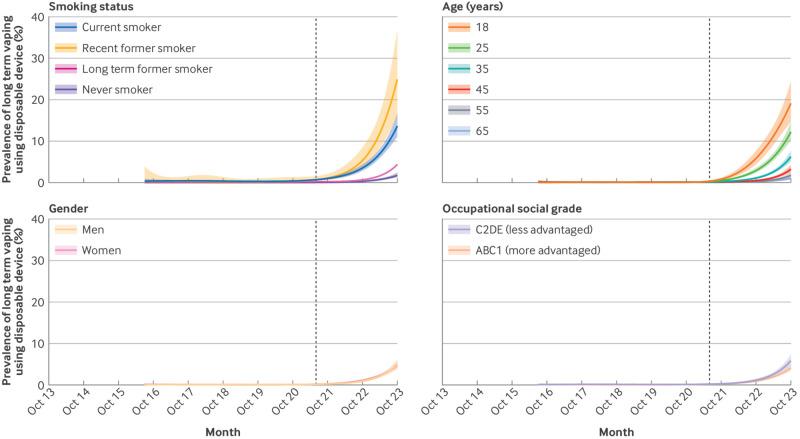
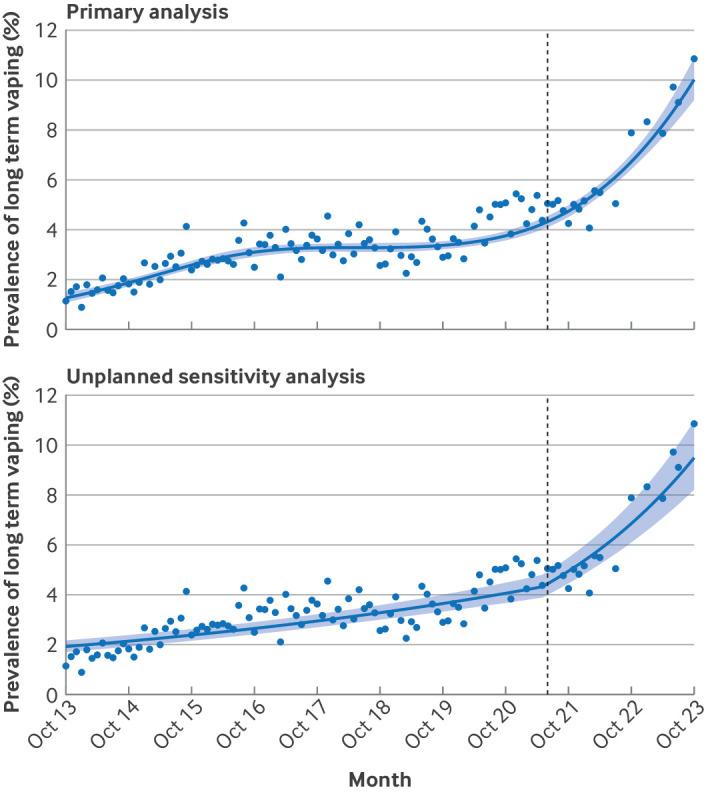
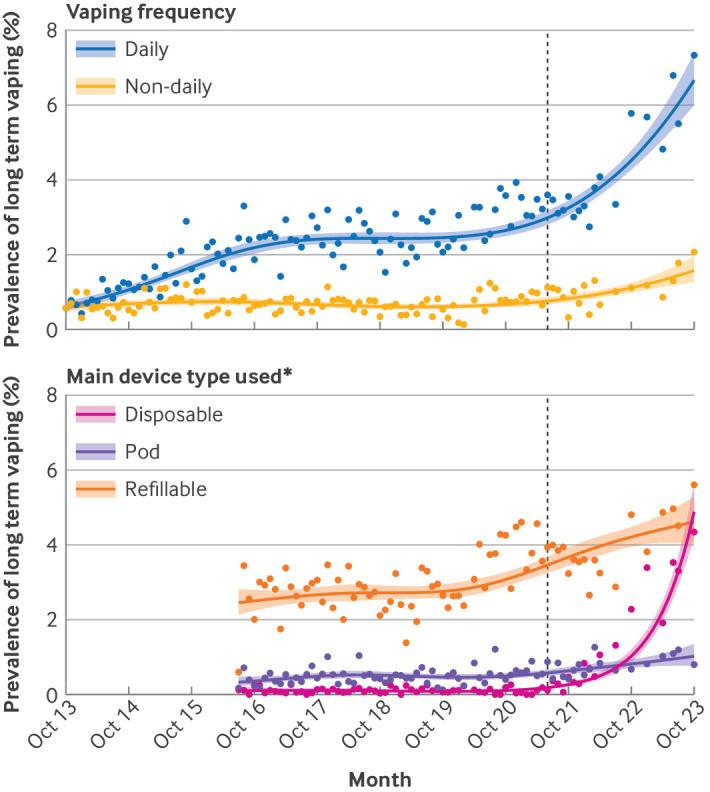
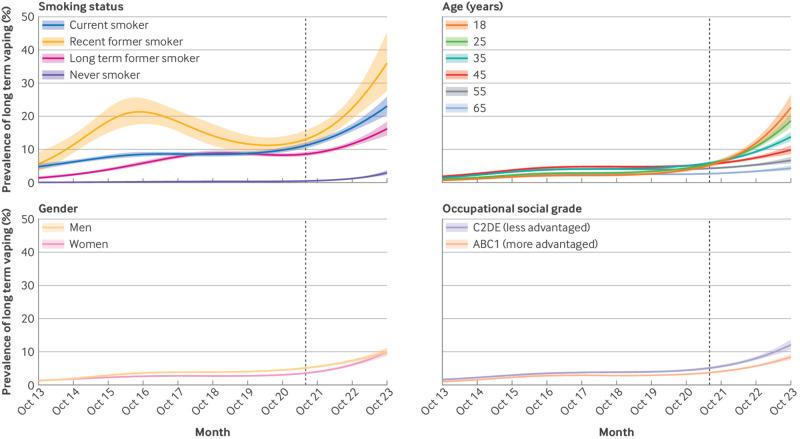
The proportion of adults reporting long term vaping increased non-linearly, from 1.3% (95% confidence interval 1.1% to 1.5%) in October 2013 to 10.0% (9.2% to 10.9%) in October 2023, with a particularly pronounced rise from 2021. This rise included an increase in long term daily vaping, from 0.6% (0.5% to 0.8%) to 6.7% (6.0% to 7.4%). Absolute increases in long term vaping were larger among people with a history of regular smoking (current smokers: 4.8% (4.0% to 5.8%) to 23.1% (20.4% to 25.9%); recent former smokers: 5.7% (3.4% to 9.2%) to 36.1% (27.6% to 45.4%); long term former smokers: 1.4% (1.0% to 1.9%) to 16.2% (14.2% to 18.4%)), but an increase also occurred among people who had never regularly smoked (0.1% (0.0% to 0.2%) to 3.0% (2.3% to 3.8%)). Growth was also more pronounced in young adults (eg, reaching 22.7% (19.2% to 26.5%) of 18 year olds 4.3% (3.6% to 5.2%) of 65 year olds), including among those who had never regularly smoked (reaching 16.1% (11.1% to 22.7%) of 18 year olds 0.3% (0.1% to 0.6%) of 65 year olds). Between October 2013 and March 2021, most long term vapers mainly or exclusively used refillable electronic cigarettes (2.5% to 3.3% of adults) and few (0.1% of adults) used disposable devices. However, prevalence of long term vaping using disposable devices subsequently rose rapidly, and by October 2023 similar proportions of adults mainly or exclusively used disposable and refillable devices (4.9% (4.2% to 5.7%) and 4.6% (4.0% to 5.3%), respectively).
CONCLUSIONS
The prevalence of long term vaping increased substantially among adults in England during 2013-23. Much of this increase occurred from 2021, coinciding with the rise in popularity of disposable e-cigarettes. Half of long term vapers now mainly or exclusively use disposable devices. The growth was concentrated among people with a history of regular smoking, but an increase also occurred among people who never regularly smoked, especially young adults.
目的
研究英格兰成年人中长期(>6个月)吸电子烟的趋势。
设计
基于人群的研究。
地点
英格兰。
参与者
2013年10月至2023年10月期间接受调查的179725名成年人(≥18岁)。
主要观察指标
使用逻辑回归分析长期吸电子烟的患病率随时间的趋势,总体情况以及按吸电子烟频率(每日或非每日)和使用的主要设备类型(一次性、可再填充或烟弹式)进行分析。
结果
报告长期吸电子烟的成年人比例呈非线性增加,从2013年10月的1.3%(95%置信区间1.1%至1.5%)增至2023年10月的10.0%(9.2%至10.9%),2021年起增长尤为显著。这一增长包括长期每日吸电子烟的人数增加,从0.6%(0.5%至0.8%)增至6.7%(6.0%至7.4%)。有规律吸烟史的人群中长期吸电子烟的绝对增幅更大(当前吸烟者:从4.8%(4.0%至5.8%)增至23.1%(20.4%至25.9%);近期戒烟者:从5.7%(3.4%至9.2%)增至36.1%(27.6%至45.4%);长期戒烟者:从1.4%(1.0%至1.9%)增至16.2%(14.2%至18.4%)),但从未有规律吸烟的人群中也出现了增加(从0.1%(0.0%至0.2%)增至3.0%(2.3%至3.8%))。年轻人中的增长也更为明显(例如,18岁人群中达到22.7%(19.2%至26.5%),65岁人群中为4.3%(3.6%至5.2%)),包括从未有规律吸烟的人群(18岁人群中达到16.1%(11.1%至22.7%),65岁人群中为0.3%(0.
 Zotero 插件