
免疫检查点抑制剂心血管毒性的分子指纹图谱。
Molecular fingerprints of cardiovascular toxicities of immune checkpoint inhibitors.
作者信息
Gergely Tamás G, Drobni Zsófia D, Sayour Nabil V, Ferdinandy Péter, Varga Zoltán V
机构信息
Center for Pharmacology and Drug Research & Development, Department of Pharmacology and Pharmacotherapy, Semmelweis University, Budapest, Hungary.
HCEMM-SU Cardiometabolic Immunology Research Group, Budapest, Hungary.
出版信息
Basic Res Cardiol. 2025 Feb;120(1):187-205. doi: 10.1007/s00395-024-01068-8. Epub 2024 Jul 17.
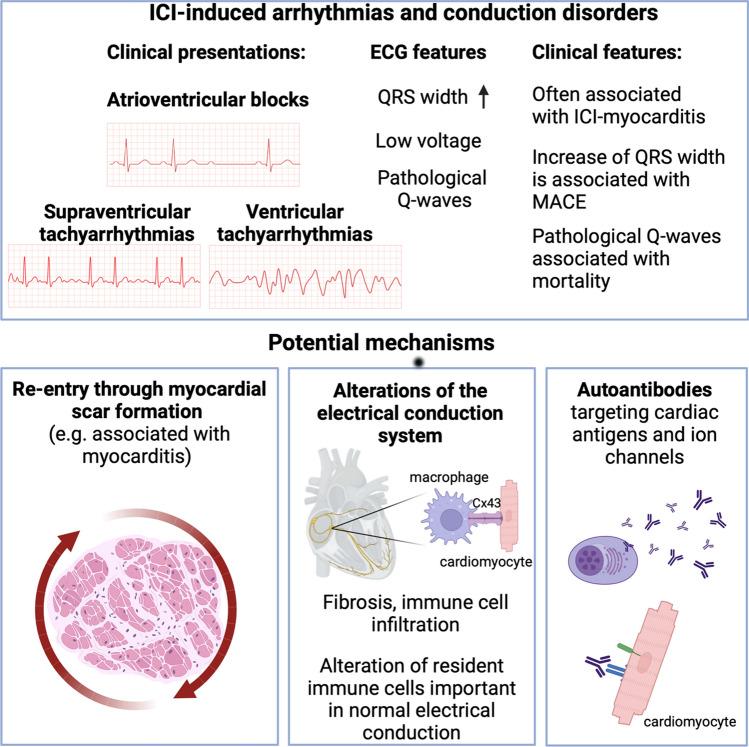
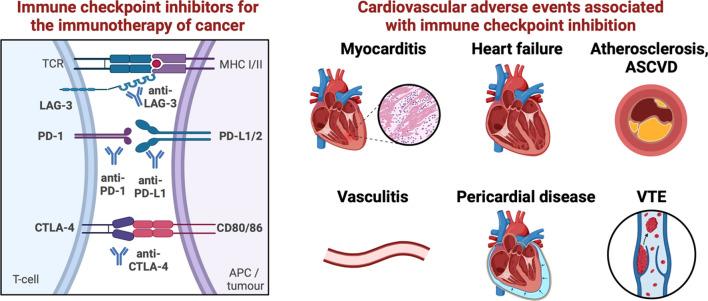
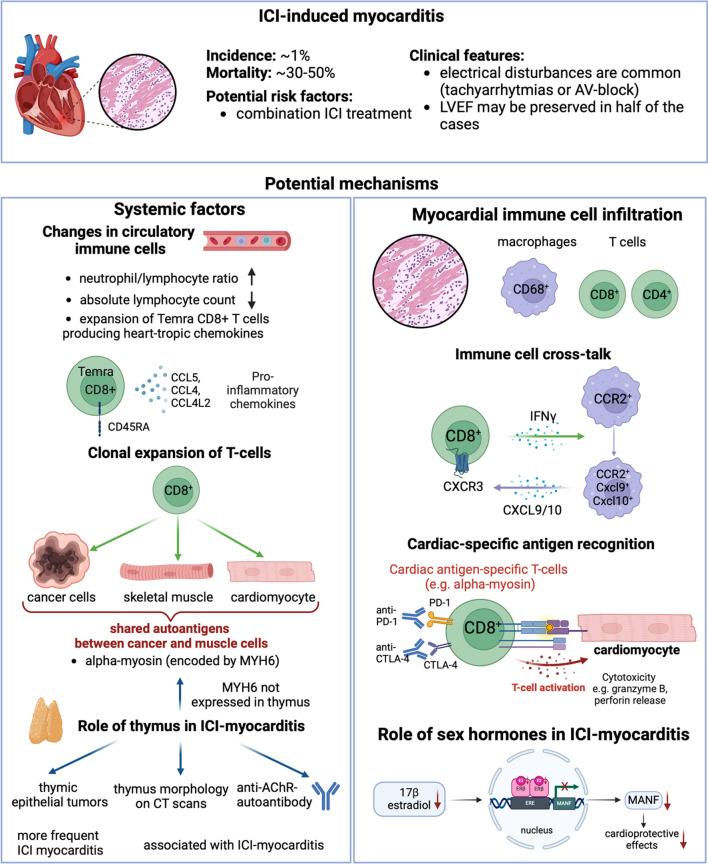
Immune checkpoint inhibitors (ICIs) have revolutionized cancer therapy by unleashing the power of the immune system against malignant cells. However, their use is associated with a spectrum of adverse effects, including cardiovascular complications, which can pose significant clinical challenges. Several mechanisms contribute to cardiovascular toxicity associated with ICIs. First, the dysregulation of immune checkpoints, such as cytotoxic T-lymphocyte-associated protein 4 (CTLA-4) and programmed cell death protein-1 (PD-1) and its ligand (PD-L1), and molecular mimicry with cardiac autoantigens, leads to immune-related adverse events, including myocarditis and vasculitis. These events result from the aberrant activation of T cells against self-antigens within the myocardium or vascular endothelium. Second, the disruption of immune homeostasis by ICIs can lead to autoimmune-mediated inflammation of cardiac tissues, manifesting as cardiac dysfunction and heart failure, arrhythmias, or pericarditis. Furthermore, the upregulation of inflammatory cytokines, particularly tumor necrosis factor-alpha, interferon-γ, interleukin-1β, interleukin-6, and interleukin-17 contributes to cardiac and endothelial dysfunction, plaque destabilization, and thrombosis, exacerbating cardiovascular risk on the long term. Understanding the intricate mechanisms of cardiovascular side effects induced by ICIs is crucial for optimizing patient care and to ensure the safe and effective integration of immunotherapy into a broader range of cancer treatment protocols. The clinical implications of these mechanisms underscore the importance of vigilant monitoring and early detection of cardiovascular toxicity in patients receiving ICIs. Future use of these key pathological mediators as biomarkers may aid in prompt diagnosis of cardiotoxicity and will allow timely interventions.
免疫检查点抑制剂(ICIs)通过释放免疫系统对抗恶性细胞的能力,彻底改变了癌症治疗方式。然而,其使用与一系列不良反应相关,包括心血管并发症,这可能带来重大的临床挑战。有几种机制导致了与ICIs相关的心血管毒性。首先,免疫检查点的失调,如细胞毒性T淋巴细胞相关蛋白4(CTLA - 4)、程序性细胞死亡蛋白1(PD - 1)及其配体(PD - L1),以及与心脏自身抗原的分子模拟,会导致免疫相关不良事件,包括心肌炎和血管炎。这些事件是由T细胞针对心肌或血管内皮内自身抗原的异常激活引起的。其次,ICIs破坏免疫稳态可导致心脏组织的自身免疫介导性炎症,表现为心脏功能障碍、心力衰竭、心律失常或心包炎。此外,炎症细胞因子的上调,特别是肿瘤坏死因子 - α、干扰素 - γ、白细胞介素 - 1β、白细胞介素 - 6和白细胞介素 - 17,会导致心脏和内皮功能障碍、斑块不稳定和血栓形成,长期加剧心血管风险。了解ICIs诱导的心血管副作用的复杂机制对于优化患者护理以及确保免疫疗法安全有效地纳入更广泛的癌症治疗方案至关重要。这些机制的临床意义强调了对接受ICIs治疗的患者进行警惕监测和早期发现心血管毒性的重要性。未来将这些关键病理介质用作生物标志物可能有助于及时诊断心脏毒性,并允许及时进行干预。


 Zotero 插件