
异基因造血干细胞移植后具有粒状形态的 CD11bCD33HLA-DRCD14 髓源抑制细胞的双重作用:在 90 天内从炎症促进物到免疫抑制物。
Dual roles of CD11bCD33HLA-DRCD14 myeloid-derived suppressor cells with a granulocytic morphology following allogeneic hematopoietic stem cell transplantation: from inflammation promoters to immune suppressors within 90 days.
机构信息
Department of Hematology, Affiliated Hospital of Guizhou Medical University, Guiyang, China.
Department of Dermatology, Affiliated Hospital of Guizhou Medical University, Guiyang, China.
出版信息
Front Immunol. 2024 Jul 8;15:1403272. doi: 10.3389/fimmu.2024.1403272. eCollection 2024.
INTRODUCTION
Granulocytic myeloid-derived suppressor cells (G-MDSCs) show fast recovery following allogeneic hematopoietic stem cell transplantation (allo-HSCT) constituting the major part of peripheral blood in the early phase. Although G-MDSCs mediate immune suppression through multiple mechanisms, they may also promote inflammation under specific conditions.
METHODS
G-MDSCs were isolated from 82 patients following allo-HSCT within 90 days after allo-HSCT, and their interactions with autologous CD3 T-cells were examined. T-cell proliferation was assessed by flow cytometry following CFSE staining, while differentiation and interferon-γ secretion were characterized using chemokine receptor profiling and ELISpot assays, respectively. NK cell cytotoxicity was evaluated through co-culture with K562 cells. An aGVHD xenogeneic model in humanized mice was employed to study the in vivo effects of human leukocytes. Furthermore, transcriptional alterations in G-MDSCs were analyzed via RNA sequencing to investigate functional transitions.
RESULTS
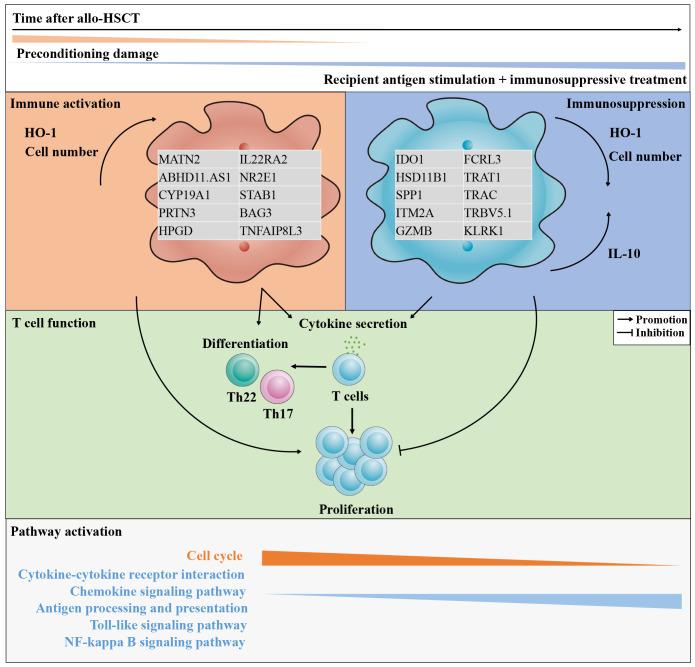
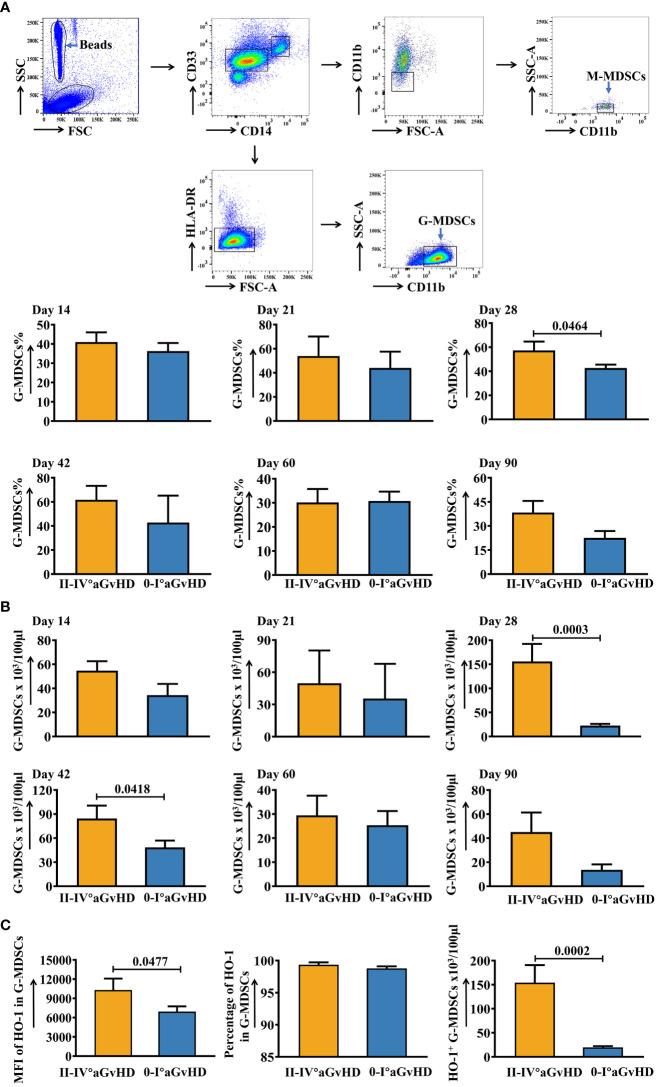
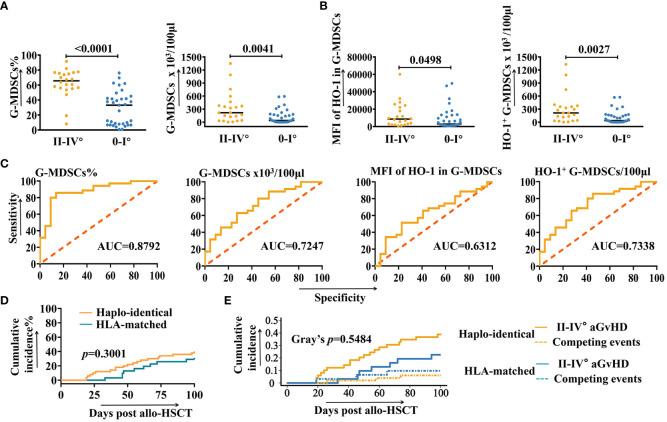
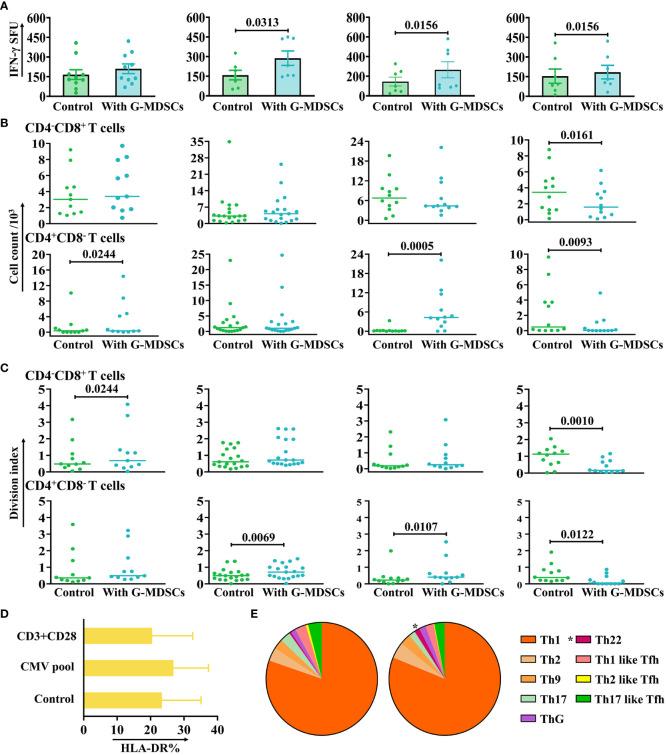
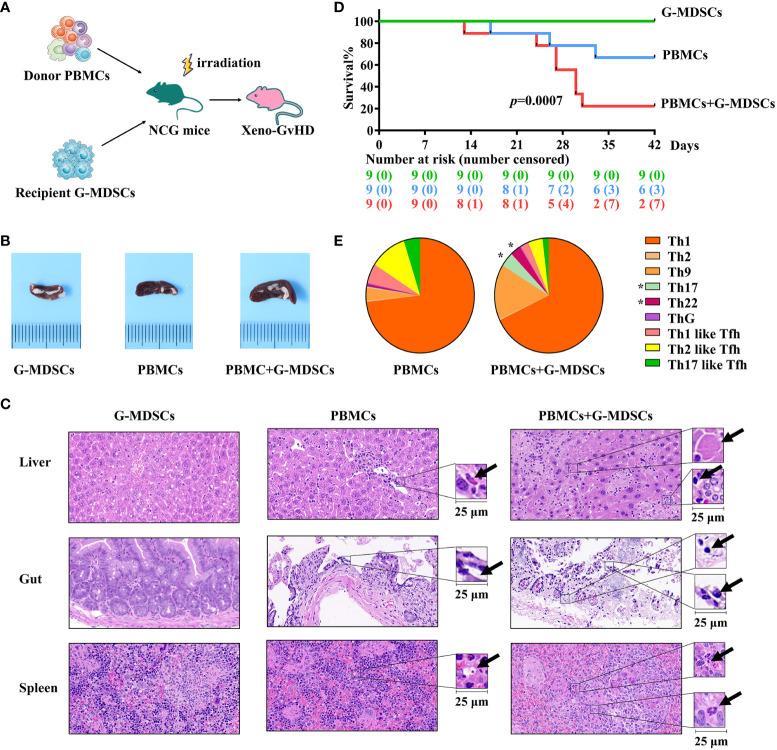
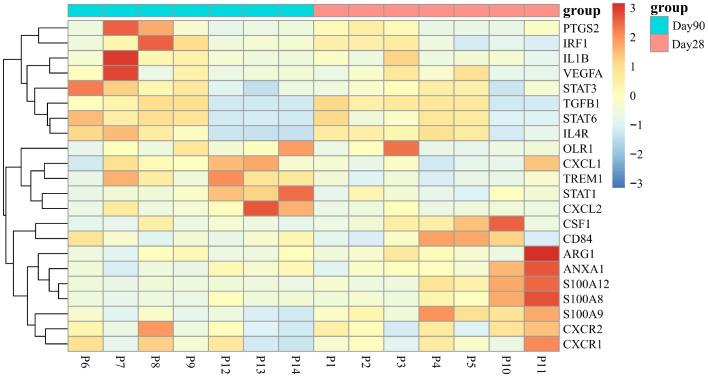
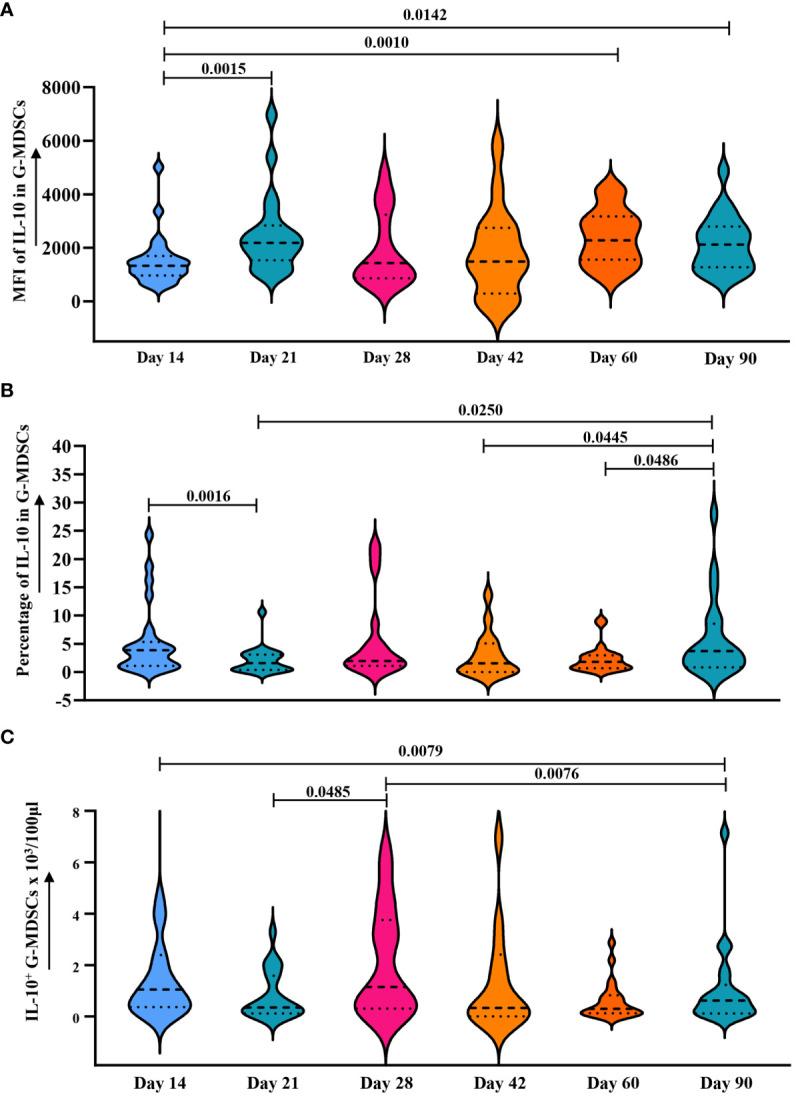
G-MDSCs promoted inflammation in the early-stage, by facilitating cytokine secretion and proliferation of T cells, as well as their differentiation into pro-inflammatory T helper subsets. At day 28, patients with a higher number of G-MDSCs exhibited an increased risk of developing grades II-IV aGvHD. Besides, adoptive transfer of G-MDSCs from patients at day 28 into humanized mice exacerbated aGvHD. However, at day 90, G-MDSCs led to immunosuppression, characterized by upregulated expression of indoleamine 2,3-dioxygenase gene and interleukin-10 secretion, coupled with the inhibition of T cell proliferation. Furthermore, transcriptional analysis of G-MDSCs at day 28 and day 90 revealed that 1445 genes were differentially expressed. These genes were associated with various pathways, revealing the molecular signatures of early post-transplant differentiation in G-MDSCs. In addition, genes linked to the endoplasmic reticulum stress were upregulated in patients without aGvHD. The acquisition of immunosuppressive function by G-MDSCs may depend on the activation of and genes.
CONCLUSION
Our findings revealed the alteration in the immune characteristics of G-MDSCs within the first 90 days post-allo-HSCT. Moreover, the quantity of G-MDSCs at day 28 may serve as a predictive indicator for the development of aGvHD.
简介
异基因造血干细胞移植(allo-HSCT)后,粒细胞髓系来源的抑制细胞(G-MDSCs)快速恢复,在早期构成外周血的主要部分。尽管 G-MDSCs 通过多种机制介导免疫抑制,但在特定条件下,它们也可能促进炎症。
方法
我们在 allo-HSCT 后 90 天内从 82 例 allo-HSCT 患者中分离 G-MDSCs,并检测其与自体 CD3 T 细胞的相互作用。通过 CFSE 染色后流式细胞术评估 T 细胞增殖,通过趋化因子受体谱和 ELISpot 分析分别表征分化和干扰素-γ分泌。通过与 K562 细胞共培养评估 NK 细胞的细胞毒性。用人白细胞在人源化小鼠中建立移植物抗宿主病(GVHD)异种模型,研究人白细胞的体内作用。此外,通过 RNA 测序分析 G-MDSCs 的转录变化,以研究功能转换。
结果
G-MDSCs 通过促进细胞因子分泌和 T 细胞增殖以及分化为促炎辅助性 T 细胞亚群,在早期促进炎症。在第 28 天,具有更多 G-MDSCs 的患者发生 II-IV 级移植物抗宿主病(GVHD)的风险增加。此外,从第 28 天的患者中过继转移 G-MDSCs 到人源化小鼠会加重 GVHD。然而,在第 90 天,G-MDSCs 导致免疫抑制,其特征是吲哚胺 2,3-双加氧酶基因表达上调和白细胞介素-10 分泌增加,同时抑制 T 细胞增殖。此外,第 28 天和第 90 天 G-MDSCs 的转录分析显示 1445 个基因差异表达。这些基因与各种途径相关,揭示了 G-MDSCs 移植后早期分化的分子特征。此外,与内质网应激相关的基因在没有 GVHD 的患者中上调。G-MDSCs 获得免疫抑制功能可能依赖于 基因和 基因的激活。
结论
我们的研究结果揭示了 allo-HSCT 后前 90 天内 G-MDSCs 免疫特征的改变。此外,第 28 天的 G-MDSC 数量可作为 GVHD 发展的预测指标。


 Zotero 插件