
联合代谢组学和转录组学揭示了白芨不同生长阶段的次生代谢产物网络
Combined metabolomics and transcriptomics reveal the secondary metabolite networks in different growth stages of Bletilla striata (Thunb.) Reichb.f.
机构信息
College of Pharmaceutical Sciences, Zhejiang Chinese Medical University, Hangzhou, China.
Academy of Chinese Medical Sciences, Zhejiang Chinese Medical University, Hangzhou, China.
出版信息
PLoS One. 2024 Jul 24;19(7):e0307260. doi: 10.1371/journal.pone.0307260. eCollection 2024.
BACKGROUND
Bletilla striata (Thunb.) Reichb.f. (B. striata) is a traditional Chinese medicinal herb. B. striata polysaccharides (BSP), stilbenes and 2-isobutyl malic acid glucosoxy-benzyl ester compounds are the main active ingredients in B. striata. However, there is limited report on the changes of medicinal components and their biosynthesis regulation mechanisms in the tubers of B. striata at different stages.
METHOD
The tubers of B. striata were collected during the flowering period, fruiting period, and harvest period to determine the total polysaccharide content using the phenol sulfuric acid method. The changes in secondary metabolites in the tubers at these stages were analyzed by ultra performance liquid chromatography tandem mass spectrometry (UPLC-MS), and transcriptomics was conducted for further exploration of their biosynthetic pathways.
RESULT
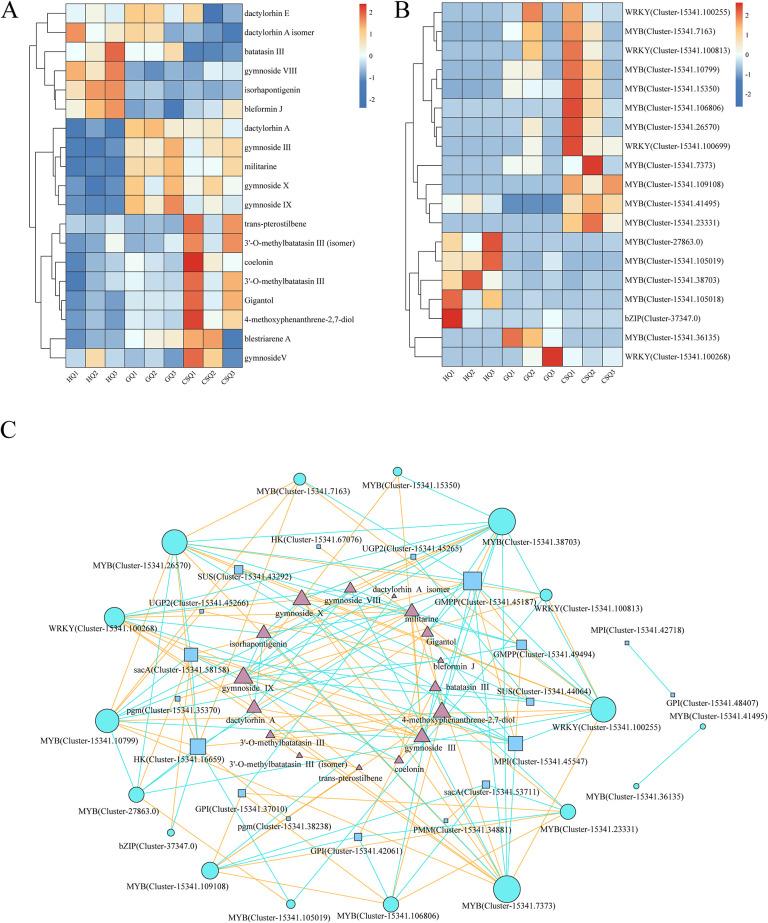
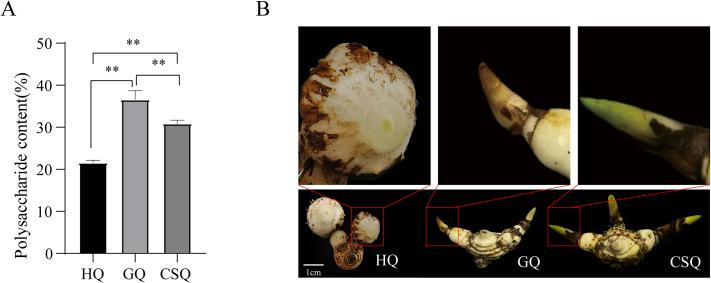
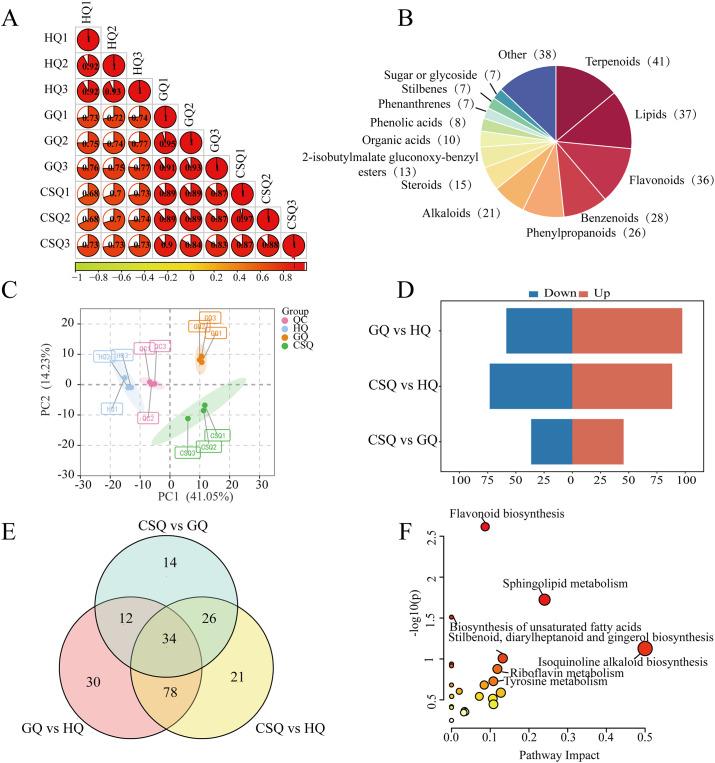
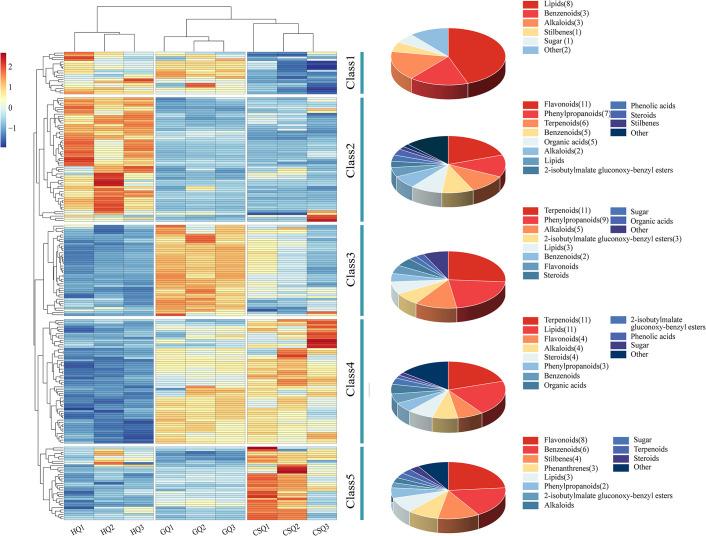
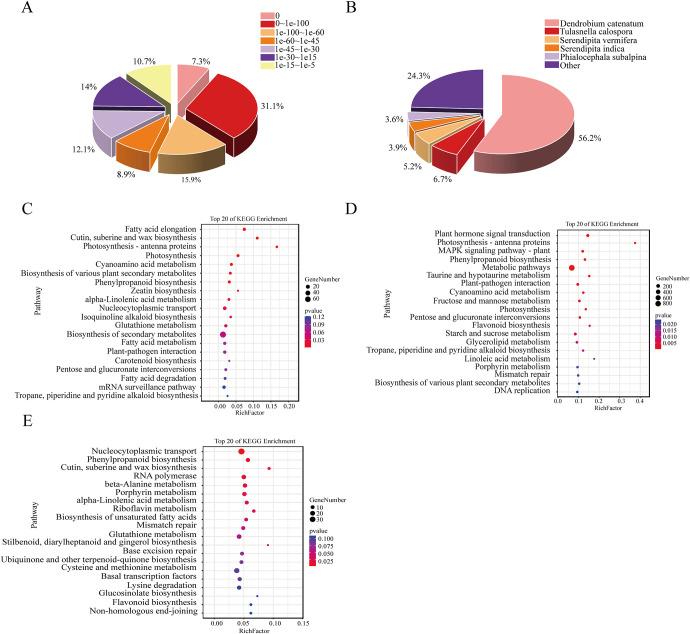
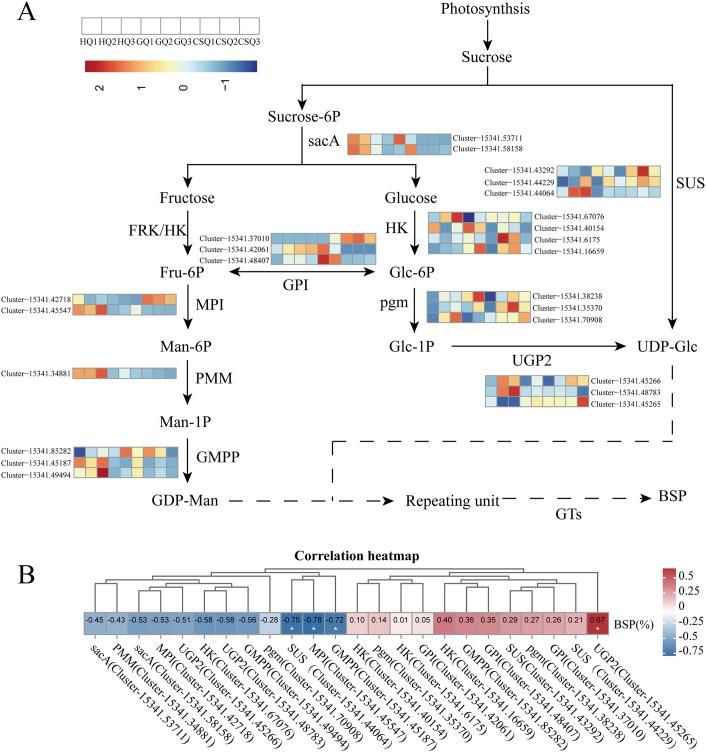
The BSP content gradually increases from the flowering period to the fruiting period as the tubers develop, reaching its peak, but subsequently decreases at harvest time, which may be associated with the germination of B. striata buds in later stage. A total of 294 compounds were identified in this study. Among them, a majority of the compounds, such as 2-isobutyl malate gluconoxy-benzyl ester, exhibited high content during the fruit stage, while stilbenes like coelonin, 3'-O-methylbatatasin III, and blestriarene A accumulated during the harvesting period. The transcriptome data also revealed a substantial number of differentially expressed genes at various stages, providing a partial explanation for the complex changes in metabolites. We observed a correspondence between the expression pattern of GDP-Man biosynthesis-related enzyme genes and cumulative changes in BSP. And identified a positive correlation between 9 transcription factors and genes associated with polysaccharide biosynthesis, while 5 transcription factors were positively correlated with accumulation of 2-isobutyl malate gluconoxy-benzyl ester compounds and 5 transcription factors exhibited negative correlated with stilbene accumulation.
CONCLUSION
It is imperative to determine the appropriate harvesting period based on the specific requirements of different active ingredients and the accumulation patterns of their metabolites. Considering the involvement of multiple transcription factors in the biosynthesis and accumulation of its active ingredients, a comprehensive investigation into the specific regulatory mechanisms that facilitate high-quality cultivation of B. striata is imperative.
背景
白及(Bletilla striata)是一种传统的中药材。白及多糖(BSP)、联苄类化合物和 2-异丁基苹果酸葡萄糖氧基苄酯化合物是白及中的主要活性成分。然而,关于白及在不同生长阶段块茎中药用成分的变化及其生物合成调控机制的报道有限。
方法
在花期、果期和收获期采集白及块茎,采用苯酚-硫酸法测定总多糖含量。利用超高效液相色谱串联质谱(UPLC-MS)分析各阶段块茎中次生代谢产物的变化,并进行转录组学分析,进一步探讨其生物合成途径。
结果
白及块茎从花期到果期发育过程中,BSP 含量逐渐增加,在果期达到峰值,随后在收获期下降,这可能与白及芽在后期萌发有关。本研究共鉴定出 294 种化合物。其中,2-异丁基苹果酸葡萄糖氧基苄酯等大部分化合物在果期含量较高,而 coelonin、3'-O-甲基蝙蝠葛新林碱 III 和 blestriarene A 等联苄类化合物则在收获期积累。转录组数据还揭示了不同阶段大量差异表达基因的存在,为代谢物的复杂变化提供了部分解释。我们观察到 GDP-Man 生物合成相关酶基因的表达模式与 BSP 的累积变化之间存在对应关系。并且发现 9 个转录因子与多糖生物合成相关基因之间存在正相关,而 5 个转录因子与 2-异丁基苹果酸葡萄糖氧基苄酯化合物的积累呈正相关,5 个转录因子与联苄类化合物的积累呈负相关。
结论
基于不同活性成分的具体需求和代谢物的积累模式,确定合适的收获期至关重要。考虑到多个转录因子参与其活性成分的生物合成和积累,需要全面研究具体的调控机制,以促进白及的高质量种植。
 Zotero 插件