
非小细胞肺癌治疗:药物重新利用及基于纳米颗粒的药物递送系统的现状
Nonsmall-cell lung cancer treatment: current status of drug repurposing and nanoparticle-based drug delivery systems.
作者信息
Inci Tuğba Gül, Acar Serap, Turgut-Balik Dilek
机构信息
Department of Bioengineering, Faculty of Chemical and Metallurgical Engineering, Yıldız Technical University, İstanbul, Turkiye.
出版信息
Turk J Biol. 2024 Apr 3;48(2):112-132. doi: 10.55730/1300-0152.2687. eCollection 2024.
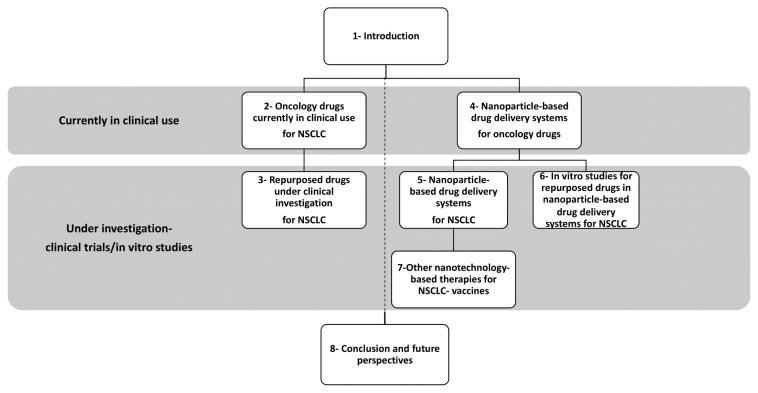
Drug repurposing is the strategy of drug utilization for a treatment option other than the intended indications. This strategy has witnessed increased adoption over the past decades, especially within cancer nanomedicine. Cancer nanomedicine has been facilitated through nanoparticle-based (NP-based) delivery systems which can combat nonsmall-cell lung cancer (NSCLC) via recent advances in nanotechnology and apply its benefits to existing drugs. The repurposing of drugs, coupled with NP-based drug delivery systems, presents a promising avenue for achieving effective therapeutic solutions with accelerated outcomes. This review aims to present an overview of NSCLC treatments, with a specific focus on drug repurposing. It seeks to elucidate the latest advances in clinical studies and the utilization of NP-based drug delivery systems tailored for NSCLC treatment. First, the molecular mechanisms of Food and Drug Administration (FDA)-approved drugs for NSCLC, including ROS1 tyrosine kinase inhibitors (TKI) like repotrectinib, approved in November 2023, are detailed. Further, in vitro studies employing a combination strategy of drug repurposing and NP-based drug delivery systems as a treatment approach against NSCLC are listed. It includes the latest study on nanoparticle-based drug delivery systems loaded with repurposed drugs.
药物重新利用是指将药物用于其预期适应症以外的治疗选择的策略。在过去几十年中,这种策略的应用越来越广泛,尤其是在癌症纳米医学领域。基于纳米颗粒的递送系统推动了癌症纳米医学的发展,该系统可通过纳米技术的最新进展对抗非小细胞肺癌(NSCLC),并将其优势应用于现有药物。药物重新利用与基于纳米颗粒的药物递送系统相结合,为实现具有更快疗效的有效治疗方案提供了一条有前景的途径。本综述旨在概述NSCLC的治疗方法,特别关注药物重新利用。它试图阐明临床研究的最新进展以及为NSCLC治疗量身定制的基于纳米颗粒的药物递送系统的应用。首先,详细介绍了美国食品药品监督管理局(FDA)批准用于NSCLC的药物的分子机制,包括2023年11月批准的ROS1酪氨酸激酶抑制剂(TKI)如瑞波替尼。此外,还列出了采用药物重新利用和基于纳米颗粒的药物递送系统联合策略作为NSCLC治疗方法的体外研究。其中包括对载有重新利用药物的基于纳米颗粒的药物递送系统的最新研究。
 Zotero 插件