
秘鲁参考医院乳腺癌患者的全免疫炎症值与生存情况。
Pan-immune-inflammation value and survival in patients with breast cancer from a Peruvian reference hospital.
机构信息
Instituto de Investigaciones en Ciencias Biomédicas, Universidad Ricardo Palma, Lima, Perú.
出版信息
Sci Rep. 2024 Jul 25;14(1):17132. doi: 10.1038/s41598-024-68304-y.
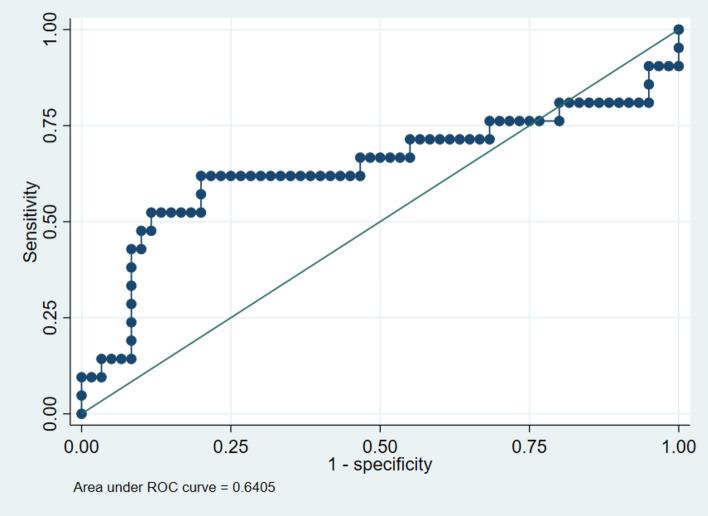
The pan-immune-inflammation value (PIV), calculated as (neutrophil × platelet × monocyte)/lymphocyte count, may be useful for estimating survival in breast cancer patients. To determine the prognostic value of PIV for overall survival in breast cancer patients in Lima, Peru. A retrospective cohort study was conducted. 97 breast cancer patients diagnosed between January 2010 and December 2016 had their medical records analyzed. The primary dependent variable was overall survival, and the key independent variable was the PIV, divided into high (≥ 310) and low (< 310) groups. Patient data included demographics, treatment protocols and other clinical variables. Statistical analysis involved Kaplan-Meier survival curves and Cox proportional hazards modeling. Patients with a PIV ≥ 310 had significantly lower 5-year survival functions (p = 0.004). Similar significant differences in survival were observed for clinical stage III-IV (p = 0.015), hemoglobin levels < 12 mg/Dl (p = 0.007), histological grade (p = 0.019), and nuclear grade (p < 0.001); however, molecular classification did not show a significant survival difference (p = 0.371). The adjusted Hazard Ratios showed that PIV ≥ 310 was significantly associated with poor outcome (5.08, IC95%: 1.52-16.92). While clinical stage and hemoglobin levels were associated with survival in the unadjusted model. These factors did not maintain significance after adjustment. PIV is an independent predictor of reduced survival in Peruvian breast cancer patients.
中性粒细胞×血小板×单核细胞/淋巴细胞计数(PIV)可能有助于估计乳腺癌患者的生存情况。为了确定 PIV 对秘鲁利马乳腺癌患者总生存的预后价值,进行了一项回顾性队列研究。分析了 2010 年 1 月至 2016 年 12 月期间诊断的 97 例乳腺癌患者的病历。主要的因变量是总生存,关键的独立变量是 PIV,分为高(≥310)和低(<310)组。患者数据包括人口统计学、治疗方案和其他临床变量。统计分析涉及 Kaplan-Meier 生存曲线和 Cox 比例风险模型。PIV≥310 的患者 5 年生存率明显较低(p=0.004)。对于临床分期 III-IV 期(p=0.015)、血红蛋白水平<12mg/dl(p=0.007)、组织学分级(p=0.019)和核分级(p<0.001),也观察到类似的生存差异,但分子分类在生存方面没有显示出显著差异(p=0.371)。调整后的危险比表明,PIV≥310 与不良预后显著相关(5.08,95%CI:1.52-16.92)。虽然临床分期和血红蛋白水平在未调整模型中与生存相关,但在调整后这些因素并不具有显著性。PIV 是秘鲁乳腺癌患者生存的独立预测因素。

 Zotero 插件