
基于微小RNA的方法在胶质母细胞瘤中的潜力:当前进展与未来展望的最新情况
The potential of miRNA-based approaches in glioblastoma: An update in current advances and future perspectives.
作者信息
Ordóñez-Rubiano Edgar G, Rincón-Arias Nicolás, Espinosa Sebastian, Shelton William J, Salazar Andres F, Cómbita Alba, Baldoncini Matías, Luzzi Sabino, Payán-Gómez César, Gómez-Amarillo Diego F, Hakim Fernando, Patiño-Gómez Javier G, Parra-Medina Rafael
机构信息
School of Medicine, Universidad Nacional de Colombia, Bogotá, Colombia.
Department of Neurosurgery, Fundación Universitaria de Ciencias de La Salud, Hospital de San José - Sociedad de Cirugía de Bogotá, Bogotá D.C., Colombia.
出版信息
Curr Res Pharmacol Drug Discov. 2024 Jun 29;7:100193. doi: 10.1016/j.crphar.2024.100193. eCollection 2024.
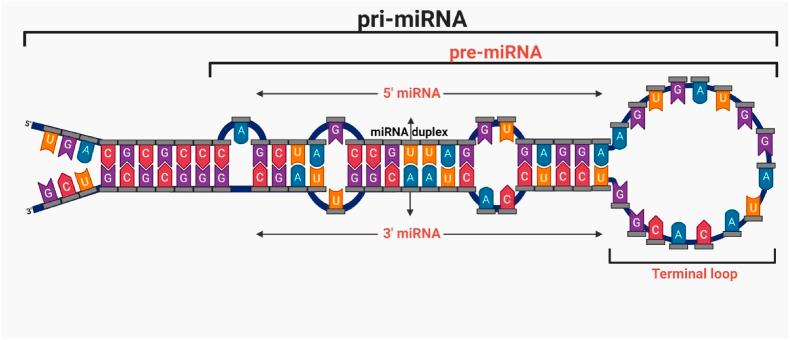
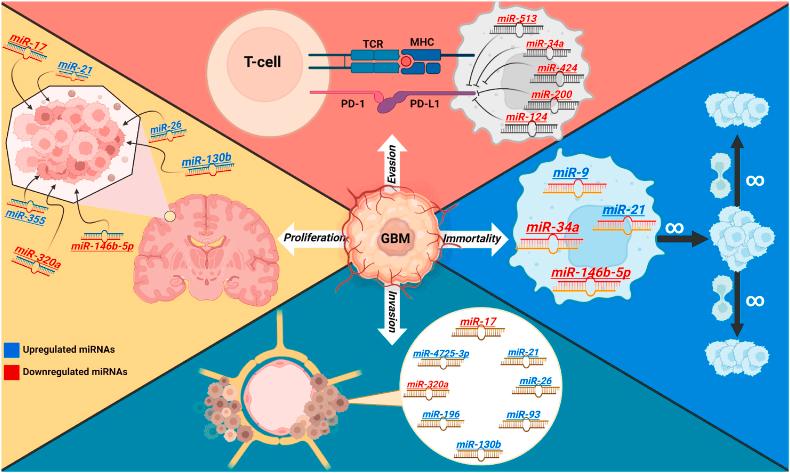
Glioblastoma (GBM) is the most common malignant central nervous system tumor. The emerging field of epigenetics stands out as particularly promising. Notably, the discovery of micro RNAs (miRNAs) has paved the way for advancements in diagnosing, treating, and prognosticating patients with brain tumors. We aim to provide an overview of the emergence of miRNAs in GBM and their potential role in the multifaceted management of this disease. We discuss the current state of the art regarding miRNAs and GBM. We performed a narrative review using the MEDLINE/PUBMED database to retrieve peer-reviewed articles related to the use of miRNA approaches for the treatment of GBMs. MiRNAs are intrinsic non-coding RNA molecules that regulate gene expression mainly through post-transcriptional mechanisms. The deregulation of some of these molecules is related to the pathogenesis of GBM. The inclusion of molecular characterization for the diagnosis of brain tumors and the advent of less-invasive diagnostic methods such as liquid biopsies, highlights the potential of these molecules as biomarkers for guiding the management of brain tumors such as GBM. Importantly, there is a need for more studies to better examine the application of these novel molecules. The constantly changing characterization and approach to the diagnosis and management of brain tumors broaden the possibilities for the molecular inclusion of novel epigenetic molecules, such as miRNAs, for a better understanding of this disease.
胶质母细胞瘤(GBM)是最常见的中枢神经系统恶性肿瘤。新兴的表观遗传学领域显得特别有前景。值得注意的是,微小RNA(miRNA)的发现为脑肿瘤患者的诊断、治疗和预后评估的进展铺平了道路。我们旨在概述miRNA在GBM中的出现及其在这种疾病的多方面管理中的潜在作用。我们讨论了关于miRNA和GBM的当前技术水平。我们使用MEDLINE/PUBMED数据库进行了叙述性综述,以检索与使用miRNA方法治疗GBM相关的同行评审文章。miRNA是内在的非编码RNA分子,主要通过转录后机制调节基因表达。其中一些分子的失调与GBM的发病机制有关。脑肿瘤诊断中分子特征的纳入以及液体活检等侵入性较小的诊断方法的出现,凸显了这些分子作为指导GBM等脑肿瘤管理的生物标志物的潜力。重要的是,需要更多研究来更好地检验这些新型分子的应用。脑肿瘤诊断和管理的特征及方法不断变化,拓宽了将miRNA等新型表观遗传分子纳入分子研究以更好理解这种疾病的可能性。



 Zotero 插件