
土壤中可降解和不可降解微塑料对植物镉毒性及生物标志物的影响存在差异。
Plant Cadmium Toxicity and Biomarkers Are Differentially Modulated by Degradable and Nondegradable Microplastics in Soil.
作者信息
Liu Jun, Yu Zihan, Song Ningning, Zong Haiying, Wang Fangli, Guo Rui, Li Shaojing
机构信息
School of Resources and Environment, Qingdao Agricultural University, Qingdao 266109, China.
Technical Centre for Soil, Agriculture and Rural Ecology and Environment, Ministry of Ecology and Environment, Beijing 100012, China.
出版信息
Toxics. 2024 Jun 29;12(7):473. doi: 10.3390/toxics12070473.
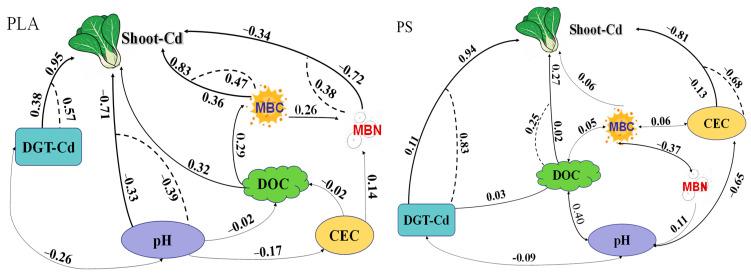
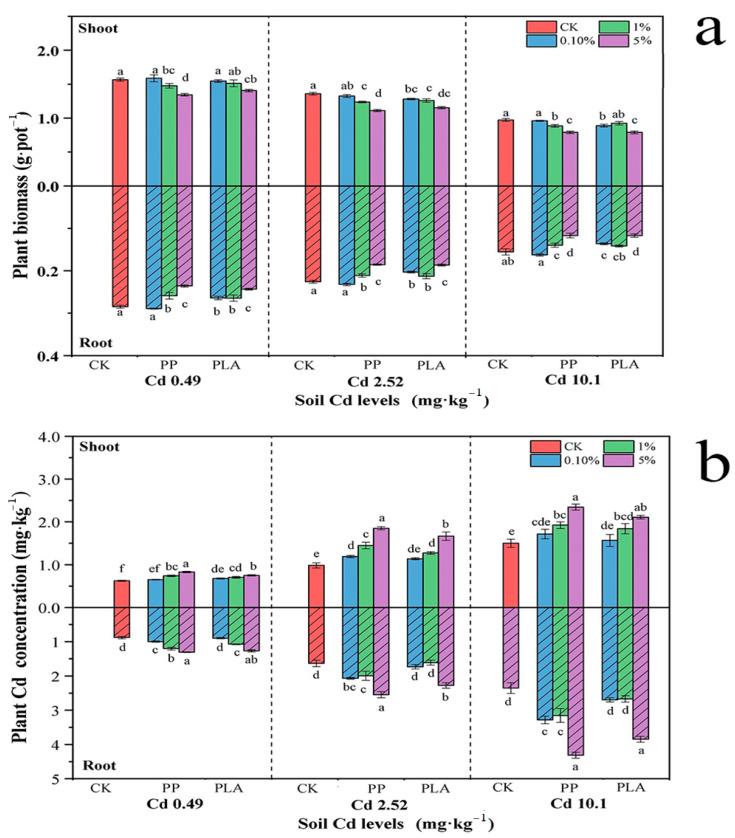
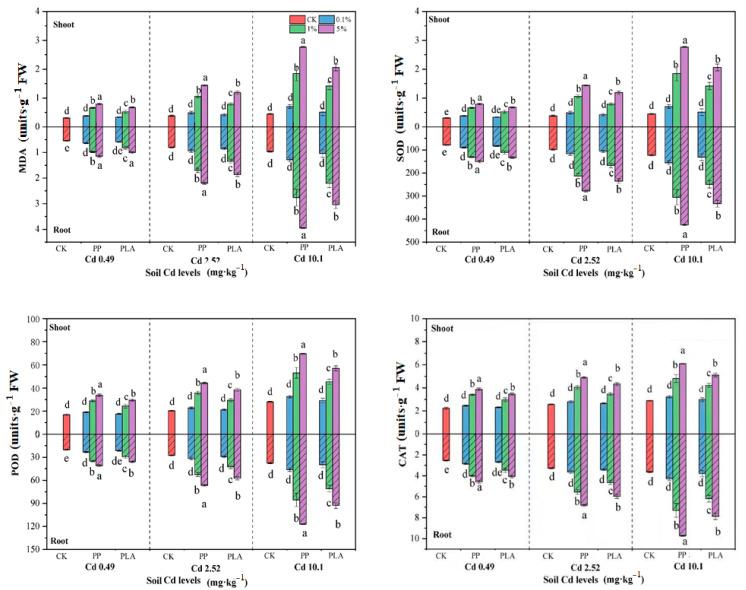
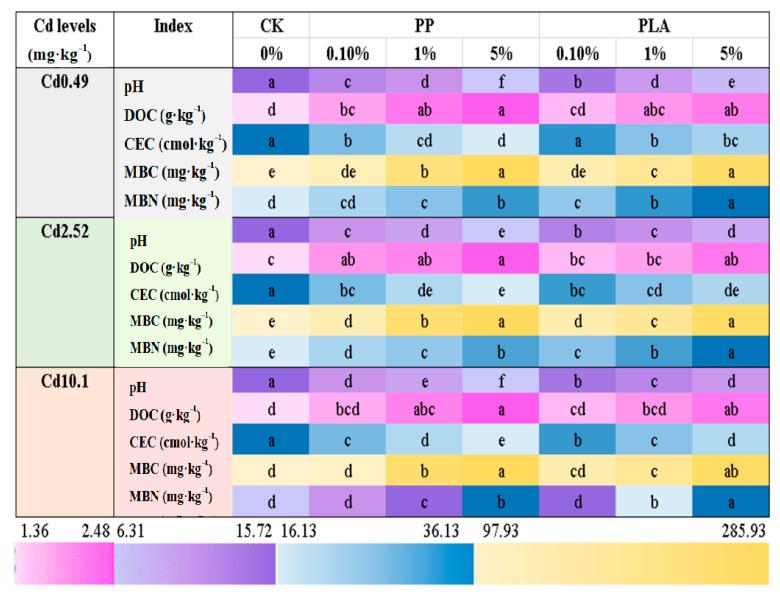
The impact of microplastics (MPs) as emerging pollutants on plant heavy metal toxicity has been extensively reported in vegetable-soil systems over recent years. However, little attention has been given to cultivar variations between degradable and non-degradable MPs. This study investigated the effects of degradable polylactic acid (PLA) and nondegradable polypropylene (PP) MPs on plant growth and biomarker (malonaldehyde (MDA) and antioxidant enzymes) performance in Cd-contaminated arable soil. The results show that both types of MPs significantly impacted plant biomass and biomarker contents across all three Cd levels. The degree of impact was significantly sensitive to both the type and dose of MPs, as they reduced the soil pH and cation exchange capacity (CEC) while increasing soil dissolved organic carbon (DOC), microbial biomass carbon, and nitrogen. PP exhibited greater root growth inhibition and phytotoxicity at higher doses of 1% and 5% compared to PLA. Specifically, the highest MDA contents were 1.44 and 2.20 mmol mg protein for shoots and roots, respectively, in the 5% PLA treatment under a 10.1 mg kg Cd level, which were 1.22 and 1.18 times higher than those in corresponding treatments of 5% PP. Overall, PLA had less significant effects on plant phytotoxicity, Cd availability, and soil properties compared to PP. Regression pathway analysis indicated that MPs increased shoot Cd uptake by altering both soil physical-chemical and microbial characteristics. Among the soil variables, pH, CEC, and Cd bioavailability were found to play vital roles. Yet, no single variable acts alone in the mechanism for plant Cd uptake. PLAs are suggested to replace conventional non-biodegradable plastics to control environmental MP pollution, particularly in agricultural systems with higher Cd contamination. However, the long-term effects of the by-products generated during the biodegradation process require further investigation.
近年来,微塑料(MPs)作为新兴污染物对植物重金属毒性的影响在蔬菜 - 土壤系统中已有广泛报道。然而,可降解和不可降解微塑料之间的品种差异却很少受到关注。本研究调查了可降解聚乳酸(PLA)和不可降解聚丙烯(PP)微塑料对镉污染耕地土壤中植物生长和生物标志物(丙二醛(MDA)和抗氧化酶)性能的影响。结果表明,在所有三种镉水平下,这两种类型的微塑料均对植物生物量和生物标志物含量产生了显著影响。影响程度对微塑料的类型和剂量均极为敏感,因为它们降低了土壤pH值和阳离子交换容量(CEC),同时增加了土壤溶解有机碳(DOC)、微生物生物量碳和氮。与PLA相比,在1%和5%的较高剂量下,PP对根系生长的抑制作用和植物毒性更大。具体而言,在镉含量为10.1 mg kg的水平下,5% PLA处理中地上部和根部的最高MDA含量分别为1.44和2.20 mmol mg蛋白质,分别比5% PP相应处理中的含量高1.22倍和1.18倍。总体而言,与PP相比,PLA对植物毒性、镉有效性和土壤性质的影响较小。回归路径分析表明,微塑料通过改变土壤物理化学和微生物特征增加了地上部对镉的吸收。在土壤变量中,pH值、CEC和镉生物有效性起着至关重要的作用。然而,在植物吸收镉的机制中,没有单一变量单独起作用。建议使用PLA替代传统的不可生物降解塑料,以控制环境中的微塑料污染,特别是在镉污染较高的农业系统中。然而,生物降解过程中产生的副产物的长期影响需要进一步研究。

 Zotero 插件