
腰椎间盘突出症和腰椎管狭窄症的韩国医学服务利用趋势:2010 年至 2019 年数据的 10 年分析。
Trends of Korean medicine service utilization for lumbar disc herniation and spinal stenosis: A 10-year analysis of the 2010 to 2019 data.
机构信息
Department of Acupuncture & Moxibustion, Jaseng Hospital of Korean Medicine, Gangnam-gu, Seoul, Republic of Korea.
Department of Acupuncture & Moxibustion, Dongguk University Bundang Oriental Hospital, Seongnam-si, Gyeonggi-do, Republic of Korea.
出版信息
Medicine (Baltimore). 2024 Jul 26;103(30):e38989. doi: 10.1097/MD.0000000000038989.
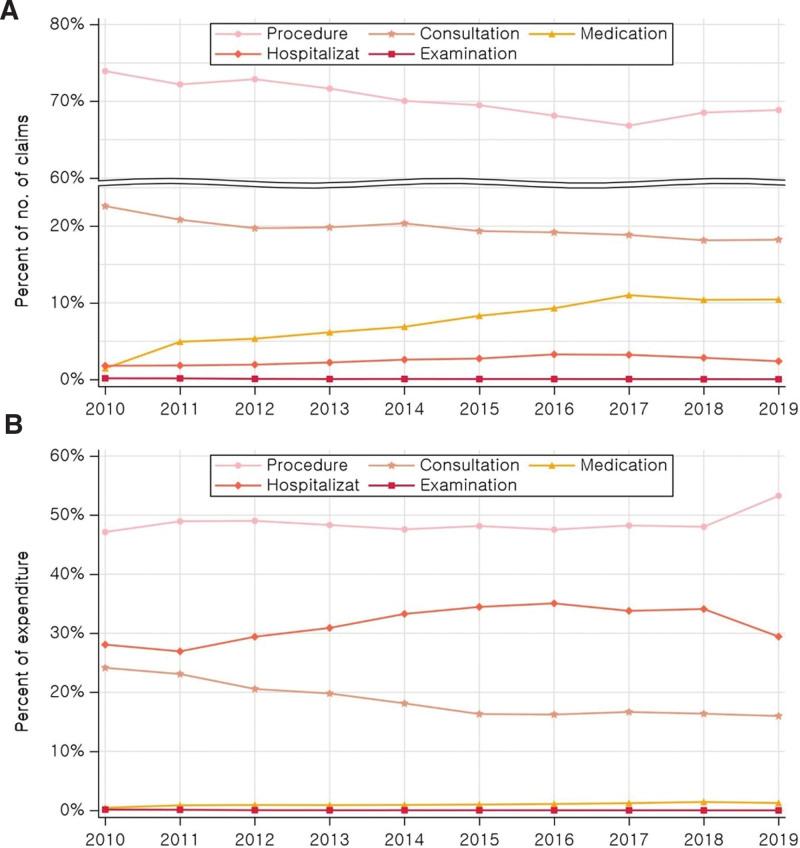
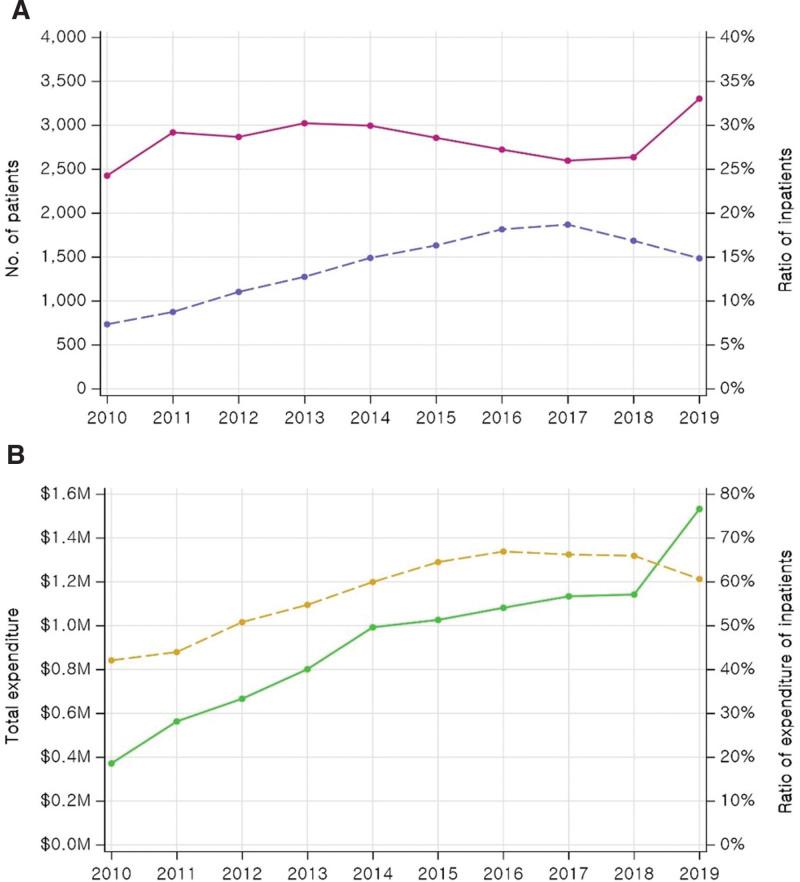
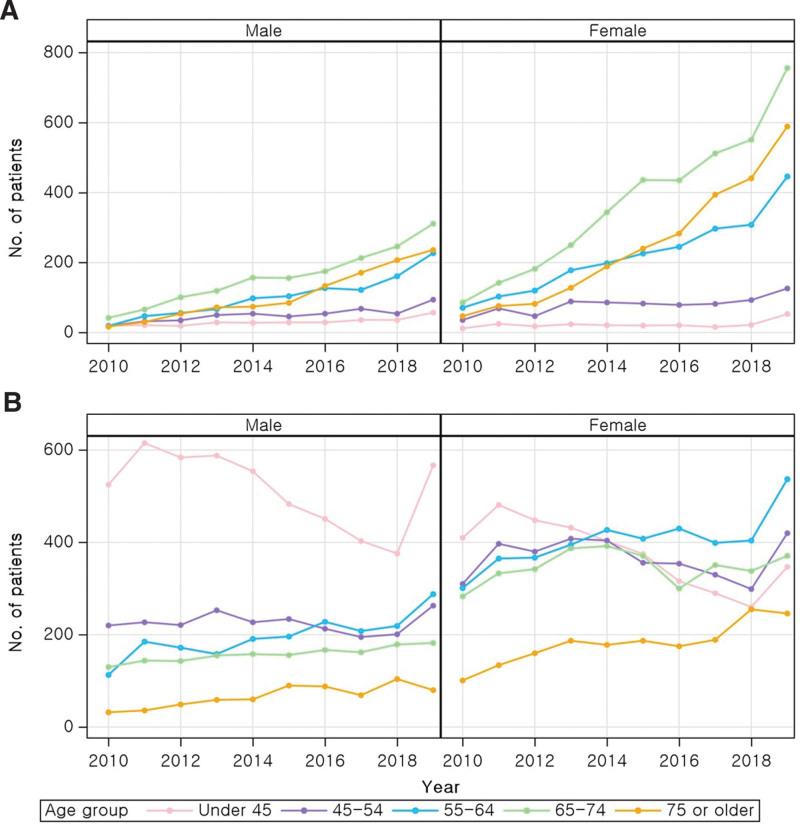
This retrospective, cross-sectional, and descriptive study aimed to analyze the trend of utilizing traditional Korean medicine services in patients with lumbar disc herniation (LDH) and/or lumbar spinal stenosis (LSS). In this study, based on the national patient sample data provided by Health Insurance Review and Assessment Service (HIRA), the trend of Korean medicine service utilization was investigated, including the following information: demographic characteristics of the patients, the total expenditure, number of claim statements per category, medical care expenditure per category, and routes of visiting traditional Korean medicine institutions. The study population comprised patients who visited Korean medicine institutions at least once from January 2010 to December 2019, with LSS and LDH as the primary diagnosis. LDH patients who used traditional Korean medicine services for treatment increased by about 1.36 times. LDH and LSS patients under 45 years of age were more likely to be males, but women accounted for a higher percentage among those over 45 years of age. Overall, women accounted for a slightly higher percentage than their counterparts for both diseases. From details of treatments received that were extracted from the claims data, acupuncture treatment accounted for the highest percentage for both disorders. Moreover, 50.7% of the patients who visited Korean medicine institutions to treat the two diseases also visited conventional Western medicine institutions. These patients, who were diagnosed with their condition at a Korean medicine institution, visited a conventional institution and then returned; the conventional institutions were primarily used for examination (40.5%). Increased utilization of traditional Korean medicine services was confirmed among patients with LDH and/or LSS; in particular, a sharp increase was noted among patients with LSS. The results of this study will be useful as basic research data for clinicians, researchers, and policy makers.
本回顾性、横断面和描述性研究旨在分析腰椎间盘突出症(LDH)和/或腰椎管狭窄症(LSS)患者接受传统韩国医学服务的趋势。在这项研究中,基于健康保险审查和评估服务(HIRA)提供的国家患者抽样数据,调查了韩国医学服务利用的趋势,包括以下信息:患者的人口统计学特征、总支出、每类别的申报次数、每类别的医疗支出以及传统韩国医学机构的就诊途径。研究人群包括 2010 年 1 月至 2019 年 12 月期间至少一次就诊于韩国医学机构的患者,主要诊断为 LSS 和 LDH。接受传统韩国医学服务治疗的 LDH 患者增加了约 1.36 倍。45 岁以下的 LDH 和 LSS 患者更有可能是男性,但 45 岁以上的患者中女性比例更高。总体而言,两种疾病的女性比例略高于男性。从索赔数据中提取的治疗细节来看,针灸治疗占两种疾病的最高比例。此外,50.7%的在韩国医学机构接受两种疾病治疗的患者还访问了传统西医机构。这些在韩国医学机构被诊断出患有该疾病的患者访问了传统机构,然后又返回;传统机构主要用于检查(40.5%)。LDH 和/或 LSS 患者接受传统韩国医学服务的利用率增加;特别是 LSS 患者的利用率急剧增加。本研究的结果将作为临床医生、研究人员和政策制定者的基础研究数据非常有用。


 Zotero 插件