
一种基于深度学习技术和元启发式算法的新型混合机器学习系统,用于各种医学数据类型分类。
A Novel Hybrid Machine Learning-Based System Using Deep Learning Techniques and Meta-Heuristic Algorithms for Various Medical Datatypes Classification.
作者信息
Kadhim Yezi Ali, Guzel Mehmet Serdar, Mishra Alok
机构信息
College of Engineering, University of Baghdad, Jadriyah, Baghdad 10071, Iraq.
Department of Modeling and Design of Engineering Systems (MODES), Atilim University, Ankara 06830, Turkey.
出版信息
Diagnostics (Basel). 2024 Jul 9;14(14):1469. doi: 10.3390/diagnostics14141469.
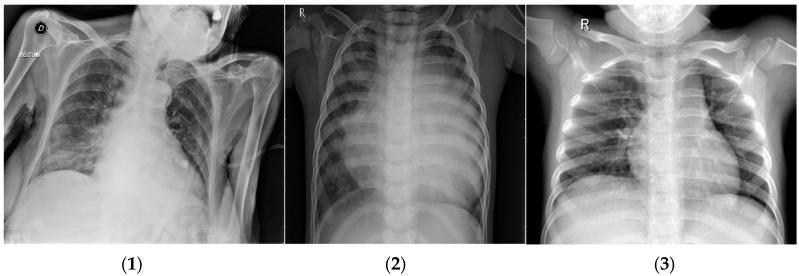
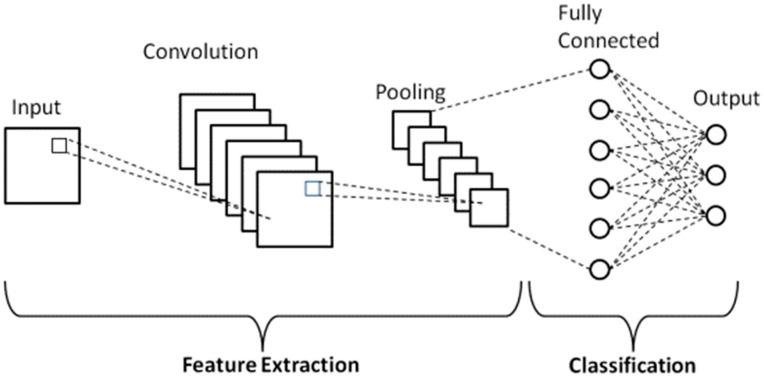
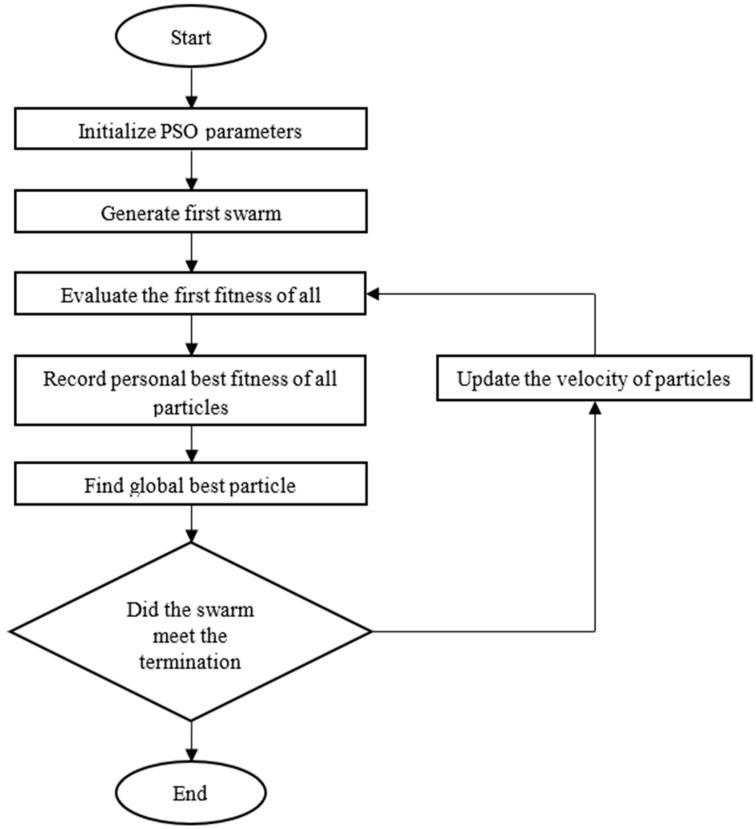
Medicine is one of the fields where the advancement of computer science is making significant progress. Some diseases require an immediate diagnosis in order to improve patient outcomes. The usage of computers in medicine improves precision and accelerates data processing and diagnosis. In order to categorize biological images, hybrid machine learning, a combination of various deep learning approaches, was utilized, and a meta-heuristic algorithm was provided in this research. In addition, two different medical datasets were introduced, one covering the magnetic resonance imaging (MRI) of brain tumors and the other dealing with chest X-rays (CXRs) of COVID-19. These datasets were introduced to the combination network that contained deep learning techniques, which were based on a convolutional neural network (CNN) or autoencoder, to extract features and combine them with the next step of the meta-heuristic algorithm in order to select optimal features using the particle swarm optimization (PSO) algorithm. This combination sought to reduce the dimensionality of the datasets while maintaining the original performance of the data. This is considered an innovative method and ensures highly accurate classification results across various medical datasets. Several classifiers were employed to predict the diseases. The COVID-19 dataset found that the highest accuracy was 99.76% using the combination of CNN-PSO-SVM. In comparison, the brain tumor dataset obtained 99.51% accuracy, the highest accuracy derived using the combination method of autoencoder-PSO-KNN.
医学是计算机科学取得重大进展的领域之一。一些疾病需要立即诊断以改善患者预后。计算机在医学中的应用提高了精度并加速了数据处理和诊断。为了对生物图像进行分类,本研究采用了混合机器学习,即各种深度学习方法的组合,并提供了一种元启发式算法。此外,还引入了两个不同的医学数据集,一个涵盖脑肿瘤的磁共振成像(MRI),另一个涉及新冠肺炎的胸部X光(CXR)。这些数据集被引入到包含深度学习技术的组合网络中,这些技术基于卷积神经网络(CNN)或自动编码器,以提取特征并将其与元启发式算法的下一步相结合,以便使用粒子群优化(PSO)算法选择最优特征。这种组合旨在降低数据集的维度,同时保持数据的原始性能。这被认为是一种创新方法,并确保在各种医学数据集中获得高度准确的分类结果。使用了几种分类器来预测疾病。在新冠肺炎数据集中,使用CNN-PSO-SVM组合的最高准确率为99.76%。相比之下,脑肿瘤数据集的准确率为99.51%,这是使用自动编码器-PSO-KNN组合方法得出的最高准确率。






 Zotero 插件