
多发性硬化症中靶标必需微量元素的变化:系统评价与荟萃分析
Changes of Target Essential Trace Elements in Multiple Sclerosis: A Systematic Review and Meta-Analysis.
作者信息
Stojsavljević Aleksandar, Jagodić Jovana, Perović Tatjana, Manojlović Dragan, Pavlović Slađan
机构信息
Innovation Center, Faculty of Chemistry, University of Belgrade, Studentski Trg 12-16, 11000 Belgrade, Serbia.
Faculty of Chemistry, University of Belgrade, 11000 Belgrade, Serbia.
出版信息
Biomedicines. 2024 Jul 17;12(7):1589. doi: 10.3390/biomedicines12071589.
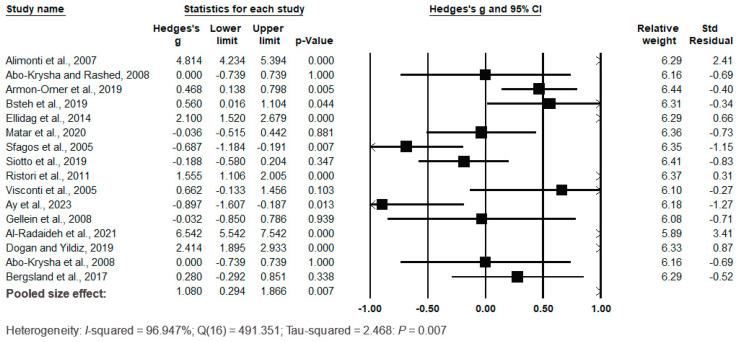
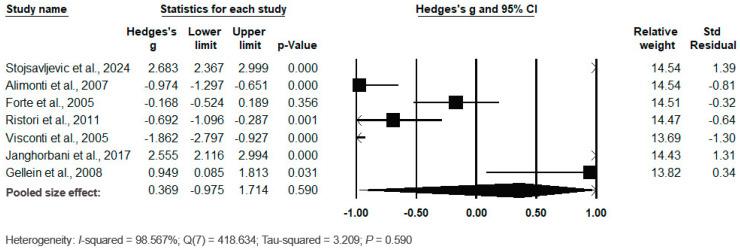
(1) Background: Multiple sclerosis (MS) is a chronic, complex, and demyelinating disease closely associated with altered levels of trace elements. Although the first studies into the role of trace elements in MS were published in the 1970s, for five decades it has remained unknown whether trace elements can be part of this heterogeneous neurological disease. (2) Materials and methods: To drive toward at a potential solution, we conducted a systematic review and meta-analysis to elucidate whether there were differences in circulating levels of neurologically important essential trace elements (Zn, Fe, Co, Cu, Mn, and Se) between MS cases and controls. (3) Results: This study revealed significantly lower serum/plasma Zn and Fe levels and higher Cu levels in MS-affected individuals compared to controls. At the same time, no significant differences were found between the MS cases and controls regarding their serum/plasma levels of Co, Mn, or Se. Thus, the loss of Fe and Zn should be considered in supplementation/nutrition strategies for MS patients. On the other hand, since high serum Cu levels indicate a burden on the bloodstreams of MS patients, Cu should be excluded from mineral supplement strategies. Furthermore, all three trace elements (Fe, Zn, and Cu) should be considered from an etiological point of view, and, most importantly, their levels in the bloodstreams of MS patients should be monitored. (4) Conclusions: This study highlights the way for personalized and targeted strategies in the management of MS.
(1) 背景:多发性硬化症(MS)是一种慢性、复杂的脱髓鞘疾病,与微量元素水平的改变密切相关。尽管关于微量元素在MS中作用的首批研究于20世纪70年代发表,但五十年来,微量元素是否可能是这种异质性神经疾病的一部分一直未知。(2) 材料和方法:为寻求潜在解决方案,我们进行了一项系统综述和荟萃分析,以阐明MS病例与对照之间在具有神经学重要性的必需微量元素(锌、铁、钴、铜、锰和硒)的循环水平上是否存在差异。(3) 结果:本研究显示,与对照相比,MS患者血清/血浆中的锌和铁水平显著降低,铜水平升高。同时,在MS病例与对照之间,其血清/血浆中的钴、锰或硒水平未发现显著差异。因此,在MS患者的补充/营养策略中应考虑铁和锌的缺失。另一方面,由于高血清铜水平表明MS患者血液负担较重,应将铜排除在矿物质补充策略之外。此外,应从病因学角度考虑所有三种微量元素(铁、锌和铜),最重要的是,应监测MS患者血液中的这些元素水平。(4) 结论:本研究突出了MS管理中个性化和针对性策略的方向。




 Zotero 插件