
水葫芦叶是一种高效、绿色且经济高效的生物吸附剂,用于从水溶液中去除酸性金黄G:动力学、等温线及热力学研究
Water Hyacinth Leaves Are an Efficient, Green, and Cost-Effective Biosorbent for the Removal of Metanil Yellow from Aqueous Solution: Kinetics, Isotherm, and Thermodynamic Studies.
作者信息
Aranda-García Erick, Guerrero-Coronilla Imelda, Cristiani-Urbina Eliseo
机构信息
Instituto Politécnico Nacional, Escuela Nacional de Ciencias Biológicas, Departamento de Ingeniería Bioquímica, Avenida Wilfrido Massieu s/n, Unidad Profesional Adolfo López Mateos, Alcaldía Gustavo A. Madero, Mexico City 07738, Mexico.
出版信息
Molecules. 2024 Jul 20;29(14):3409. doi: 10.3390/molecules29143409.
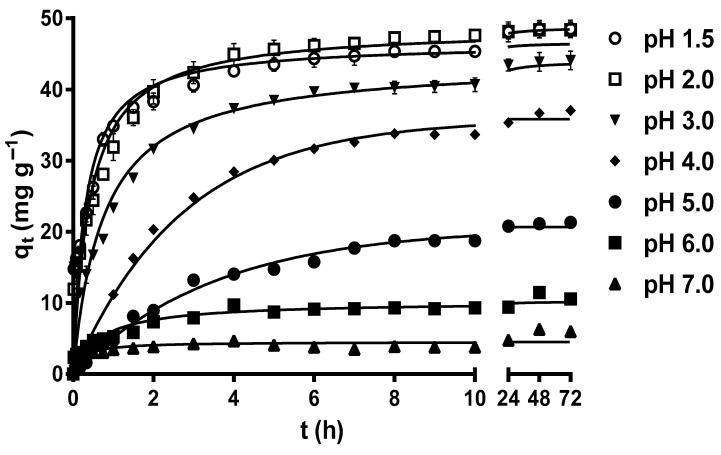
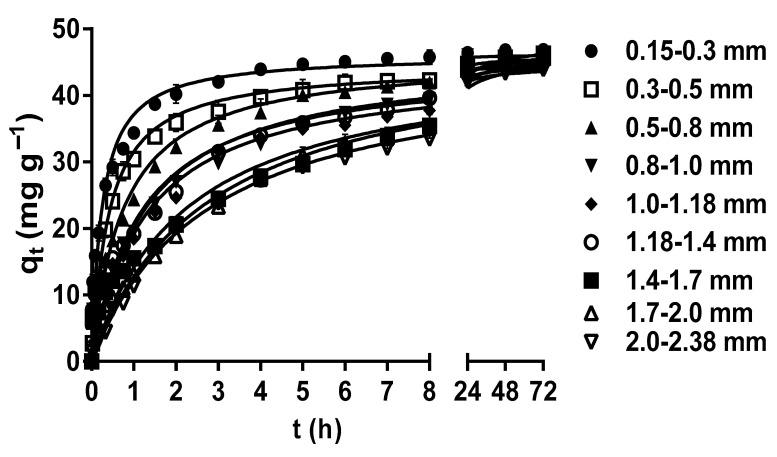
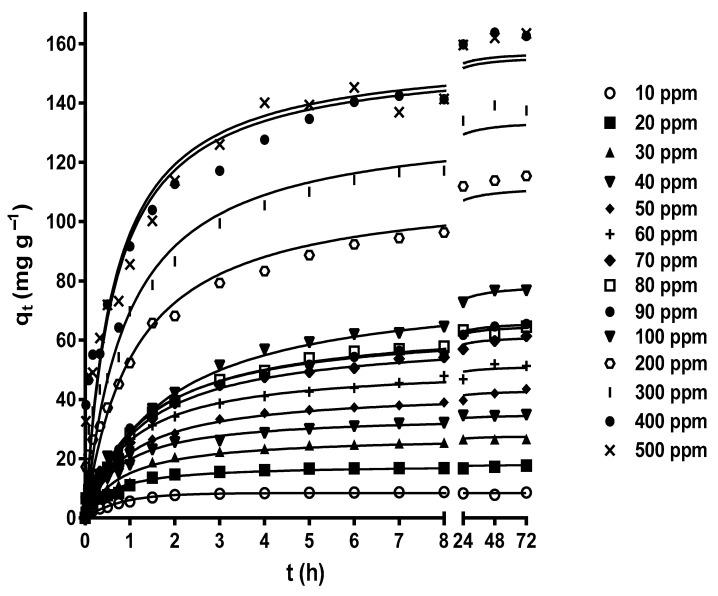
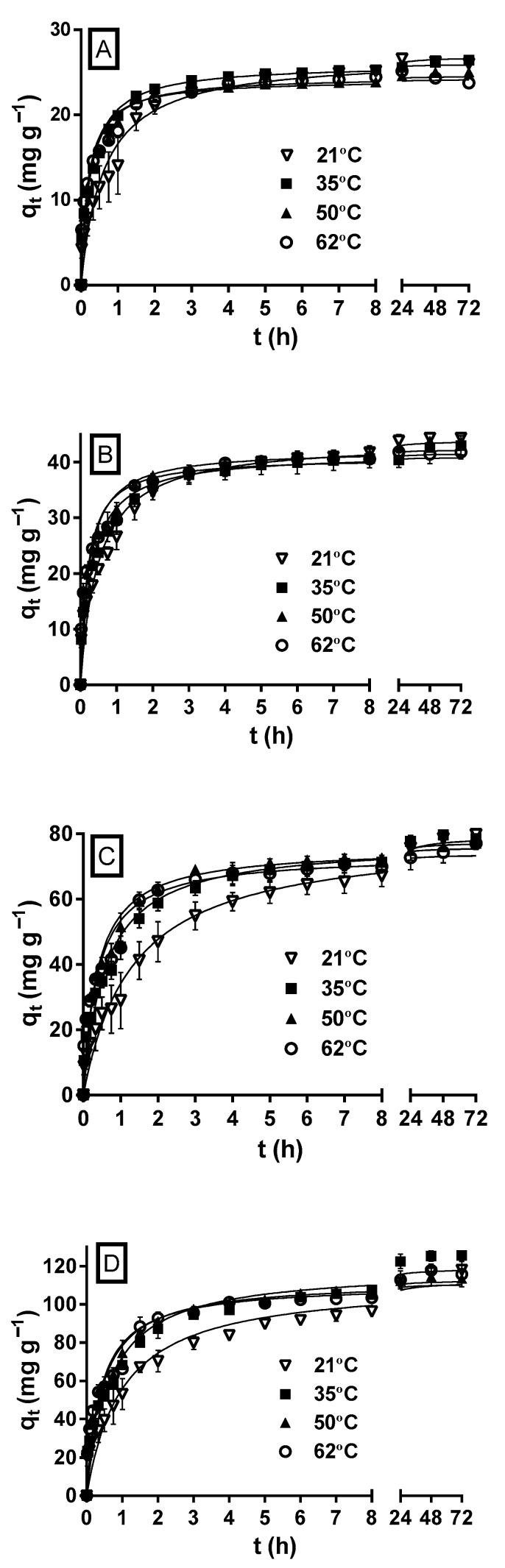
Excessive water hyacinth growth in aquatic environments and metanil yellow (MY) dye in industrial wastewater pose severe environmental and public health challenges. Therefore, this study evaluated the effects of various process factors on batch MY biosorption onto water hyacinth leaves (LECs) and MY biosorption kinetics, equilibrium, and thermodynamics. The optimal pH for MY biosorption by LECs was 1.5-2.0. The initial MY concentration affected the equilibrium MY biosorption capacity but not the LEC particle size and solution temperature. However, the LEC particle size and solution temperature affected the MY biosorption rate; the biosorption rate was higher at a lower particle size (0.15-0.3 mm) and a higher temperature (62 °C) than at higher particle sizes and lower temperatures. The pseudo-second-order model adequately described the biosorption kinetics of MY by LECs at the different levels of the process factors, whereas the Sips and Redlich-Peterson models satisfactorily represented the biosorption isotherm of MY. The Sips model predicted a maximum MY biosorption capacity of 170.8 mg g. The biosorption of MY by LECs was endothermic and not spontaneous. These findings demonstrate that LECs exhibit great potential for bioremediating MY-contaminated wastewater, thereby providing valuable insights for effective water treatment and pollution control strategies.
水生环境中凤眼莲的过度生长以及工业废水中的间硝基苯黄酸(MY)染料对环境和公众健康构成了严峻挑战。因此,本研究评估了各种工艺因素对凤眼莲叶片(LECs)批量吸附MY的影响以及MY的生物吸附动力学、平衡和热力学。LECs对MY生物吸附的最佳pH值为1.5 - 2.0。初始MY浓度影响平衡时的MY生物吸附容量,但不影响LECs颗粒大小和溶液温度。然而,LECs颗粒大小和溶液温度影响MY的生物吸附速率;在较低颗粒大小(0.15 - 0.3毫米)和较高温度(62°C)下的生物吸附速率高于较高颗粒大小和较低温度下的速率。伪二级模型充分描述了在不同工艺因素水平下LECs对MY的生物吸附动力学,而Sips模型和Redlich - Peterson模型则令人满意地表示了MY的生物吸附等温线。Sips模型预测的最大MY生物吸附容量为170.8毫克/克。LECs对MY的生物吸附是吸热的且非自发的。这些发现表明,LECs在生物修复受MY污染的废水方面具有巨大潜力,从而为有效的水处理和污染控制策略提供了有价值的见解。

 Zotero 插件