
聚焦金黄色葡萄球菌和铜绿假单胞菌的钛纳米管表面抗菌效果的研究进展。
Insight into antibacterial effect of titanium nanotubular surfaces with focus on Staphylococcus aureus and Pseudomonas aeruginosa.
机构信息
Department of Pathological Physiology, Faculty of Medicine, Masaryk University, Kamenice 5, Brno, 625 00, Czech Republic.
Department of Chemistry and Biochemistry, Mendel University in Brno, Zemědělská 1, Brno, 613 00, Czech Republic.
出版信息
Sci Rep. 2024 Jul 27;14(1):17303. doi: 10.1038/s41598-024-68266-1.
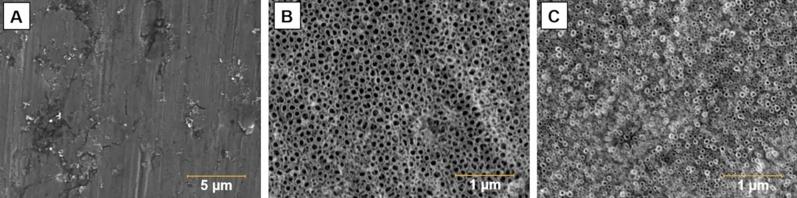
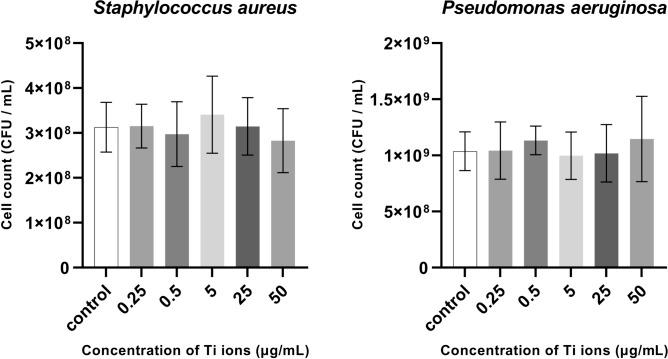
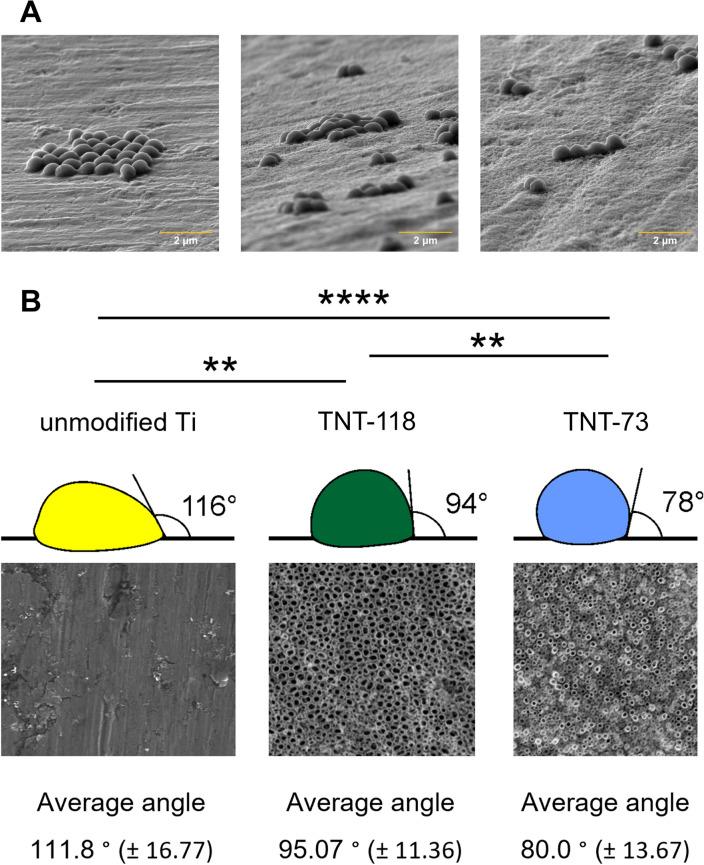
Materials used for orthopedic implants should not only have physical properties close to those of bones, durability and biocompatibility, but should also exhibit a sufficient degree of antibacterial functionality. Due to its excellent properties, titanium is still a widely used material for production of orthopedic implants, but the unmodified material exhibits poor antibacterial activity. In this work, the physicochemical characteristics, such as chemical composition, crystallinity, wettability, roughness, and release of Ti ions of the titanium surface modified with nanotubular layers were analyzed and its antibacterial activity against two biofilm-forming bacterial strains responsible for prosthetic joint infection (Staphylococcus aureus and Pseudomonas aeruginosa) was investigated. Electrochemical anodization (anodic oxidation) was used to prepare two types of nanotubular arrays with nanotubes differing in dimensions (with diameters of 73 and 118 nm and lengths of 572 and 343 nm, respectively). These two surface types showed similar chemistry, crystallinity, and surface energy. The surface with smaller nanotube diameter (TNT-73) but larger values of roughness parameters was more effective against S. aureus. For P. aeruginosa the sample with a larger nanotube diameter (TNT-118) had better antibacterial effect with proven cell lysis. Antibacterial properties of titanium nanotubular surfaces with potential in implantology, which in our previous work demonstrated a positive effect on the behavior of human gingival fibroblasts, were investigated in terms of surface parameters. The interplay between nanotube diameter and roughness appeared critical for the bacterial fate on nanotubular surfaces. The relationship of nanotube diameter, values of roughness parameters, and other surface properties to bacterial behavior is discussed in detail. The study is believed to shed more light on how nanotubular surface parameters and their interplay affect antibacterial activity.
用于骨科植入物的材料不仅应具有与骨骼接近的物理特性、耐用性和生物相容性,还应具有足够的抗菌功能。由于其优异的性能,钛仍然是生产骨科植入物的广泛使用的材料,但未经修饰的材料表现出较差的抗菌活性。在这项工作中,分析了经过纳米管层表面改性的钛的物理化学特性,如化学成分、结晶度、润湿性、粗糙度和 Ti 离子释放,研究了其对两种生物膜形成细菌(金黄色葡萄球菌和铜绿假单胞菌)的抗菌活性。采用电化学阳极氧化(阳极氧化)制备了两种具有不同尺寸的纳米管阵列(分别具有 73nm 和 118nm 的直径和 572nm 和 343nm 的长度)。这两种表面类型具有相似的化学、结晶度和表面能。具有较小纳米管直径(TNT-73)但具有较大粗糙度参数的表面对于金黄色葡萄球菌更有效。对于铜绿假单胞菌,具有较大纳米管直径(TNT-118)的样品具有更好的抗菌效果,并且已证明具有细胞裂解作用。在植入物学方面具有潜力的钛纳米管表面的抗菌性能,在我们之前的工作中已证明对人牙龈成纤维细胞的行为有积极影响,根据表面参数对其进行了研究。纳米管直径和粗糙度之间的相互作用对于纳米管表面上细菌的命运至关重要。详细讨论了纳米管直径、粗糙度参数值和其他表面特性与细菌行为之间的关系。该研究有助于更好地了解纳米管表面参数及其相互作用如何影响抗菌活性。



 Zotero 插件