
一种基于深度学习和放射组学的超声列线图,用于精确预测≥75 岁乳腺癌患者腋窝淋巴结转移。
A cutting-edge deep learning-and-radiomics-based ultrasound nomogram for precise prediction of axillary lymph node metastasis in breast cancer patients ≥ 75 years.
机构信息
Department of Medical Ultrasound, Fudan University Shanghai Cancer Center, Shanghai, China.
Department of Oncology, Shanghai Medical College, Fudan University, Shanghai, China.
出版信息
Front Endocrinol (Lausanne). 2024 Jul 12;15:1323452. doi: 10.3389/fendo.2024.1323452. eCollection 2024.
OBJECTIVE
The objective of this study was to develop a deep learning-and-radiomics-based ultrasound nomogram for the evaluation of axillary lymph node (ALN) metastasis risk in breast cancer patients ≥ 75 years.
METHODS
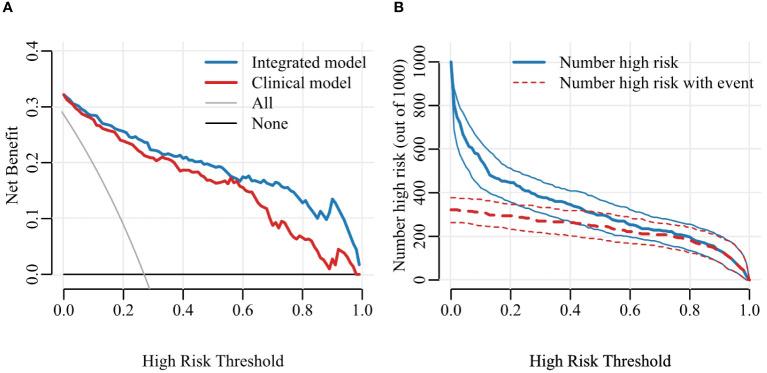
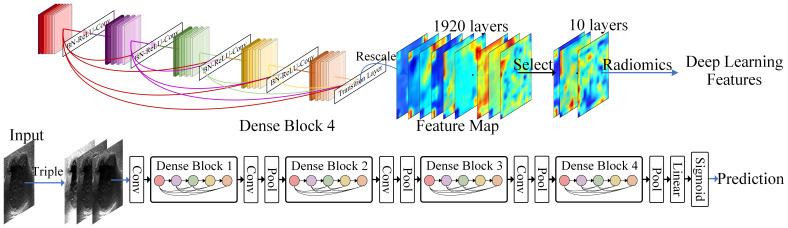
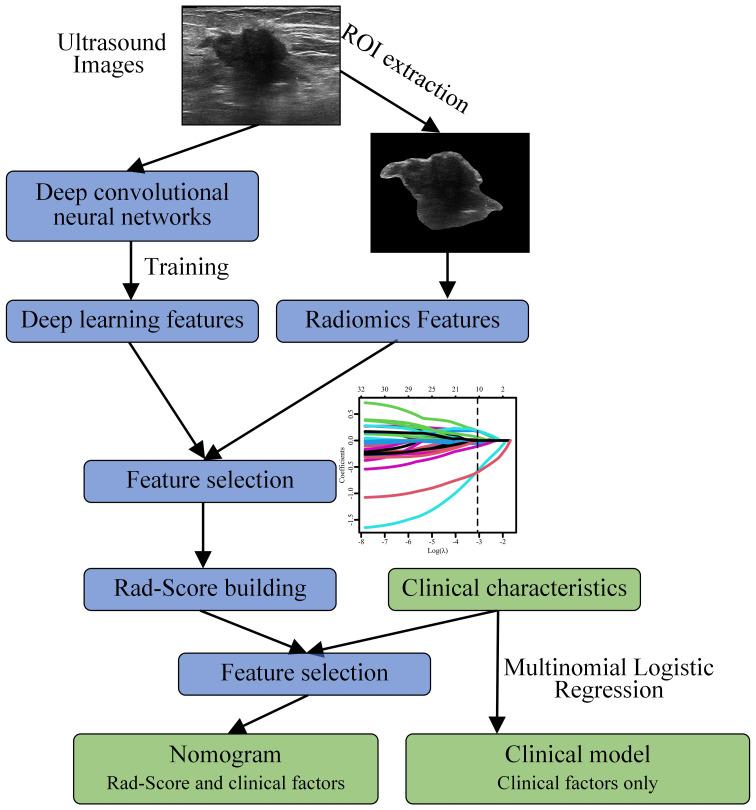
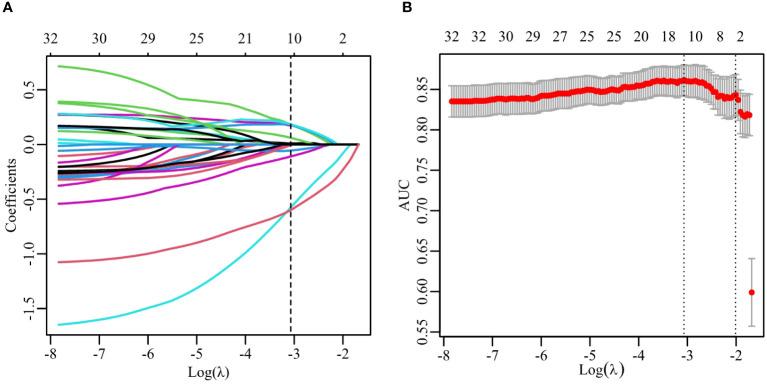
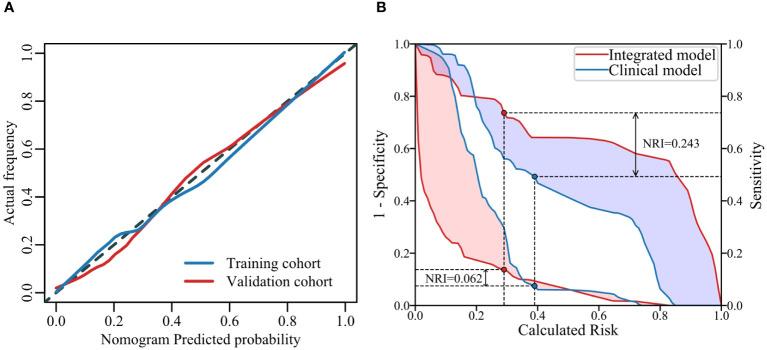
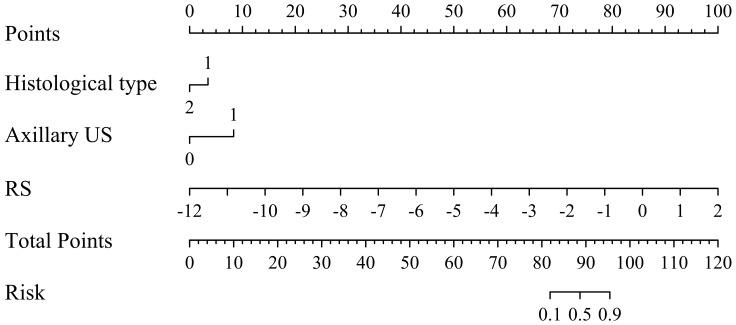
The study enrolled breast cancer patients ≥ 75 years who underwent either sentinel lymph node biopsy or ALN dissection at Fudan University Shanghai Cancer Center. DenseNet-201 was employed as the base model, and it was trained using the Adam optimizer and cross-entropy loss function to extract deep learning (DL) features from ultrasound images. Additionally, radiomics features were extracted from ultrasound images utilizing the Pyradiomics tool, and a Rad-Score (RS) was calculated employing the Lasso regression algorithm. A stepwise multivariable logistic regression analysis was conducted in the training set to establish a prediction model for lymph node metastasis, which was subsequently validated in the validation set. Evaluation metrics included area under the curve (AUC), accuracy, sensitivity, specificity, positive predictive value, negative predictive value, and F1-score. The calibration of the model's performance and its clinical prediction accuracy were assessed using calibration curves and decision curves respectively. Furthermore, integrated discrimination improvement and net reclassification improvement were utilized to quantify enhancements in RS.
RESULTS
Histological grade, axillary ultrasound, and RS were identified as independent risk factors for predicting lymph node metastasis. The integration of the RS into the clinical prediction model significantly improved its predictive performance, with an AUC of 0.937 in the training set, surpassing both the clinical model and the RS model alone. In the validation set, the integrated model also outperformed other models with AUCs of 0.906, 0.744, and 0.890 for the integrated model, clinical model, and RS model respectively. Experimental results demonstrated that this study's integrated prediction model could enhance both accuracy and generalizability.
CONCLUSION
The DL and radiomics-based model exhibited remarkable accuracy and reliability in predicting ALN status among breast cancer patients ≥ 75 years, thereby contributing to the enhancement of personalized treatment strategies' efficacy and improvement of patients' quality of life.
目的
本研究旨在建立一种基于深度学习和放射组学的超声列线图,用于评估 75 岁及以上乳腺癌患者腋窝淋巴结(ALN)转移风险。
方法
本研究纳入了在复旦大学附属肿瘤医院接受前哨淋巴结活检或 ALN 清扫术的 75 岁及以上乳腺癌患者。采用 DenseNet-201 作为基础模型,使用 Adam 优化器和交叉熵损失函数对超声图像进行深度学习(DL)特征提取。此外,使用 Pyradiomics 工具从超声图像中提取放射组学特征,并使用 Lasso 回归算法计算 Rad-Score(RS)。在训练集中进行逐步多变量逻辑回归分析,建立淋巴结转移预测模型,然后在验证集中进行验证。评估指标包括曲线下面积(AUC)、准确率、敏感度、特异度、阳性预测值、阴性预测值和 F1 评分。使用校准曲线和决策曲线分别评估模型性能和临床预测准确性的校准。此外,还使用综合判别改善和净重新分类改善来量化 RS 的改善程度。
结果
组织学分级、腋窝超声和 RS 被确定为预测淋巴结转移的独立危险因素。将 RS 纳入临床预测模型可显著提高其预测性能,在训练集中 AUC 为 0.937,优于临床模型和 RS 模型单独使用。在验证集中,该综合模型也优于其他模型,其 AUC 分别为 0.906、0.744 和 0.890,对应于综合模型、临床模型和 RS 模型。实验结果表明,该研究的综合预测模型可提高准确性和通用性。
结论
基于深度学习和放射组学的模型在预测 75 岁及以上乳腺癌患者的 ALN 状态方面具有出色的准确性和可靠性,有助于增强个性化治疗策略的疗效并提高患者的生活质量。

 Zotero 插件