
转录组学揭示钴和镍毒性的作用机制:Nrf2 介导的肝癌细胞的细胞反应。
Transcriptomics pave the way into mechanisms of cobalt and nickel toxicity: Nrf2-mediated cellular responses in liver carcinoma cells.
机构信息
Food Chemistry with Focus on Toxicology, Faculty of Mathematics and Natural Sciences, University of Wuppertal, Gaußstr. 20, 42119, Wuppertal, Germany.
Molecular Cell Biology and Microbiology, Faculty of Mathematics and Natural Sciences, University of Wuppertal, Gaußstr. 20, 42119, Wuppertal, Germany.
出版信息
Redox Biol. 2024 Sep;75:103290. doi: 10.1016/j.redox.2024.103290. Epub 2024 Jul 27.
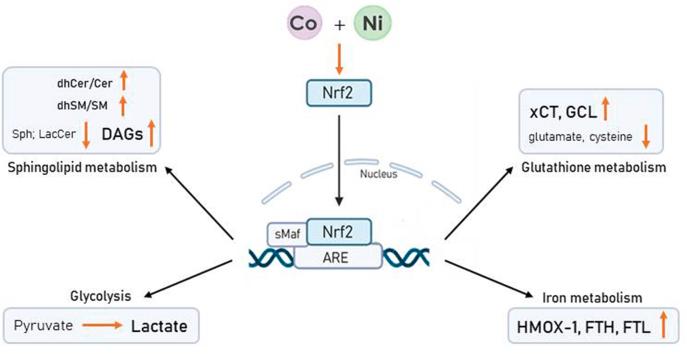
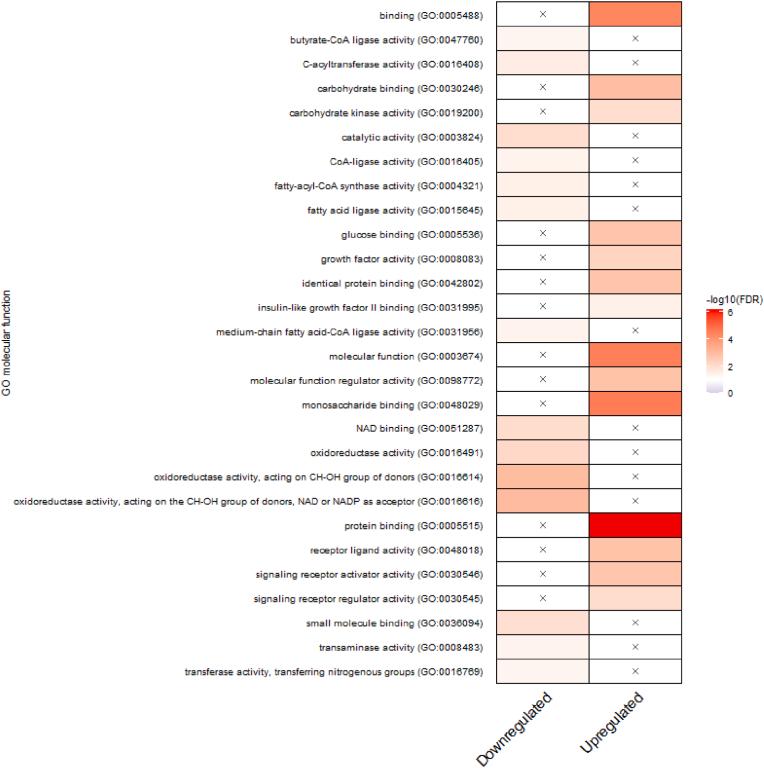
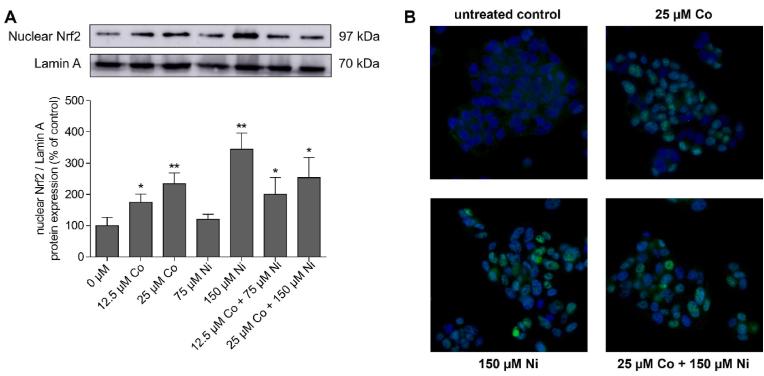
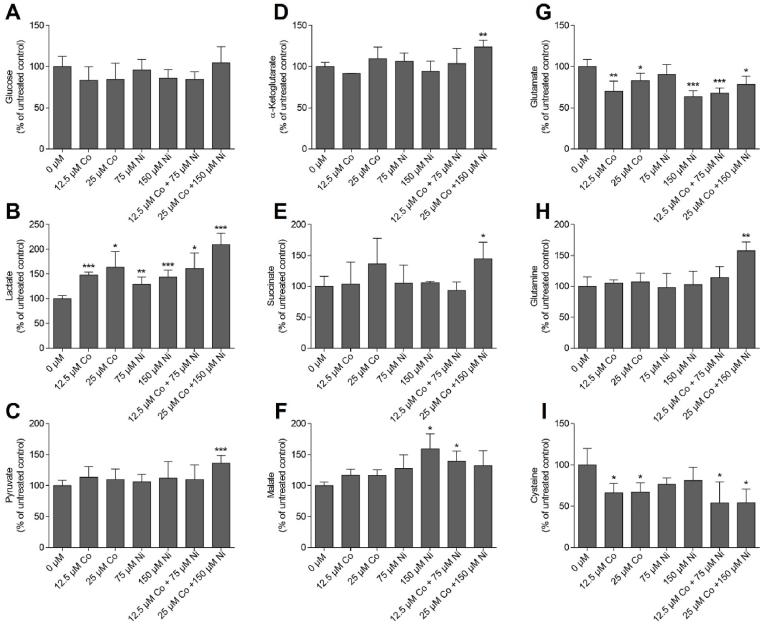
Cobalt (Co) and Nickel (Ni) are used nowadays in various industrial applications like lithium-ion batteries, raising concerns about their environmental release and public health threats. Both metals are potentially carcinogenic and may cause neurological and cardiovascular dysfunctions, though underlying toxicity mechanisms have to be further elucidated. This study employs untargeted transcriptomics to analyze downstream cellular effects of individual and combined Co and Ni toxicity in human liver carcinoma cells (HepG2). The results reveal a synergistic effect of Co and Ni, leading to significantly higher number of differentially expressed genes (DEGs) compared to individual exposure. There was a clear enrichment of Nrf2 regulated genes linked to pathways such as glycolysis, iron and glutathione metabolism, and sphingolipid metabolism, confirmed by targeted analysis. Co and Ni exposure alone and combined caused nuclear Nrf2 translocation, while only combined exposure significantly affects iron and glutathione metabolism, evidenced by upregulation of HMOX-1 and iron storage protein FTL. Both metals impact sphingolipid metabolism, increasing dihydroceramide levels and decreasing ceramides, sphingosine and lactosylceramides, along with diacylglycerol accumulation. By combining transcriptomics and analytical methods, this study provides valuable insights into molecular mechanisms of Co and Ni toxicity, paving the way for further understanding of metal stress.
钴(Co)和镍(Ni)如今广泛应用于锂离子电池等各种工业应用,这引起了人们对它们环境释放和公共健康威胁的关注。这两种金属都具有潜在的致癌性,可能导致神经和心血管功能障碍,尽管其潜在的毒性机制仍需进一步阐明。本研究采用无靶向转录组学分析钴和镍单独及联合毒性对人肝癌细胞(HepG2)的下游细胞效应。结果表明,钴和镍具有协同作用,与单独暴露相比,导致差异表达基因(DEGs)的数量明显增加。通过靶向分析证实,与糖酵解、铁和谷胱甘肽代谢以及鞘脂代谢等途径相关的 Nrf2 调节基因明显富集。钴和镍单独及联合暴露均可导致核 Nrf2 易位,而只有联合暴露显著影响铁和谷胱甘肽代谢,表现为 HMOX-1 和铁储存蛋白 FTL 的上调。两种金属均影响鞘脂代谢,增加二氢神经酰胺水平,降低神经酰胺、鞘氨醇和半乳糖脑苷脂,同时伴有二酰基甘油积累。本研究通过将转录组学和分析方法相结合,为钴和镍毒性的分子机制提供了有价值的见解,为进一步了解金属应激奠定了基础。





 Zotero 插件