
综合与个体化策略在老年 2 型糖尿病患者管理中的应用。
Holistic and Personalized Strategies for Managing in Elderly Type 2 Diabetes Patients.
机构信息
Department of Internal Medicine, St. Vincent's Hospital, College of Medicine, The Catholic University of Korea, Seoul, Korea.
Department of Statistics and Actuarial Science, Soongsil University, Seoul, Korea.
出版信息
Diabetes Metab J. 2024 Jul;48(4):531-545. doi: 10.4093/dmj.2024.0310. Epub 2024 Jul 26.
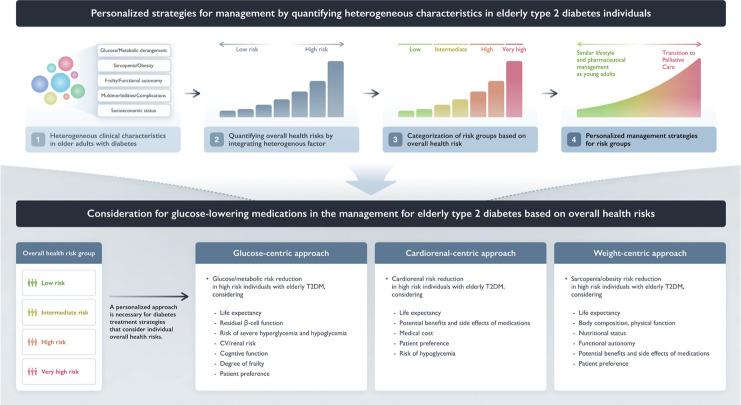
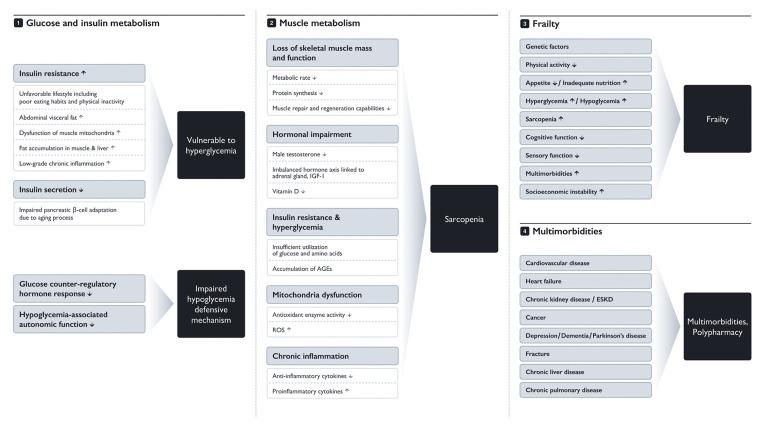
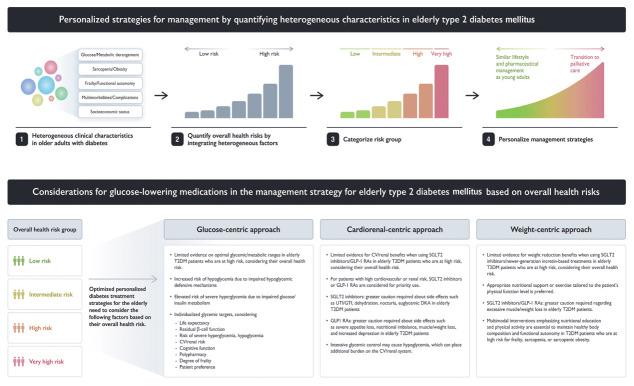
Due to increased life expectancy and lifestyle changes, the prevalence of diabetes among the elderly in Korea is continuously rising, as is the associated public health burden. Diabetes management in elderly patients is complicated by age-related physiological changes, sarcopenia characterized by loss of muscle mass and function, comorbidities, and varying levels of functional, cognitive, and mobility abilities that lead to frailty. Moreover, elderly patients with diabetes frequently face multiple chronic conditions that elevate their risk of cardiovascular diseases, cancer, and mortality; they are also prone to complications such as hyperglycemic hyperosmolar state, diabetic ketoacidosis, and severe hypoglycemia. This review examines the characteristics of and management approaches for diabetes in the elderly, and advocates for a comprehensive yet personalized strategy.
由于预期寿命的延长和生活方式的改变,韩国老年人糖尿病的患病率持续上升,随之而来的公共卫生负担也在增加。老年患者的糖尿病管理因与年龄相关的生理变化、以肌肉质量和功能丧失为特征的肌少症、合并症以及不同程度的功能、认知和移动能力而变得复杂,这些都会导致虚弱。此外,老年糖尿病患者经常面临多种慢性疾病,增加了他们患心血管疾病、癌症和死亡的风险;他们也容易出现高血糖高渗状态、糖尿病酮症酸中毒和严重低血糖等并发症。这篇综述探讨了老年糖尿病的特征和管理方法,并提倡采取全面而个性化的策略。
 Zotero 插件