
探索运动强度对男性生育能力和生殖健康的影响:生育力研究的进展与启示
Exploring the dynamics of exercise intensity on male fertility and reproductive health: advancements and implications for fertility research.
作者信息
Abedpoor Navid, Taghian Farzaneh, Hajibabaie Fatemeh
机构信息
Department of Sports Physiology, Faculty of Sports Sciences, Isfahan (Khorasgan) Branch, Islamic Azad University, Isfahan, Iran.
Department of Physiology, Medicinal Plants Research Center, Isfahan (Khorasgan) Branch, Islamic Azad University, Isfahan, Iran.
出版信息
Front Reprod Health. 2024 Jul 18;6:1423916. doi: 10.3389/frph.2024.1423916. eCollection 2024.
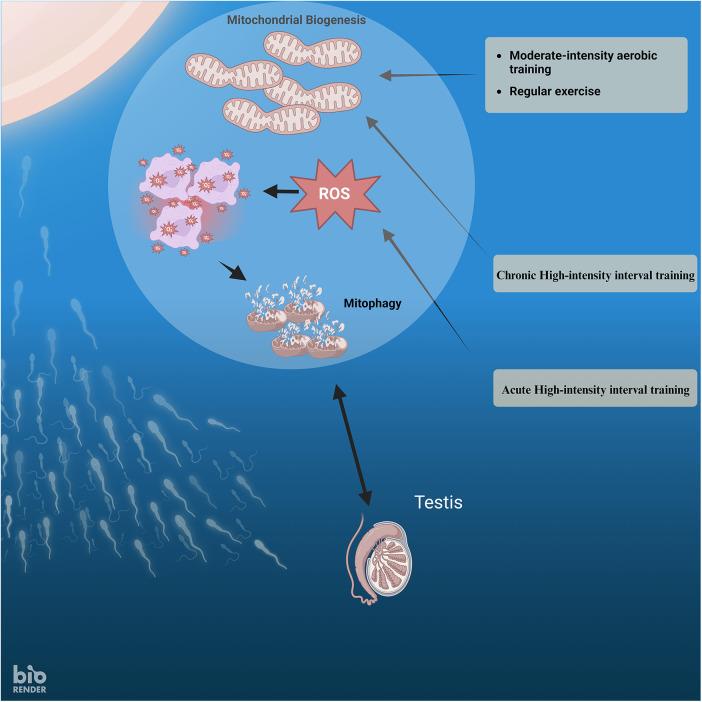
On a global scale, 15% of couples experience infertility. Approximately 50% of these cases refer to male infertility. This literature review investigated the effects of exercise activities on male fertility and reproductive health. This subject was explored using studies conducted on human and animal models. Physical activity is widely recognized to improve overall well-being, but engaging in excessive exercise might potentially lead to male infertility due to the negative impact on hypothalamic-pituitary-testicular (HPT) function, increased oxidative stress, and the presence of chronic inflammation. Infertility might result from the fundamental factors that induce a decline in testosterone production and semen quality. Physical activity has the potential strategy to enhance male fertility in cases of infertility caused by obesity and diabetes. Exercise enhances spermatogenesis and semen quality in lifestyle-induced infertility by increasing testicular antioxidant defense, reducing pro-inflammatory cytokines, and promoting steroidogenesis.
在全球范围内,15%的夫妇面临不孕不育问题。其中约50%的案例归因于男性不育。这篇文献综述调查了体育活动对男性生育能力和生殖健康的影响。通过对人类和动物模型进行的研究来探讨这一主题。体育活动被广泛认为能改善整体健康状况,但过度运动可能会因对下丘脑-垂体-睾丸(HPT)功能产生负面影响、增加氧化应激以及存在慢性炎症而导致男性不育。不育可能源于导致睾酮分泌减少和精液质量下降的根本因素。对于由肥胖和糖尿病引起的不育病例,体育活动有可能提高男性生育能力。运动通过增强睾丸抗氧化防御、减少促炎细胞因子以及促进类固醇生成,从而提高生活方式导致的不育症中的精子发生和精液质量。
 Zotero 插件