
探讨褪黑素与尼古丁依赖之间的关系(综述)。
Exploring the association between melatonin and nicotine dependence (Review).
机构信息
Department of Pathophysiology, Laiko General Hospital, National and Kapodistrian University of Athens, 11527 Athens, Greece.
Department of Biochemistry, Sismanogleio Hospital, 15126 Athens, Greece.
出版信息
Int J Mol Med. 2024 Oct;54(4). doi: 10.3892/ijmm.2024.5406. Epub 2024 Aug 2.
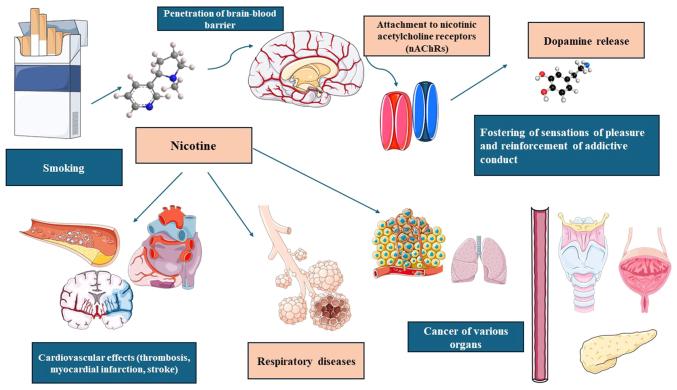
Due to the addictive qualities of tobacco products and the compulsive craving and dependence associated with their use, nicotine dependence continues to be a serious public health concern on a global scale. Despite awareness of the associated health risks, nicotine addiction contributes to numerous acute and chronic medical conditions, including cardiovascular disease, respiratory disorders and cancer. The nocturnal secretion of pineal melatonin, known as the 'hormone of darkness', influences circadian rhythms and is implicated in addiction‑related behaviors. Melatonin receptors are found throughout the brain, influencing dopaminergic neurotransmission and potentially attenuating nicotine‑seeking behavior. Additionally, the antioxidant properties of melatonin may mitigate oxidative stress from chronic nicotine exposure, reducing cellular damage and lowering the risk of nicotine‑related health issues. In addition to its effects on circadian rhythmicity, melatonin acting via specific neural receptors influences sleep and mood, and provides neuroprotection. Disruptions in melatonin signaling may contribute to sleep disturbances and mood disorders, highlighting the potential therapeutic role of melatonin in addiction and psychiatric conditions. Melatonin may influence neurotransmitter systems involved in addiction, such as the dopaminergic, glutamatergic, serotonergic and endogenous opioid systems. Preclinical studies suggest the potential of melatonin in modulating reward processing, attenuating drug‑induced hyperactivity and reducing opioid withdrawal symptoms. Chronotherapeutic approaches targeting circadian rhythms and melatonin signaling show promise in smoking cessation interventions. Melatonin supplementation during periods of heightened nicotine cravings may alleviate withdrawal symptoms and reduce the reinforcing effects of nicotine. Further research is required however, to examine the molecular mechanisms underlying the melatonin‑nicotine association and the optimization of therapeutic interventions. Challenges include variability in individual responses to melatonin, optimal dosing regimens and identifying biomarkers of treatment response. Understanding these complexities could lead to personalized treatment strategies and improve smoking cessation outcomes.
由于烟草产品具有成瘾性,而且使用这些产品会导致强迫性的渴望和依赖,因此尼古丁成瘾仍然是一个严重的全球公共卫生问题。尽管人们意识到与吸烟有关的健康风险,但尼古丁成瘾会导致许多急性和慢性疾病,包括心血管疾病、呼吸系统疾病和癌症。夜间松果腺分泌的褪黑素,被称为“黑暗荷尔蒙”,它会影响昼夜节律,并与成瘾相关的行为有关。褪黑素受体存在于大脑的各个部位,影响多巴胺能神经传递,并可能减轻尼古丁寻求行为。此外,褪黑素的抗氧化特性可以减轻慢性尼古丁暴露引起的氧化应激,减少细胞损伤,降低与尼古丁相关的健康问题的风险。除了对昼夜节律的影响外,通过特定的神经受体发挥作用的褪黑素还会影响睡眠和情绪,并提供神经保护。褪黑素信号的中断可能导致睡眠障碍和情绪障碍,这突出了褪黑素在成瘾和精神疾病中的潜在治疗作用。褪黑素可能会影响参与成瘾的神经递质系统,如多巴胺能、谷氨酸能、5-羟色胺能和内源性阿片系统。临床前研究表明,褪黑素在调节奖励处理、减轻药物引起的过度活跃和减少阿片类药物戒断症状方面具有潜在作用。针对昼夜节律和褪黑素信号的时间治疗方法在戒烟干预中显示出前景。在尼古丁渴求增加的时期补充褪黑素可能会减轻戒断症状并降低尼古丁的强化作用。然而,需要进一步研究,以研究褪黑素-尼古丁关联的分子机制和优化治疗干预措施。挑战包括个体对褪黑素的反应性、最佳剂量方案和鉴定治疗反应的生物标志物的变异性。了解这些复杂性可能会导致个性化的治疗策略,并改善戒烟的结果。


 Zotero 插件