
伤口愈合中的上皮-间质可塑性(EMP):探索上皮-间质转化机制、调控网络及治疗机遇。
Epithelial-mesenchymal plasticity (EMP) in wound healing: Exploring EMT mechanisms, regulatory network, and therapeutic opportunities.
作者信息
Yao Wentao, Wang Zhengchun, Ma Huike, Lin Yan, Liu Xin, Li Ping, He Xiujuan
机构信息
Beijing Hospital of Traditional Chinese Medicine, Capital Medical University, Beijing Institute of Chinese Medicine, Beijing, 100010, China.
出版信息
Heliyon. 2024 Jul 8;10(14):e34269. doi: 10.1016/j.heliyon.2024.e34269. eCollection 2024 Jul 30.
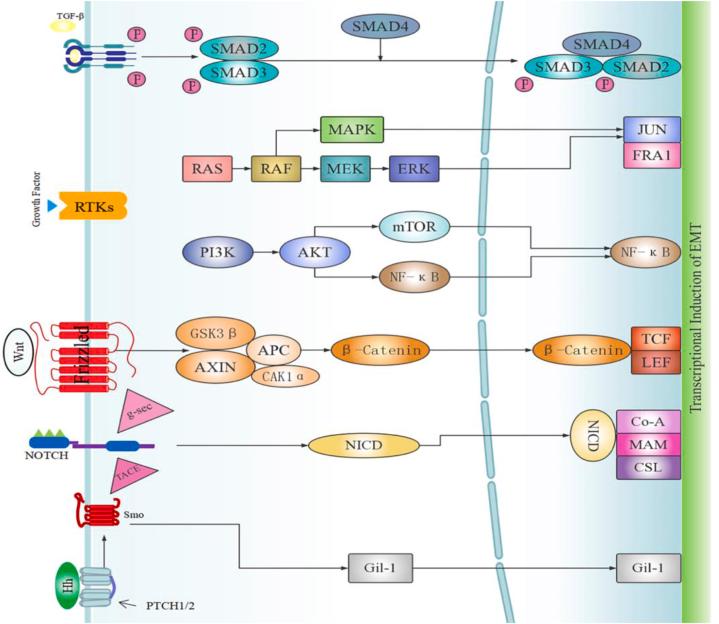
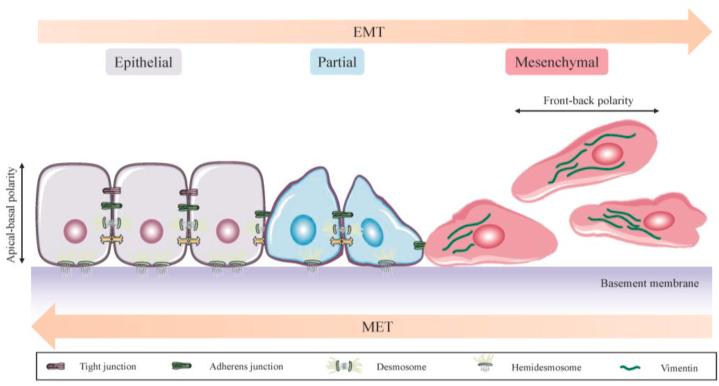
Epithelial-to-mesenchymal transition (EMT), a process by which epithelial cells acquire mesenchymal cell characteristics, is well recognized for its critical role in development, wound healing, tissue fibrosis, and cancer progression. During wound healing, keratinocytes undergo a partially reversible EMT process to promote migration and re-epithelialization. In this paper, we review the regulatory roles of key signaling pathways (TGF-β, Wnt/β-catenin, Notch) and core transcription factors (Snail, Slug, Twist) in EMT, explore the parallels between re-epithelialization and EMT, and outline recent therapeutic advances and future developments targeting EMT in wound healing. In addition, we call for the adoption of the term "epithelial-mesenchymal plasticity" (EMP) to more accurately describe the dynamic processes that occur during keratinocyte migration and re-epithelialization.
上皮-间质转化(EMT)是上皮细胞获得间充质细胞特征的过程,其在发育、伤口愈合、组织纤维化和癌症进展中的关键作用已得到充分认可。在伤口愈合过程中,角质形成细胞经历部分可逆的EMT过程以促进迁移和重新上皮化。在本文中,我们综述了关键信号通路(TGF-β、Wnt/β-连环蛋白、Notch)和核心转录因子(Snail、Slug、Twist)在EMT中的调节作用,探讨重新上皮化与EMT之间的相似之处,并概述伤口愈合中针对EMT的近期治疗进展和未来发展。此外,我们呼吁采用“上皮-间充质可塑性”(EMP)这一术语来更准确地描述角质形成细胞迁移和重新上皮化过程中发生的动态过程。

 Zotero 插件