
探索临床试验与真实世界数据之间的差异:一项小细胞肺癌研究。
Exploring the discrepancies between clinical trials and real-world data: A small-cell lung cancer study.
作者信息
Marzano Luca, Darwich Adam S, Dan Asaf, Tendler Salomon, Lewensohn Rolf, De Petris Luigi, Raghothama Jayanth, Meijer Sebastiaan
机构信息
Division of Health Informatics and Logistics, School of Engineering Sciences in Chemistry, Biotechnology and Health (CBH), KTH Royal Institute of Technology, Stockholm, Sweden.
Department of Oncology-Pathology, Karolinska Institutet and the Thoracic Oncology Center, Karolinska University Hospital, Stockholm, Sweden.
出版信息
Clin Transl Sci. 2024 Aug;17(8):e13909. doi: 10.1111/cts.13909.
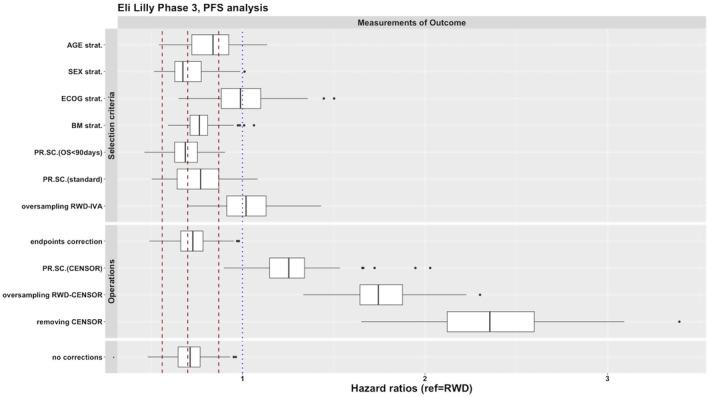
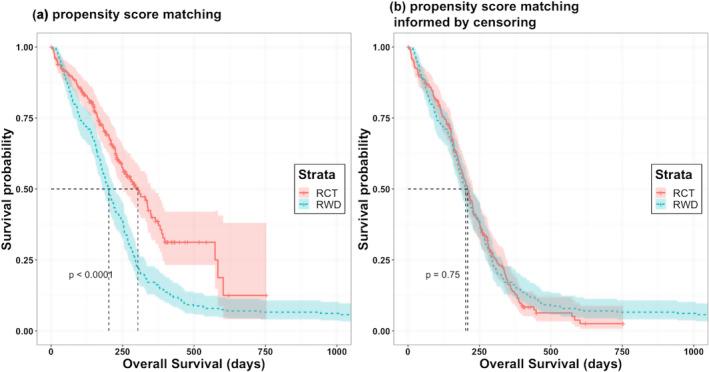
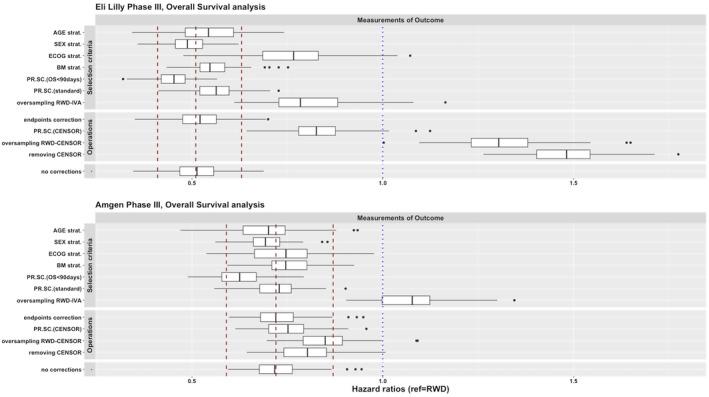
The potential of real-world data to inform clinical trial design and supplement control arms has gained much interest in recent years. The most common approach relies on reproducing control arm outcomes by matching real-world patient cohorts to clinical trial baseline populations. However, recent studies pointed out that there is a lack of replicability, generalisability, and consensus. In this article, we propose a novel approach that aims to explore and examine these discrepancies by concomitantly investigating the impact of selection criteria and operations on the measurements of outcomes from the patient data. We tested the approach on a dataset consisting of small-cell lung cancer patients receiving platinum-based chemotherapy regimens from a real-world data cohort (n = 223) and six clinical trial control arms (n = 1224). The results showed that the discrepancy between real-world and clinical trial data potentially depends on differences in both patient populations and operational conditions (e.g., frequency of assessments, and censoring), for which further investigation is required. Discovering and accounting for confounders, including hidden effects of differences in operations related to the treatment process and clinical trial study protocol, would potentially allow for improved translation between clinical trials and real-world data. Continued development of the method presented here to systematically explore and account for these differences could pave the way for transferring learning across clinical studies and developing mutual translation between the real-world and clinical trials to inform clinical study design.
近年来,真实世界数据在为临床试验设计提供信息及补充对照臂方面的潜力引起了广泛关注。最常见的方法是通过将真实世界患者队列与临床试验基线人群进行匹配来重现对照臂结果。然而,最近的研究指出,这种方法缺乏可重复性、普遍性和共识性。在本文中,我们提出了一种新方法,旨在通过同时研究选择标准和操作对患者数据结果测量的影响来探索和检验这些差异。我们在一个数据集上测试了该方法,该数据集由来自真实世界数据队列(n = 223)的接受铂类化疗方案的小细胞肺癌患者和六个临床试验对照臂(n = 1224)组成。结果表明,真实世界数据与临床试验数据之间的差异可能取决于患者群体和操作条件(如评估频率和删失)的差异,对此需要进一步研究。发现并考虑混杂因素,包括与治疗过程和临床试验研究方案相关的操作差异的隐藏效应,可能会改善临床试验与真实世界数据之间的转化。持续开发本文提出的方法以系统地探索和考虑这些差异,可能为跨临床研究传递知识以及在真实世界与临床试验之间开展相互转化以指导临床研究设计铺平道路。


 Zotero 插件