
肺动脉高压中的细胞死亡
Cell Death in Pulmonary Arterial Hypertension.
作者信息
Li Xia, Tan JunLan, Wan JiaJing, Cheng BeiBei, Wang Yu-Hong, Dai Aiguo
机构信息
Hunan Academy of Chinese Medicine, Changsha 410208, Hunan, People's Republic of China.
Department of Respiratory Diseases, Medical School, Hunan University of Chinese Medicine, Changsha 410208, Hunan, People's Republic of China.
出版信息
Int J Med Sci. 2024 Jul 14;21(10):1840-1851. doi: 10.7150/ijms.93902. eCollection 2024.
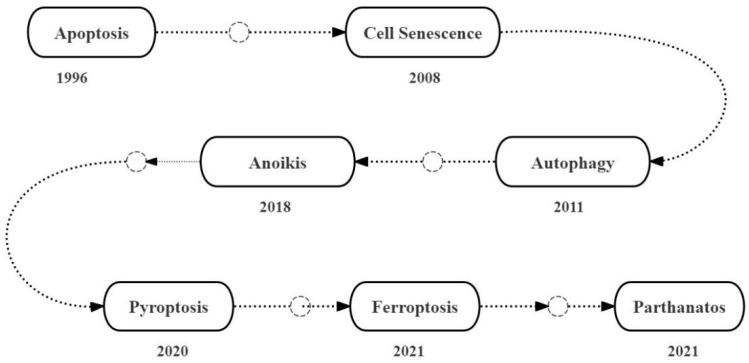
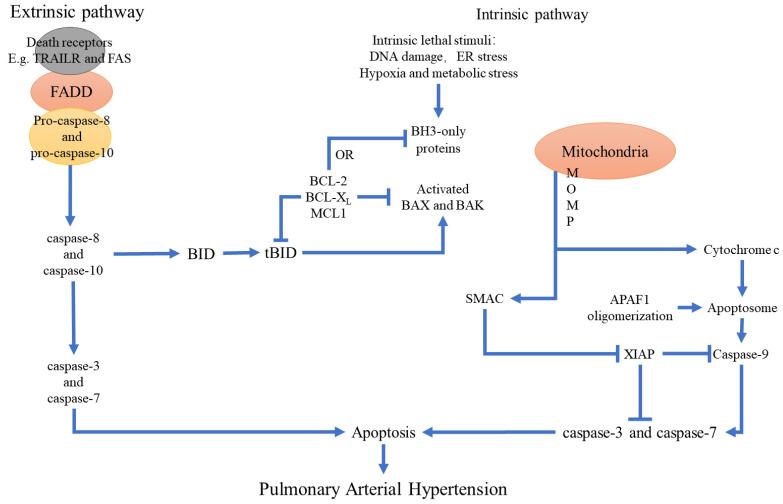
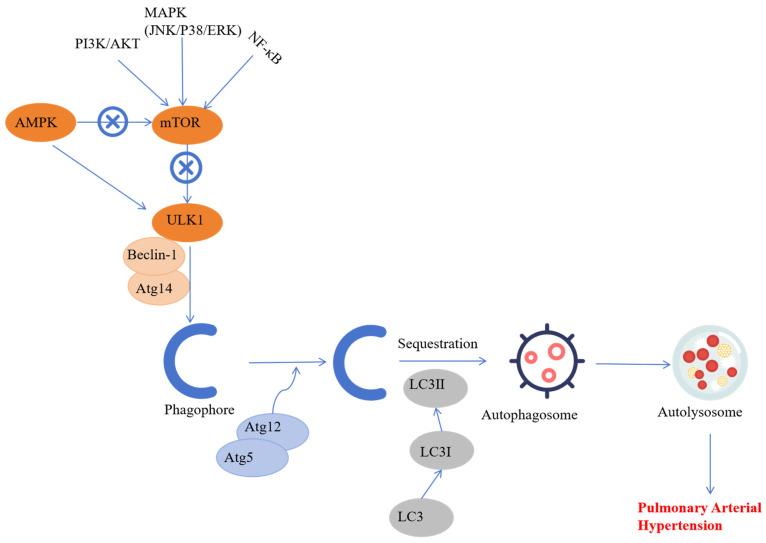
Pulmonary arterial hypertension (PAH) is a severe pulmonary vascular disease characterized by increased pulmonary vascular resistance because of vascular remodeling and vasoconstriction. Subsequently, PAH leads to right ventricular hypertrophy and heart failure. Cell death mechanisms play a significant role in development and tissue homeostasis, and regulate the balance between cell proliferation and differentiation. Several basic and clinical studies have demonstrated that multiple mechanisms of cell death, including pyroptosis, apoptosis, autophagy, ferroptosis, anoikis, parthanatos, and senescence, are closely linked with the pathogenesis of PAH. This review summarizes different cell death mechanisms involved in the death of pulmonary artery smooth muscle cells (PASMCs) and pulmonary artery endothelial cells (PAECs), the primary target cells in PAH. This review summarizes the role of these cell death mechanisms, associated signaling pathways, unique effector molecules, and various pro-survival or reprogramming mechanisms. The aim of this review is to summarize the currently known molecular mechanisms underlying PAH. Further investigations of the cell death mechanisms may unravel new avenues for the prevention and treatment of PAH.
肺动脉高压(PAH)是一种严重的肺血管疾病,其特征是由于血管重塑和血管收缩导致肺血管阻力增加。随后,PAH会导致右心室肥大和心力衰竭。细胞死亡机制在发育和组织稳态中起重要作用,并调节细胞增殖和分化之间的平衡。多项基础和临床研究表明,包括焦亡、凋亡、自噬、铁死亡、失巢凋亡、PARP 依赖性坏死和衰老在内的多种细胞死亡机制与 PAH 的发病机制密切相关。本综述总结了参与肺动脉平滑肌细胞(PASMCs)和肺动脉内皮细胞(PAECs)死亡的不同细胞死亡机制,这两种细胞是 PAH 的主要靶细胞。本综述总结了这些细胞死亡机制的作用、相关信号通路、独特的效应分子以及各种促生存或重编程机制。本综述的目的是总结目前已知的 PAH 潜在分子机制。对细胞死亡机制的进一步研究可能会为 PAH 的预防和治疗开辟新途径。

 Zotero 插件