
鼻内多表位 PD-L1-siRNA 纳米疫苗:新一代 COVID-19 免疫疗法。
Intranasal Multiepitope PD-L1-siRNA-Based Nanovaccine: The Next-Gen COVID-19 Immunotherapy.
机构信息
Research Institute for Medicines (iMed.ULisboa), Faculty of Pharmacy, Universidade de Lisboa, Lisbon, 1649-003, Portugal.
Department of Physiology and Pharmacology, Faculty of Medicine, Tel Aviv University, Tel Aviv, 6997801, Israel.
出版信息
Adv Sci (Weinh). 2024 Oct;11(40):e2404159. doi: 10.1002/advs.202404159. Epub 2024 Aug 8.
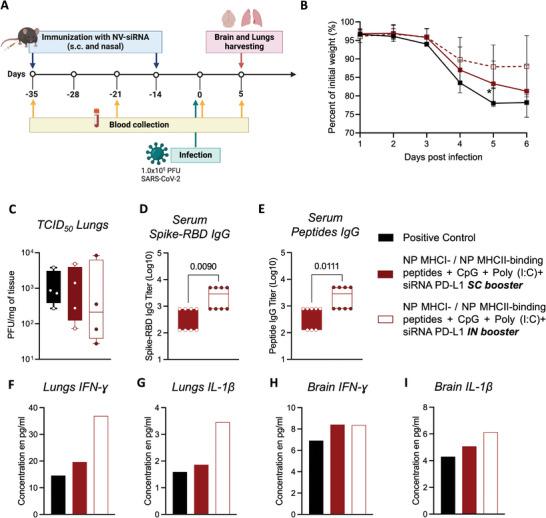
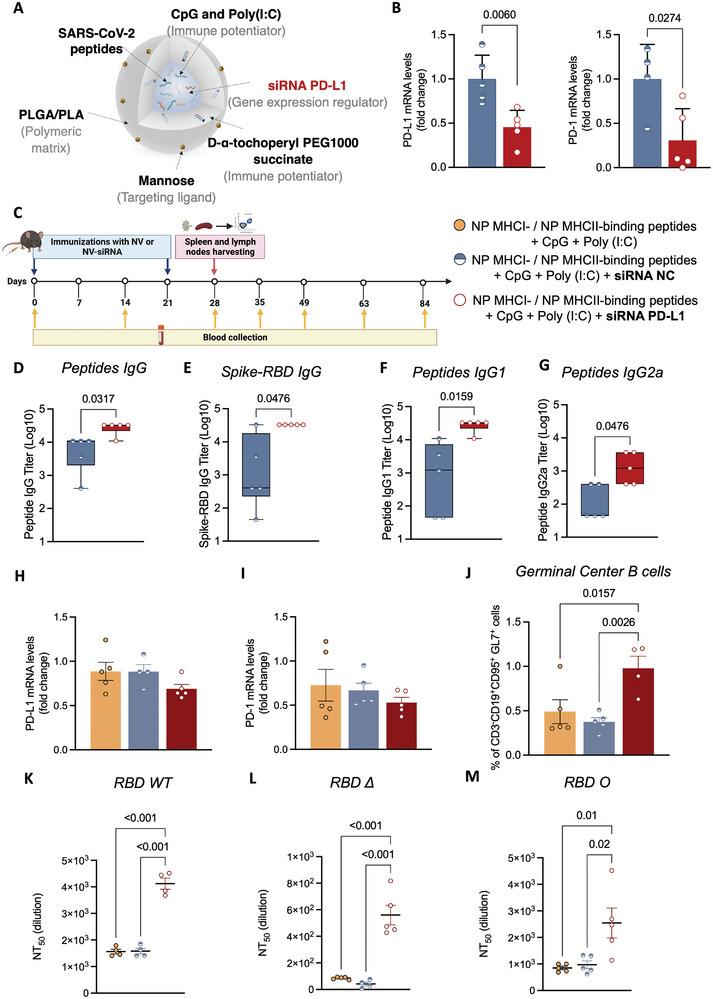
The first approved vaccines for human use against severe acute respiratory syndrome coronavirus 2 (SARS-CoV-2) are nanotechnology-based. Although they are modular, rapidly produced, and can reduce disease severity, the currently available vaccines are restricted in preventing infection, stressing the global demand for novel preventive vaccine technologies. Bearing this in mind, we set out to develop a flexible nanovaccine platform for nasal administration to induce mucosal immunity, which is fundamental for optimal protection against respiratory virus infection. The next-generation multiepitope nanovaccines co-deliver immunogenic peptides, selected by an immunoinformatic workflow, along with adjuvants and regulators of the PD-L1 expression. As a case study, we focused on SARS-CoV-2 peptides as relevant antigens to validate the approach. This platform can evoke both local and systemic cellular- and humoral-specific responses against SARS-CoV-2. This led to the secretion of immunoglobulin A (IgA), capable of neutralizing SARS-CoV-2, including variants of concern, following a heterologous immunization strategy. Considering the limitations of the required cold chain distribution for current nanotechnology-based vaccines, it is shown that the lyophilized nanovaccine is stable for long-term at room temperature and retains its in vivo efficacy upon reconstitution. This makes it particularly relevant for developing countries and offers a modular system adaptable to future viral threats.
第一种经批准可用于人体的针对严重急性呼吸综合征冠状病毒 2 (SARS-CoV-2) 的疫苗是基于纳米技术的。尽管它们具有模块化、快速生产的特点,可以降低疾病的严重程度,但目前可用的疫苗在预防感染方面受到限制,这凸显了全球对新型预防疫苗技术的需求。考虑到这一点,我们着手开发一种用于鼻腔给药的灵活纳米疫苗平台,以诱导粘膜免疫,这对于针对呼吸道病毒感染的最佳保护至关重要。下一代多表位纳米疫苗共同递呈免疫原性肽,这些肽是通过免疫信息学工作流程选择的,同时还递呈佐剂和 PD-L1 表达的调节剂。作为案例研究,我们专注于 SARS-CoV-2 肽作为相关抗原来验证该方法。该平台可以引发针对 SARS-CoV-2 的局部和全身细胞和体液特异性反应。这导致了免疫球蛋白 A (IgA) 的分泌,能够中和 SARS-CoV-2,包括关注的变体,遵循异源免疫策略。考虑到当前基于纳米技术的疫苗所需冷链分配的限制,结果表明冻干纳米疫苗在室温下长期稳定,并在复水后保持其体内疗效。这使其特别适用于发展中国家,并提供了一种可适应未来病毒威胁的模块化系统。



 Zotero 插件