
解析肝细胞癌的分子复杂性:通过先进的生物信息学分析揭示新的生物标志物和治疗靶点。
Deciphering the Molecular Complexity of Hepatocellular Carcinoma: Unveiling Novel Biomarkers and Therapeutic Targets Through Advanced Bioinformatics Analysis.
机构信息
Immunology Research Center, Tabriz University of Medical Sciences, Tabriz, Iran.
Stem Cell Research Center, Tabriz University of Medical Sciences, Tabriz, Iran.
出版信息
Cancer Rep (Hoboken). 2024 Aug;7(8):e2152. doi: 10.1002/cnr2.2152.
BACKGROUND
Hepatocellular carcinoma (HCC) represents a primary liver tumor characterized by a bleak prognosis and elevated mortality rates, yet its precise molecular mechanisms have not been fully elucidated. This study uses advanced bioinformatics techniques to discern differentially expressed genes (DEGs) implicated in the pathogenesis of HCC. The primary objective is to discover novel biomarkers and potential therapeutic targets that can contribute to the advancement of HCC research.
METHODS
The bioinformatics analysis in this study primarily utilized the Gene Expression Omnibus (GEO) database as data source. Initially, the Transcriptome analysis console (TAC) screened for DEGs. Subsequently, we constructed a protein-protein interaction (PPI) network of the proteins associated to the identified DEGs with the STRING database. We obtained our hub genes using Cytoscape and confirmed the results through the GEPIA database. Furthermore, we assessed the prognostic significance of the identified hub genes using the GEPIA database. To explore the regulatory interactions, a miRNA-gene interaction network was also constructed, incorporating information from the miRDB database. For predicting the impact of gene overexpression on drug effects, we utilized CANCER DP.
RESULTS
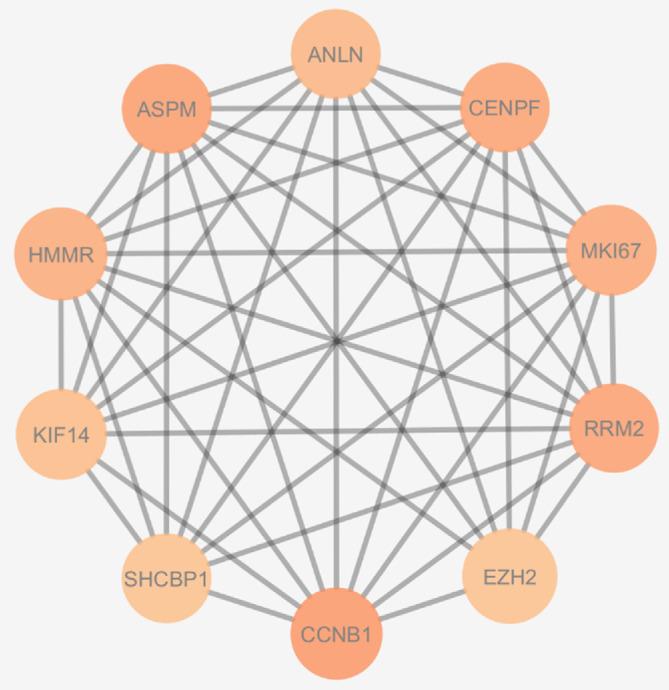
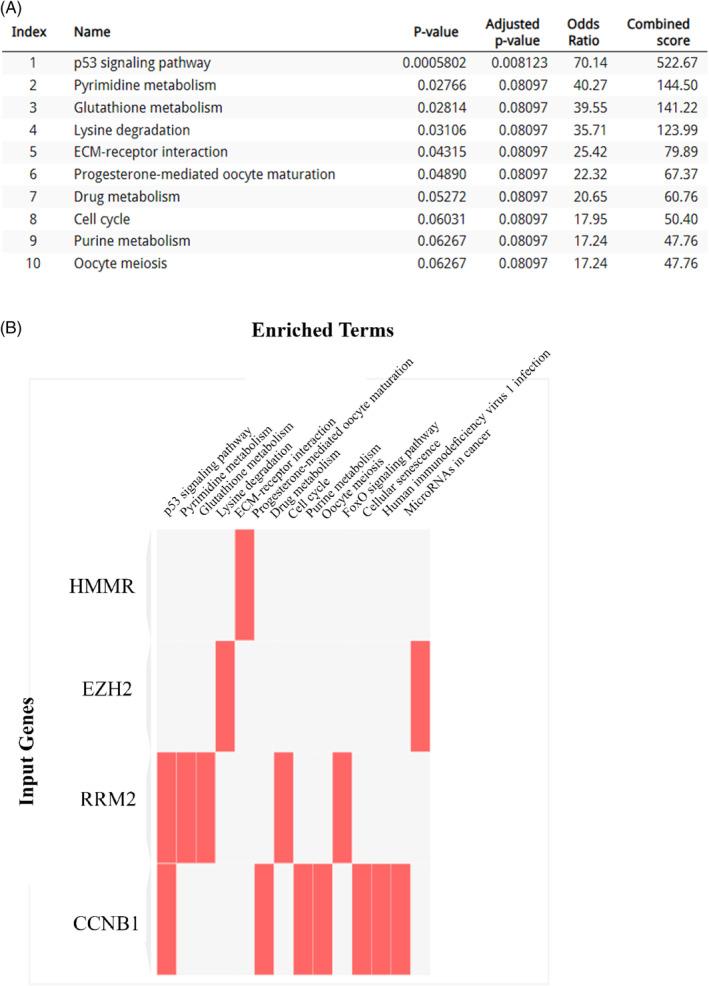
A comprehensive analysis of HCC gene expression profiles revealed a total of 4716 DEGs, consisting of 2430 upregulated genes and 2313 downregulated genes in HCC sample compared to healthy control group. These DEGs exhibited significant enrichment in key pathways such as the PI3K-Akt signaling pathway, nuclear receptors meta-pathway, and various metabolism-related pathways. Further exploration of the PPI network unveiled the P53 signaling pathway and pyrimidine metabolism as the most prominent pathways. We identified 10 hub genes (ASPM, RRM2, CCNB1, KIF14, MKI67, SHCBP1, CENPF, ANLN, HMMR, and EZH2) that exhibited significant upregulation in HCC samples compared to healthy control group. Survival analysis indicated that elevated expression levels of these genes were strongly associated with changes in overall survival in HCC patients. Lastly, we identified specific miRNAs that were found to influence the expression of these genes, providing valuable insights into potential regulatory mechanisms underlying HCC progression.
CONCLUSION
The findings of this study have successfully identified pivotal genes and pathways implicated in the pathogenesis of HCC. These novel discoveries have the potential to significantly enhance our understanding of HCC at the molecular level, opening new ways for the development of targeted therapies and improved prognosis evaluation.
背景
肝细胞癌(HCC)是一种原发性肝肿瘤,其预后较差,死亡率较高,但确切的分子机制尚未完全阐明。本研究使用先进的生物信息学技术来识别与 HCC 发病机制相关的差异表达基因(DEGs)。主要目的是发现新的生物标志物和潜在的治疗靶点,以促进 HCC 研究的进展。
方法
本研究中的生物信息学分析主要利用基因表达综合数据库(GEO)作为数据源。首先,使用 Transcriptome analysis console(TAC)筛选 DEGs。然后,我们使用 STRING 数据库构建与鉴定的 DEGs 相关的蛋白质 - 蛋白质相互作用(PPI)网络。我们使用 Cytoscape 获得我们的枢纽基因,并通过 GEPIA 数据库确认结果。此外,我们使用 GEPIA 数据库评估鉴定的枢纽基因的预后意义。为了探索调控相互作用,还构建了一个 miRNA-基因相互作用网络,其中包含来自 miRDB 数据库的信息。为了预测基因过表达对药物效果的影响,我们使用了 CANCER DP。
结果
对 HCC 基因表达谱的综合分析显示,与健康对照组相比,HCC 样本中共有 4716 个 DEGs,其中 2430 个上调基因和 2313 个下调基因。这些 DEGs 在关键途径中表现出显著的富集,如 PI3K-Akt 信号通路、核受体元途径和各种代谢相关途径。进一步探索 PPI 网络揭示了 P53 信号通路和嘧啶代谢是最突出的途径。我们鉴定了 10 个枢纽基因(ASPM、RRM2、CCNB1、KIF14、MKI67、SHCBP1、CENPF、ANLN、HMMR 和 EZH2),它们在 HCC 样本中表现出明显的上调,与健康对照组相比。生存分析表明,这些基因的表达水平升高与 HCC 患者的总生存率变化密切相关。最后,我们鉴定了特定的 miRNA,发现它们影响这些基因的表达,为 HCC 进展的潜在调控机制提供了有价值的见解。
结论
本研究成功地鉴定了与 HCC 发病机制相关的关键基因和途径。这些新发现有可能极大地提高我们对 HCC 分子水平的理解,为开发靶向治疗和改善预后评估开辟新途径。



 Zotero 插件