
可溶性 CD40 配体作为癌症诊断中有前途的生物标志物。
Soluble CD40 Ligand as a Promising Biomarker in Cancer Diagnosis.
机构信息
Department of Immunology, School of Medicine, Semnan University of Medical Sciences, Semnan 35147-99442, Iran.
Department of Health Science, Iran University of Medical Sciences, Tehran 14496-14535, Iran.
出版信息
Cells. 2024 Jul 28;13(15):1267. doi: 10.3390/cells13151267.
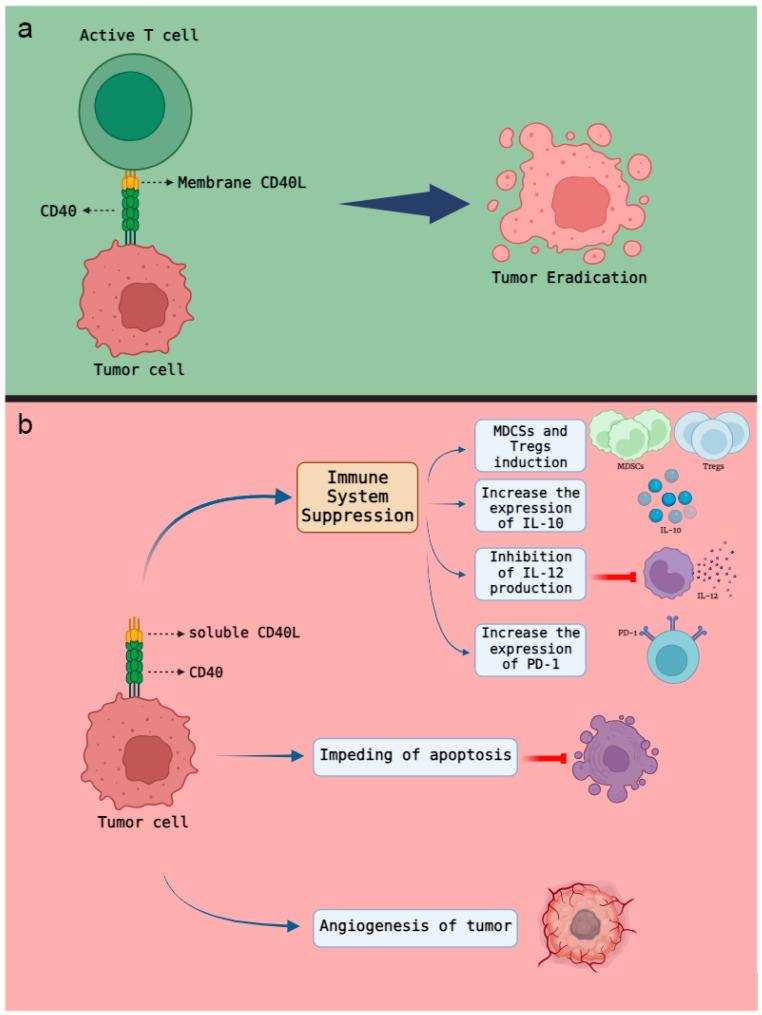
Cancer remains a significant challenge in medicine due to its complexity and heterogeneity. Biomarkers have emerged as vital tools for cancer research and clinical practice, facilitating early detection, prognosis assessment, and treatment monitoring. Among these, CD40 ligand (CD40L) has gained attention for its role in immune response modulation. Soluble CD40 ligand (sCD40L) has shown promise as a potential biomarker in cancer diagnosis and progression, reflecting interactions between immune cells and the tumor microenvironment. This review explores the intricate relationship between sCD40L and cancer, highlighting its diagnostic and prognostic potential. It discusses biomarker discovery, emphasizing the need for reliable markers in oncology, and elucidates the roles of CD40L in inflammatory responses and interactions with tumor cells. Additionally, it examines sCD40L as a biomarker, detailing its significance across various cancer types and clinical applications. Moreover, the review focuses on therapeutic interventions targeting CD40L in malignancies, providing insights into cellular and gene therapy approaches and recombinant protein-based strategies. The clinical effectiveness of CD40L-targeted therapy is evaluated, underscoring the need for further research to unlock the full potential of this signaling pathway in cancer management.
癌症因其复杂性和异质性仍然是医学上的重大挑战。生物标志物已成为癌症研究和临床实践的重要工具,有助于早期检测、预后评估和治疗监测。在这些生物标志物中,CD40 配体(CD40L)因其在免疫反应调节中的作用而受到关注。可溶性 CD40 配体(sCD40L)作为癌症诊断和进展的潜在生物标志物显示出了希望,反映了免疫细胞与肿瘤微环境之间的相互作用。本综述探讨了 sCD40L 与癌症之间的复杂关系,强调了其诊断和预后潜力。它讨论了生物标志物的发现,强调了在肿瘤学中需要可靠的标志物,并阐明了 CD40L 在炎症反应和与肿瘤细胞相互作用中的作用。此外,它还研究了 sCD40L 作为生物标志物的作用,详细说明了它在各种癌症类型和临床应用中的意义。此外,该综述还重点介绍了针对恶性肿瘤中 CD40L 的治疗干预措施,提供了对细胞和基因治疗方法以及基于重组蛋白的策略的深入了解。评估了 CD40L 靶向治疗的临床效果,强调需要进一步研究以充分发挥该信号通路在癌症管理中的潜力。
 Zotero 插件