
预测奶牛甲烷排放的方法:从传统方法到机器学习。
Approaches for predicting dairy cattle methane emissions: from traditional methods to machine learning.
机构信息
School of Computing, Ulster University, Belfast BT15 1ED, UK.
Sustainable Livestock Systems Branch, Agri Food and Biosciences Institute, Hillsborough BT26 6DR, UK.
出版信息
J Anim Sci. 2024 Jan 3;102. doi: 10.1093/jas/skae219.
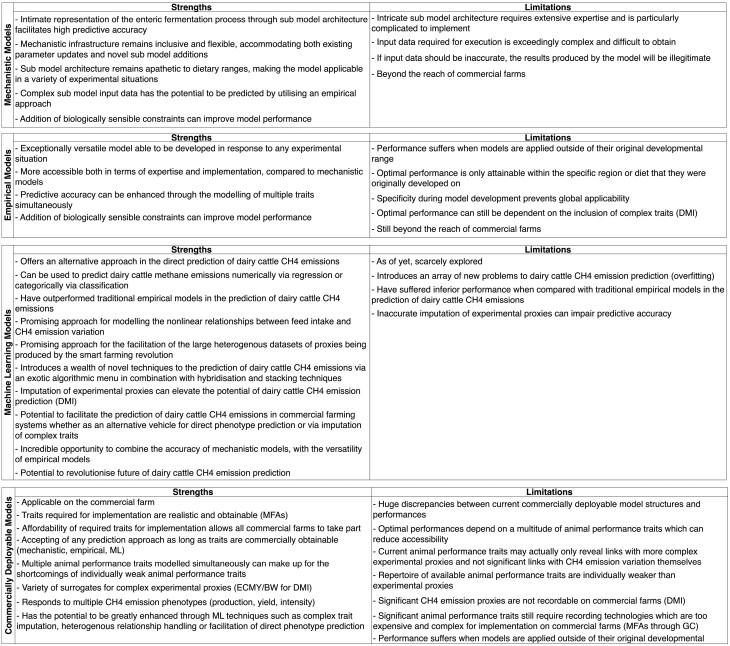
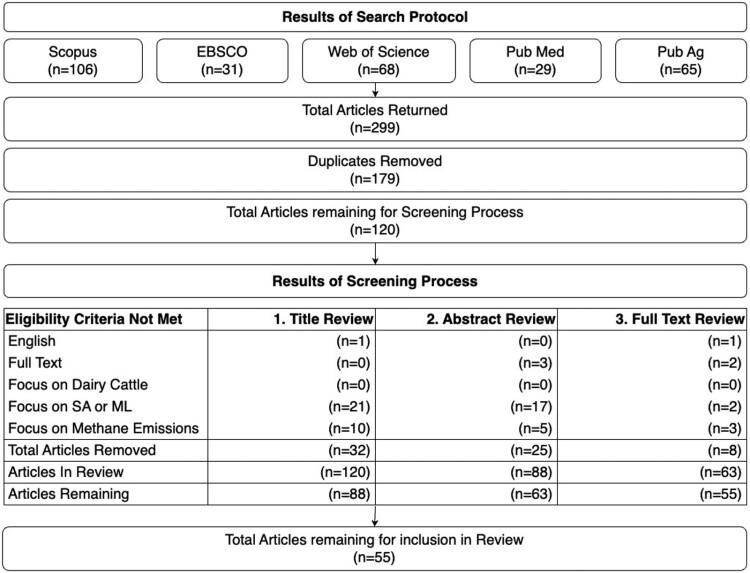
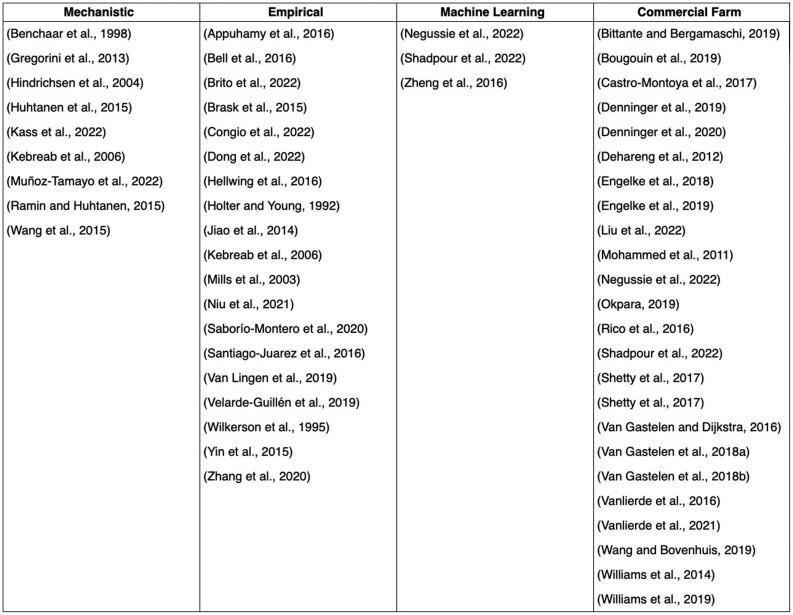
Measuring dairy cattle methane (CH4) emissions using traditional recording technologies is complicated and expensive. Prediction models, which estimate CH4 emissions based on proxy information, provide an accessible alternative. This review covers the different modeling approaches taken in the prediction of dairy cattle CH4 emissions and highlights their individual strengths and limitations. Following the guidelines set out by the Preferred Reporting Items for Systematic Review and Meta-Analyses (PRISMA); Scopus, EBSCO, Web of Science, PubMed and PubAg were each queried for papers with titles that contained search terms related to a population of "Bovine," exposure of "Statistical Analysis or Machine Learning," and outcome of "Methane Emissions". The search was executed in December 2022 with no publication date range set. Eligible papers were those that investigated the prediction of CH4 emissions in dairy cattle via statistical or machine learning (ML) methods and were available in English. 299 papers were returned from the initial search, 55 of which, were eligible for inclusion in the discussion. Data from the 55 papers was synthesized by the CH4 emission prediction approach explored, including mechanistic modeling, empirical modeling, and machine learning. Mechanistic models were found to be highly accurate, yet they require difficult-to-obtain input data, which, if imprecise, can produce misleading results. Empirical models remain more versatile by comparison, yet suffer greatly when applied outside of their original developmental range. The prediction of CH4 emissions on commercial dairy farms can utilize any approach, however, the traits they use must be procurable in a commercial farm setting. Milk fatty acids (MFA) appear to be the most popular commercially accessible trait under investigation, however, MFA-based models have produced ambivalent results and should be consolidated before robust accuracies can be achieved. ML models provide a novel methodology for the prediction of dairy cattle CH4 emissions through a diverse range of advanced algorithms, and can facilitate the combination of heterogenous data types via hybridization or stacking techniques. In addition to this, they also offer the ability to improve dataset complexity through imputation strategies. These opportunities allow ML models to address the limitations faced by traditional prediction approaches, as well as enhance prediction on commercial farms.
使用传统的记录技术测量奶牛甲烷(CH4)排放既复杂又昂贵。预测模型根据替代信息估算 CH4 排放量,提供了一种可行的替代方法。本综述涵盖了预测奶牛 CH4 排放所采用的不同建模方法,并强调了它们各自的优缺点。根据系统评价和荟萃分析的首选报告项目(PRISMA)的指导原则;Scopus、EBSCO、Web of Science、PubMed 和 PubAg 都针对标题中包含与“牛”种群相关的搜索词、“统计分析或机器学习”暴露和“甲烷排放”结果的论文进行了查询。搜索于 2022 年 12 月执行,未设置发布日期范围。符合条件的论文是那些通过统计或机器学习(ML)方法研究奶牛 CH4 排放预测的论文,并且可以用英文获得。从最初的搜索中返回了 299 篇论文,其中 55 篇论文符合纳入讨论的条件。通过所探索的 CH4 排放预测方法,对 55 篇论文的数据进行了综合,包括机械建模、经验建模和机器学习。机械模型被发现非常准确,但它们需要难以获得的输入数据,如果不精确,可能会产生误导性的结果。相比之下,经验模型仍然更加通用,但在应用于其原始开发范围之外时,会受到很大影响。商业奶牛场的 CH4 排放预测可以使用任何方法,但是,它们使用的特征必须在商业农场环境中可获得。乳脂肪酸(MFA)似乎是最受欢迎的商业上可获得的研究特征,但基于 MFA 的模型产生了矛盾的结果,在获得稳健的准确性之前,应该进行整合。机器学习模型通过各种先进的算法为奶牛 CH4 排放预测提供了一种新的方法,并且可以通过杂交或堆叠技术促进异类数据类型的组合。除此之外,它们还提供了通过插补策略改善数据集复杂性的能力。这些机会使 ML 模型能够解决传统预测方法面临的限制,并提高商业农场的预测能力。
 Zotero 插件