
睾酮通过调节……抑制猪前脂肪细胞中的脂质积累。
Testosterone Inhibits Lipid Accumulation in Porcine Preadipocytes by Regulating .
作者信息
Xie Fuyin, Wang Yubei, Chan Shuheng, Zheng Meili, Xue Mingming, Yang Xiaoyang, Luo Yabiao, Fang Meiying
机构信息
Department of Animal Genetics and Breeding, National Engineering Laboratory for Animal Breeding, MOA Key Laboratory of Animal Genetics and Breeding, Beijing Key Laboratory for Animal Genetic Improvement, State Key Laboratory of Animal Biotech Breeding, Frontiers Science Center for Molecular Design Breeding, College of Animal Science and Technology, China Agricultural University, Beijing 100193, China.
Sanya Research Institute, China Agricultural University, Sanya 572025, China.
出版信息
Animals (Basel). 2024 Jul 23;14(15):2143. doi: 10.3390/ani14152143.
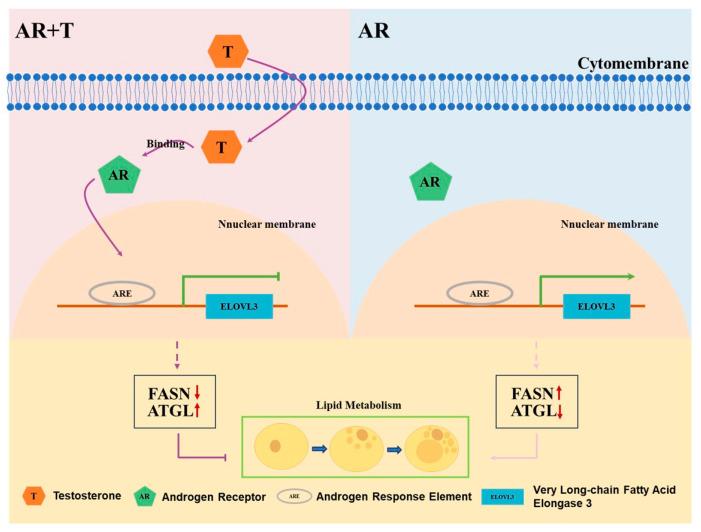
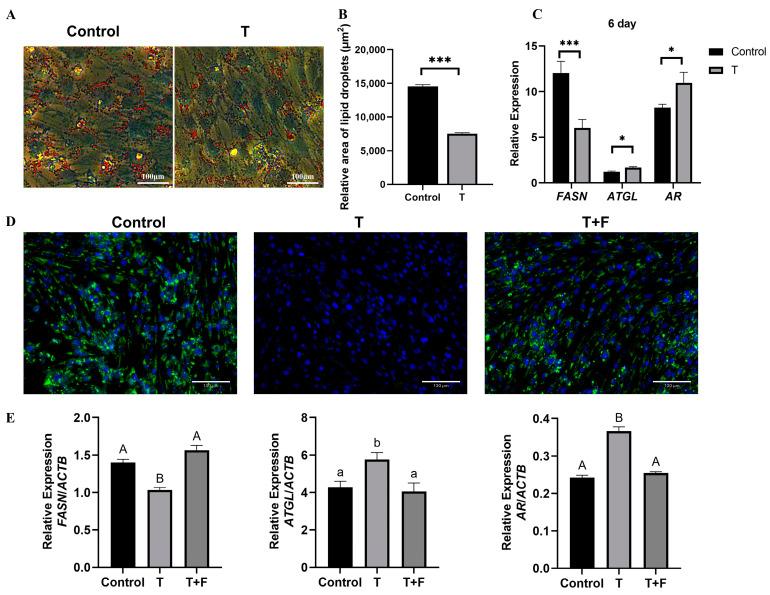
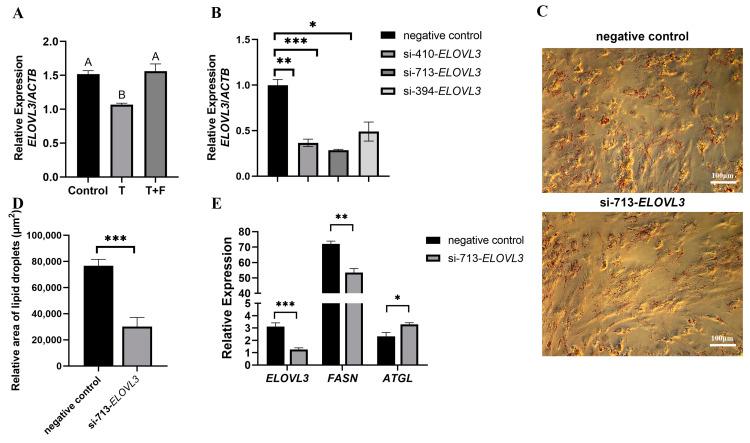
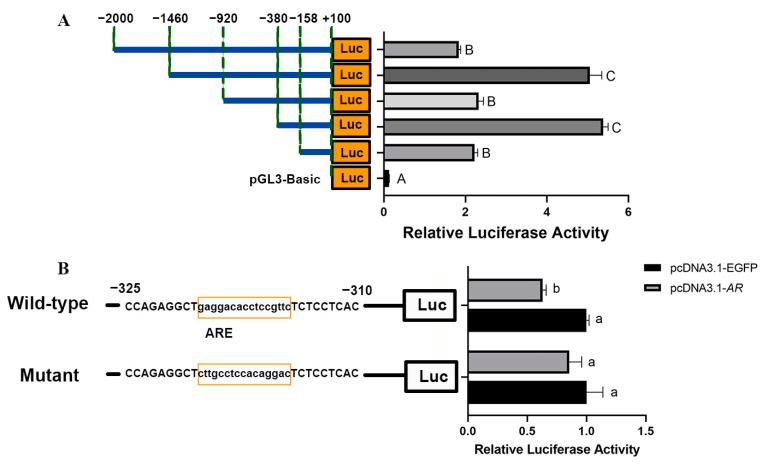
Castration is commonly used to reduce stink during boar production. In porcine adipose tissue, castration reduces androgen levels resulting in metabolic disorders and excessive fat deposition. However, the underlying detailed mechanism remains unclear. In this study, we constructed porcine preadipocyte models with and without androgen by adding testosterone exogenously. The fluorescence intensity of lipid droplet (LD) staining and the fatty acid synthetase () mRNA levels were lower in the testosterone-treated cells than in the untreated control cells. In contrast, the mRNA levels of adipose triglycerides lipase () and androgen receptor () were higher than in the testosterone-treated cells than in the control cells. Subsequently, transcriptomic sequencing of porcine preadipocytes incubated with and without testosterone showed that the mRNA expression levels of very long-chain fatty acid elongase 3 (), a key enzyme involved in fatty acids synthesis and metabolism, were high in control cells. The siRNA-mediated knockdown of reduced LD accumulation and the mRNA levels of and increased the mRNA levels of . Next, we conducted dual-luciferase reporter assays using wild-type and mutant promoter reporters, which showed that the promoter contained an androgen response element (ARE); furthermore, its transcription was negatively regulated by overexpression. In conclusion, our study reveals that testosterone inhibits fat deposition in porcine preadipocytes by suppressing expression. Moreover, our study provides a theoretical basis for further studies on the mechanisms of fat deposition caused by castration.
去势常用于减少公猪生产过程中的异味。在猪的脂肪组织中,去势会降低雄激素水平,导致代谢紊乱和脂肪过度沉积。然而,其潜在的详细机制仍不清楚。在本研究中,我们通过外源添加睾酮构建了有雄激素和无雄激素的猪前体脂肪细胞模型。与未处理的对照细胞相比,睾酮处理的细胞中脂滴(LD)染色的荧光强度和脂肪酸合成酶()的mRNA水平较低。相反,脂肪甘油三酯脂肪酶()和雄激素受体()的mRNA水平在睾酮处理的细胞中高于对照细胞。随后,对有睾酮和无睾酮孵育的猪前体脂肪细胞进行转录组测序,结果表明,参与脂肪酸合成和代谢的关键酶超长链脂肪酸延长酶3()的mRNA表达水平在对照细胞中较高。siRNA介导的敲低减少了LD积累和的mRNA水平,并增加了的mRNA水平。接下来,我们使用野生型和突变型启动子报告基因进行了双荧光素酶报告基因测定,结果表明启动子包含一个雄激素反应元件(ARE);此外,其转录受到过表达的负调控。总之,我们的研究表明,睾酮通过抑制的表达来抑制猪前体脂肪细胞中的脂肪沉积。此外,我们的研究为进一步研究去势引起脂肪沉积的机制提供了理论基础。

 Zotero 插件