
调节……中天然橡胶的生物合成。
Regulates the Biosynthesis of Natural Rubber in .
作者信息
Wu Yulin, Dong Gaoquan, Luo Fengqi, Xie Hao, Li Xiaodong, Yan Jie
机构信息
Key Laboratory of Xinjiang Phytomedicine Resource and Utilization of Ministry of Education, Xinjiang Production and Construction Corps Key Laboratory of Oasis Town and Mountain-Basin System Ecology, College of Life Sciences, Shihezi University, Shihezi 832003, China.
出版信息
Plants (Basel). 2024 Jul 24;13(15):2034. doi: 10.3390/plants13152034.
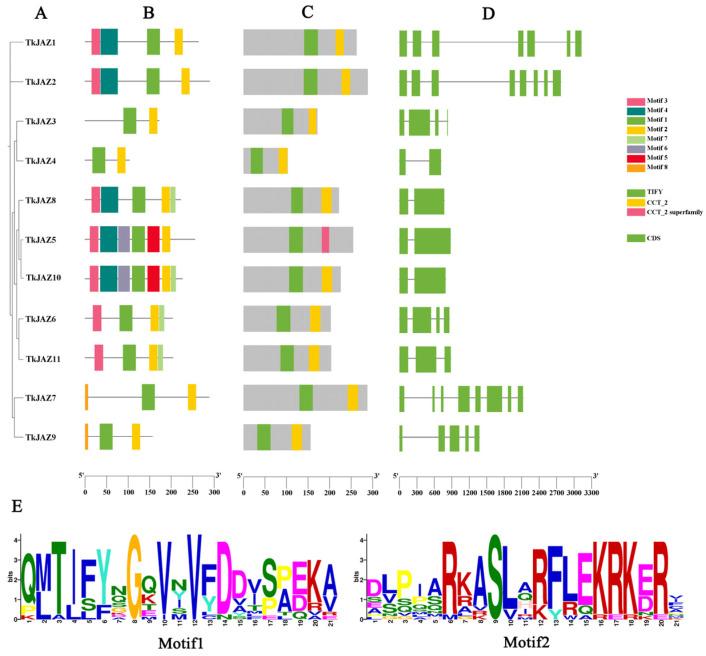
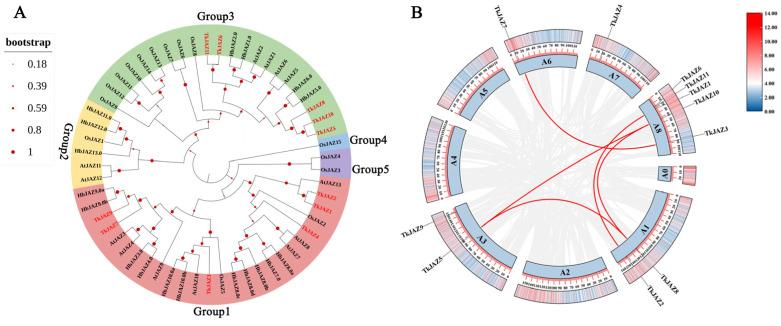
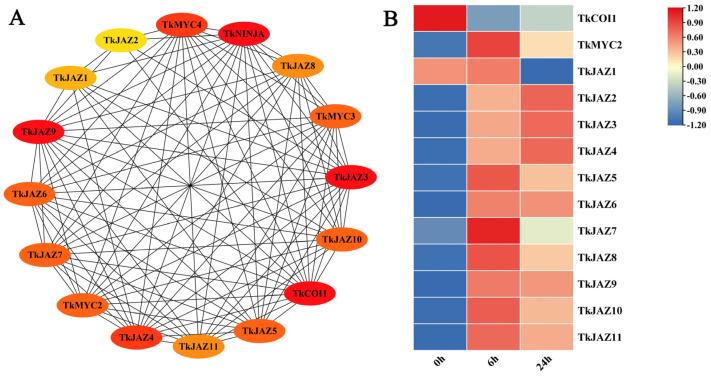
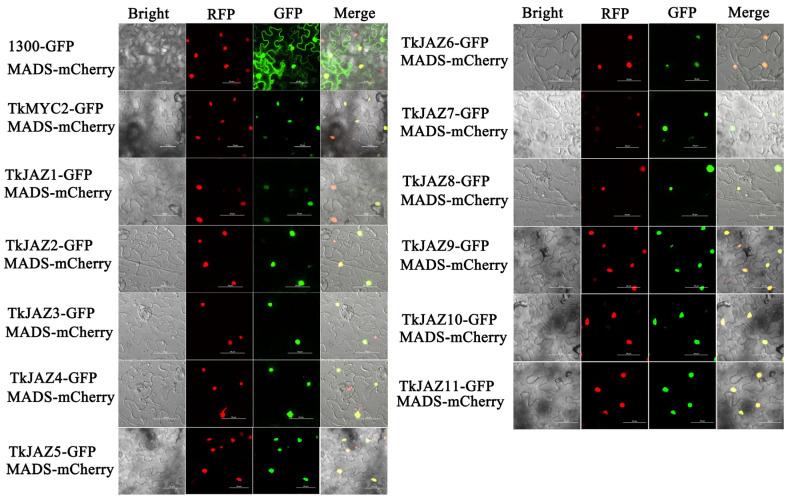
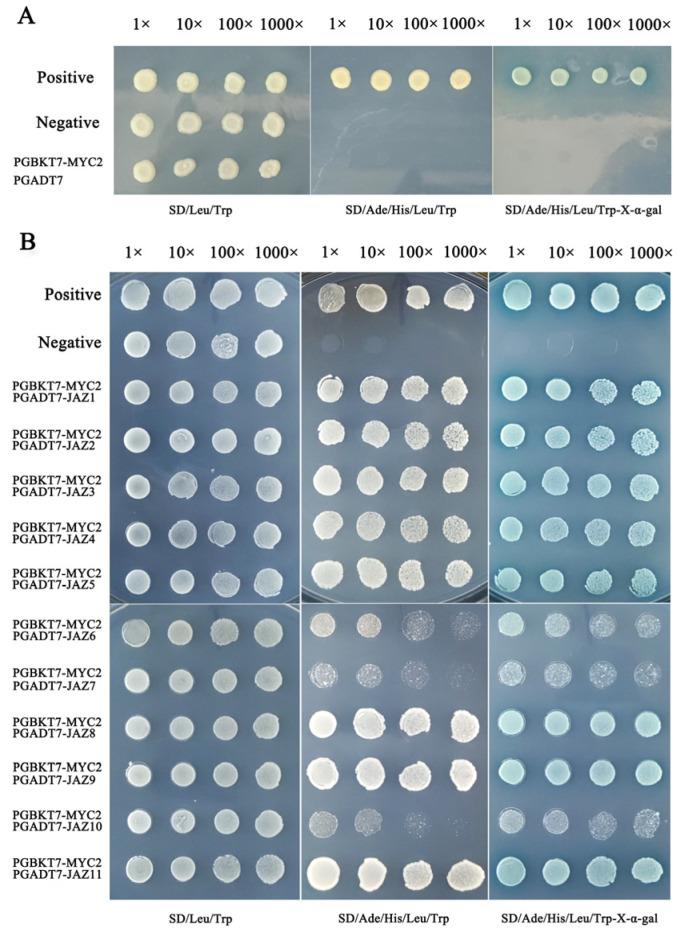
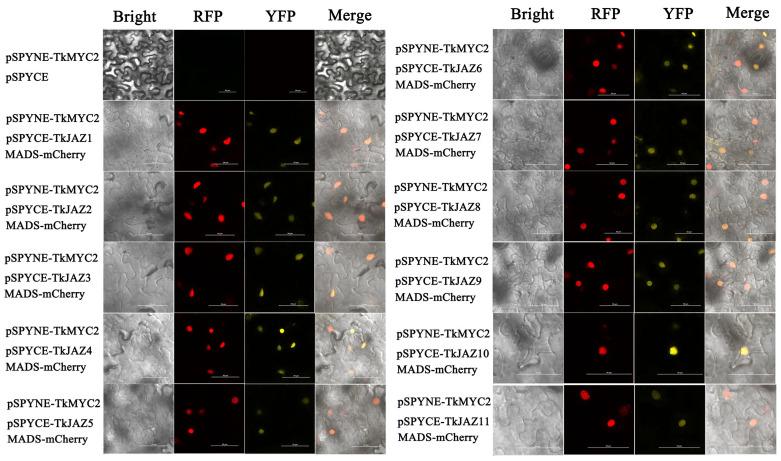
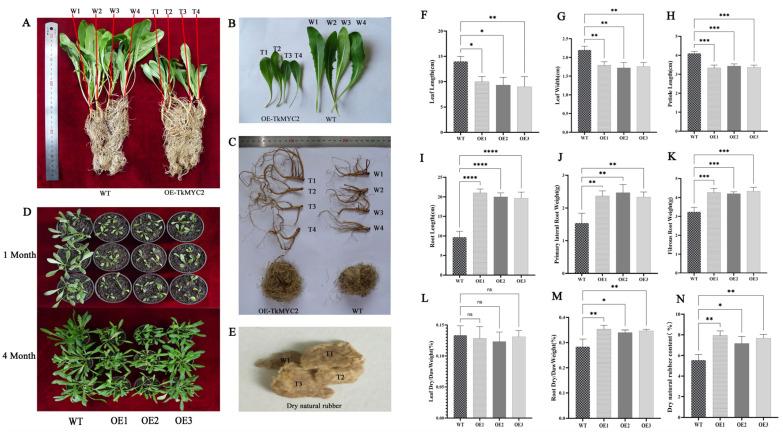
(TKS) is a natural rubber (NR)-producing plant and a model plant for studying the biosynthesis of NR. Analyzing and studying the biosynthetic mechanism of NR is an important way to cultivate high-yield rubber TKS varieties. JAZ proteins, which belong to the Jasmonate ZIM domain family, function as negative regulators in the jasmonic acid (JA) signal transduction pathway. MYC2 is typically regarded as a regulatory factor for the target genes of JAZ proteins; JAZ proteins indirectly influence the gene expression regulated by MYC2 by modulating its activity. Theoretically, JAZ is expected to participate in growth, development, and responses to environmental cues related to rubber and biomass accumulation in TKS, all of which rely on the interaction between JAZ and MYC2. In this study, we identified 11 TkJAZs through homology searching of the TKS genomes and bioinformatics analyses. Subcellular localization, Y2H, and BiFC analysis demonstrate that TkJAZs and TkMYC2 are localized in the nucleus, with all TkJAZs and TkMYC2 showing nuclear colocalization interactions. Overexpression of in TKS inhibited leaf development, promoted root growth, and simultaneously increased NR production. RNA-seq and qRT-PCR analysis revealed that the genes exhibit varying degrees of upregulation compared to the wild type, upregulating the gene by 3.7-fold, suggesting that regulates the synthesis of NR by modulating the genes.
三叶橡胶(TKS)是一种产天然橡胶(NR)的植物,也是研究NR生物合成的模式植物。分析和研究NR的生物合成机制是培育高产橡胶TKS品种的重要途径。茉莉酸ZIM结构域(JAZ)蛋白属于茉莉酸ZIM结构域家族,在茉莉酸(JA)信号转导途径中作为负调控因子发挥作用。MYC2通常被认为是JAZ蛋白靶基因的调控因子;JAZ蛋白通过调节MYC2的活性间接影响其调控的基因表达。理论上,JAZ有望参与TKS中与橡胶和生物量积累相关的生长、发育以及对环境信号的响应,所有这些都依赖于JAZ与MYC2之间的相互作用。在本研究中,我们通过对TKS基因组进行同源搜索和生物信息学分析鉴定出11个TkJAZs。亚细胞定位、酵母双杂交(Y2H)和双分子荧光互补(BiFC)分析表明,TkJAZs和TkMYC2定位于细胞核,所有TkJAZs和TkMYC2均表现出核共定位相互作用。在TKS中过表达[此处原文缺失具体基因名称]抑制叶片发育,促进根系生长,同时增加NR产量。RNA测序(RNA-seq)和实时定量聚合酶链反应(qRT-PCR)分析表明,与野生型相比,[此处原文缺失具体基因名称]基因呈现不同程度的上调;[此处原文缺失具体基因名称]基因上调3.7倍,表明[此处原文缺失具体基因名称]通过调节[此处原文缺失具体基因名称]基因来调控NR的合成。

 Zotero 插件