
神经血管单元中的线粒体转移,不仅用于能量救援:一项系统综述。
Mitochondrial Transfer in the Neurovascular Unit, Not Only for Energy Rescue: A Systematic Review.
作者信息
Zhou Daqiang, Yang Sibo, Wu Jiehong, Li Yanan, Jin Huijuan, Luo Yan, Zhang Feng, Jiang Junjie, Hu Bo, Zhou Yifan
出版信息
Aging Dis. 2024 Jul 16;16(4):2008-2035. doi: 10.14336/AD.2024.0461.
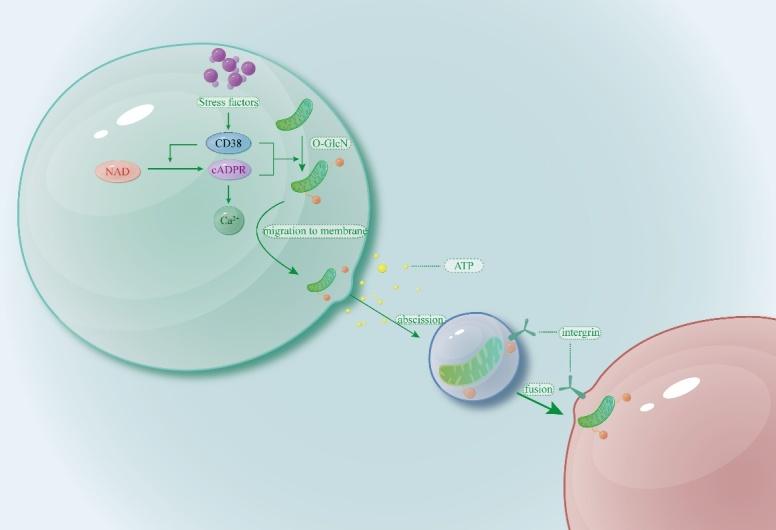
Despite substantial evidence highlighting molecular communication within the components of neurovascular units (NVU), the interactions at the organelle level have been insufficiently explored in recent decades. Mitochondria, for instance, beyond their traditional role as energy supply for intracellular metabolism and survival, provide a novel perspective on intercellular connections through mitochondrial transfer. These transferred mitochondria not only carry bioactive molecules but also signal to mitigate risks in both healthy and pathological conditions. In this review, we summarized mitochondrial transfer events, relevant routes, and underlying molecular mechanisms originating from diverse cell populations within NVU. We particularly focus on the therapeutic potential of this mechanism in treating central nervous system disorders, notably neurodegenerative diseases marked by mitochondrial dysfunction and then highlight the promising prospects of exogenous mitochondrial supplementation as a treatment target.
尽管有大量证据突出了神经血管单元(NVU)各组成部分之间的分子通讯,但近几十年来细胞器水平上的相互作用尚未得到充分探索。例如,线粒体除了作为细胞内代谢和存活的能量供应的传统作用外,还通过线粒体转移为细胞间连接提供了新的视角。这些转移的线粒体不仅携带生物活性分子,还能发出信号以减轻健康和病理状态下的风险。在这篇综述中,我们总结了源自NVU内不同细胞群体的线粒体转移事件、相关途径和潜在分子机制。我们特别关注该机制在治疗中枢神经系统疾病,尤其是以线粒体功能障碍为特征的神经退行性疾病方面的治疗潜力,然后强调外源性线粒体补充作为治疗靶点的广阔前景。


 Zotero 插件