
K9 淋巴瘤检测法可以对犬类淋巴瘤进行遗传亚群分类,从而改善风险分类。
The K9 lymphoma assay allows a genetic subgrouping of canine lymphomas with improved risk classification.
机构信息
Department of Veterinary Sciences, University of Turin, Grugliasco, Turin, Italy.
Institute of Oncology Research, Faculty of Biomedical Sciences, USI, Bellinzona, Switzerland.
出版信息
Sci Rep. 2024 Aug 12;14(1):18687. doi: 10.1038/s41598-024-69716-6.
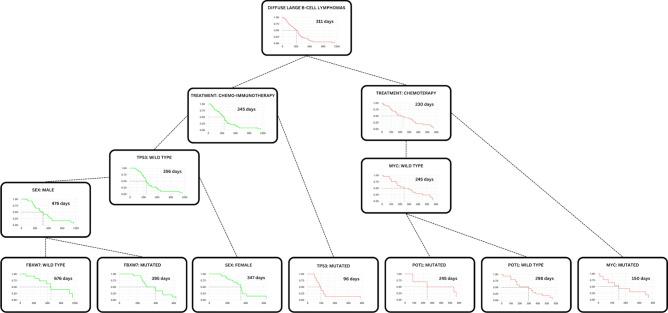
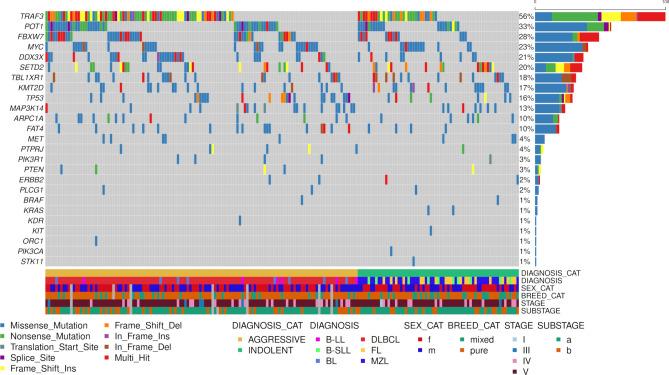
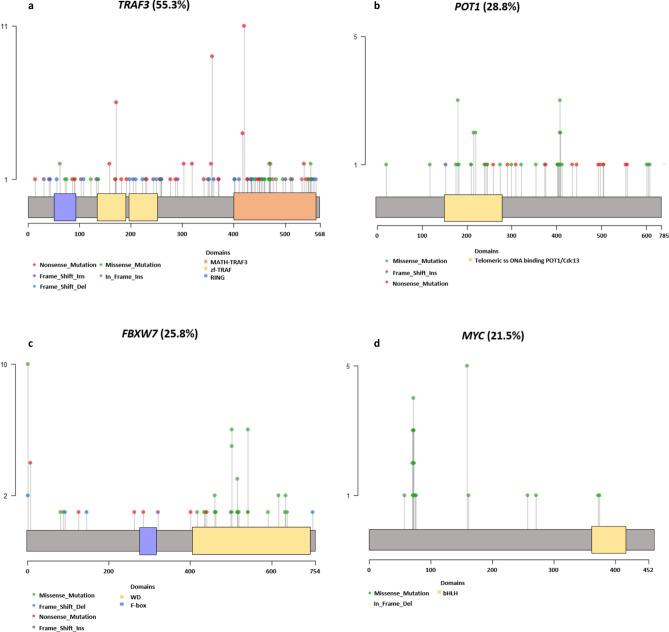
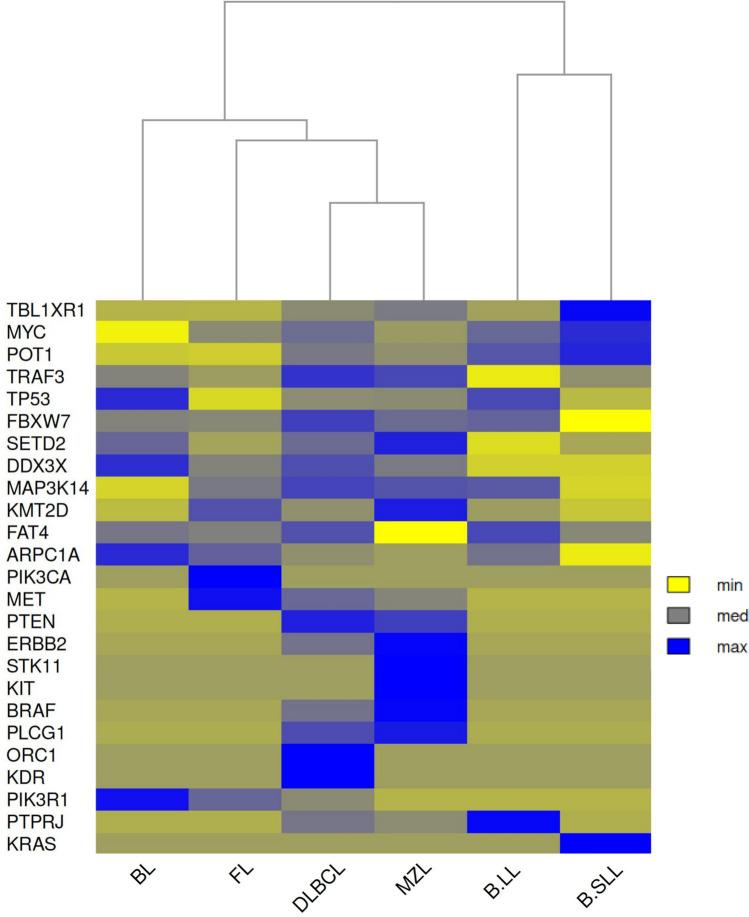
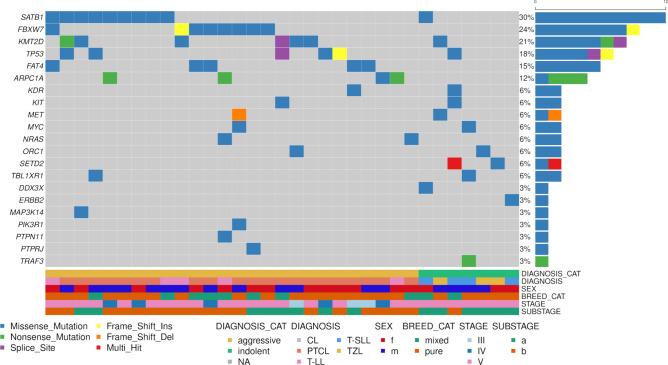
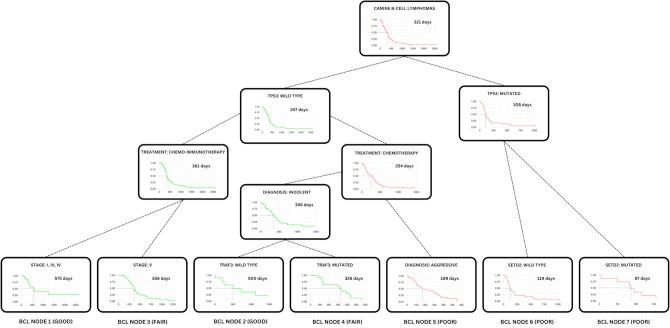
We present here the K9 lymphoma assay, a novel 31-gene targeted next-generation sequencing panel designed for genomic profiling of canine lymphoid neoplasms. Addressing the growing demand for advanced diagnostics in veterinary oncology, this assay enables sensitive identification of known and actionable mutations specific to canine lymphomas, while evaluating its prognostic potential to facilitate diagnosis and prognosis. Our analysis, spanning several B- and T-cell lymphoma histotypes, unveiled distinct mutational landscapes distinguishing tumors derived from immature versus mature lymphocytes. Clustering analysis revealed a shared genetic origin between diffuse large B-cell lymphoma and marginal zone lymphoma, aligning with findings in human lymphomas, with TRAF3 emerging as the most frequently mutated gene across B-cell lymphoma subtypes. Significantly, TP53 mutations demonstrated universal adverse prognostic implications across B-cell lymphomas. Additionally, SETD2 mutations contributed to shorter time-to-progression, underscoring the role of epigenetic dysregulation in B-cell tumors. In T-cell lymphomas, SATB1 and FBXW7 were frequently mutated, warranting further investigation in larger cohorts. Our findings advocate for tailored therapeutic approaches based on the genetic profile, impacting treatment decisions and outcomes in canine lymphoma management. This study provides pivotal insights bridging veterinary and human oncology, paving the way for comprehensive genomic diagnostics and therapeutic strategies in comparative oncology.
我们在此呈现 K9 淋巴瘤检测法,这是一种新的 31 基因靶向下一代测序面板,旨在对犬类淋巴肿瘤进行基因组分析。为了满足兽医肿瘤学领域对高级诊断的日益增长的需求,该检测法能够敏感地识别出犬淋巴瘤特有的已知和可操作的突变,同时评估其预后潜力,以促进诊断和预后。我们的分析涵盖了几种 B 细胞和 T 细胞淋巴瘤组织类型,揭示了区分源自不成熟和成熟淋巴细胞的肿瘤的独特突变景观。聚类分析显示弥漫性大 B 细胞淋巴瘤和边缘区淋巴瘤之间存在共同的遗传起源,与人类淋巴瘤的发现一致,TRAF3 是 B 细胞淋巴瘤亚型中最常发生突变的基因。重要的是,TP53 突变对 B 细胞淋巴瘤具有普遍的不良预后意义。此外,SETB2 突变与较短的进展时间相关,突显了表观遗传失调在 B 细胞肿瘤中的作用。在 T 细胞淋巴瘤中,SATB1 和 FBXW7 经常发生突变,需要在更大的队列中进一步研究。我们的研究结果提倡根据遗传特征制定个性化的治疗方法,从而影响犬淋巴瘤管理中的治疗决策和结果。本研究提供了重要的见解,连接了兽医肿瘤学和人类肿瘤学,为比较肿瘤学中的综合基因组诊断和治疗策略铺平了道路。
 Zotero 插件