
实体瘤全基因组测序在精准肿瘤学中的临床应用。
Clinical application of whole-genome sequencing of solid tumors for precision oncology.
机构信息
Inocras, San Diego, CA, USA.
Department of Pathology, Ajou University School of Medicine, Suwon, Republic of Korea.
出版信息
Exp Mol Med. 2024 Aug;56(8):1856-1868. doi: 10.1038/s12276-024-01288-x. Epub 2024 Aug 13.
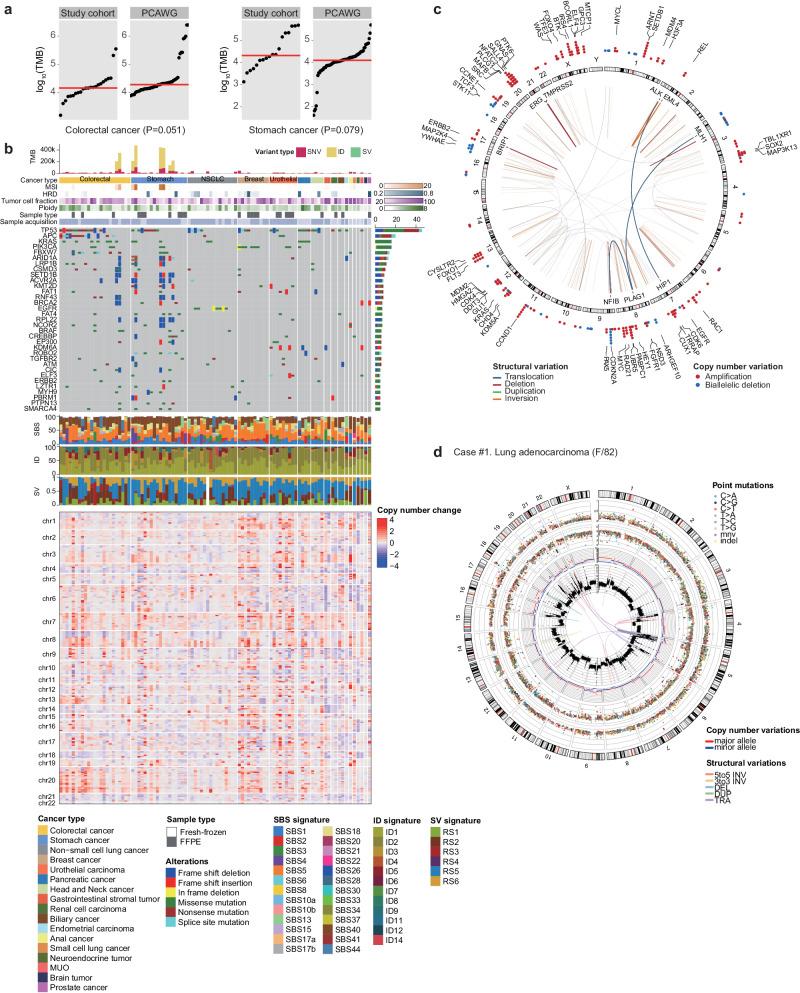
Genomic alterations in tumors play a pivotal role in determining their clinical trajectory and responsiveness to treatment. Targeted panel sequencing (TPS) has served as a key clinical tool over the past decade, but advancements in sequencing costs and bioinformatics have now made whole-genome sequencing (WGS) a feasible single-assay approach for almost all cancer genomes in clinical settings. This paper reports on the findings of a prospective, single-center study exploring the real-world clinical utility of WGS (tumor and matched normal tissues) and has two primary objectives: (1) assessing actionability for therapeutic options and (2) providing clarity for clinical questions. Of the 120 patients with various solid cancers who were enrolled, 95 (79%) successfully received genomic reports within a median of 11 working days from sampling to reporting. Analysis of these 95 WGS reports revealed that 72% (68/95) yielded clinically relevant insights, with 69% (55/79) pertaining to therapeutic actionability and 81% (13/16) pertaining to clinical clarity. These benefits include the selection of informed therapeutics and/or active clinical trials based on the identification of driver mutations, tumor mutational burden (TMB) and mutational signatures, pathogenic germline variants that warrant genetic counseling, and information helpful for inferring cancer origin. Our findings highlight the potential of WGS as a comprehensive tool in precision oncology and suggests that it should be integrated into routine clinical practice to provide a complete image of the genomic landscape to enable tailored cancer management.
肿瘤中的基因组改变在确定其临床轨迹和对治疗的反应性方面起着关键作用。靶向面板测序(TPS)在过去十年中一直是一种重要的临床工具,但测序成本和生物信息学的进步使得全基因组测序(WGS)成为临床环境中几乎所有癌症基因组的可行单一检测方法。本文报告了一项前瞻性、单中心研究的结果,该研究探讨了 WGS(肿瘤和匹配的正常组织)的实际临床应用,主要有两个目标:(1)评估治疗选择的可操作性,(2)为临床问题提供明确答案。在纳入的 120 名患有各种实体癌的患者中,有 95 名(79%)患者在采样后 11 个工作日内成功获得了基因组报告。对这 95 份 WGS 报告进行分析后发现,72%(68/95)产生了具有临床相关性的见解,其中 69%(55/79)与治疗的可操作性有关,81%(13/16)与临床清晰度有关。这些益处包括根据驱动突变、肿瘤突变负荷(TMB)和突变特征、需要遗传咨询的致病性种系变体以及有助于推断癌症起源的信息,选择知情治疗和/或积极的临床试验。我们的研究结果强调了 WGS 作为精准肿瘤学综合工具的潜力,并表明应该将其纳入常规临床实践,以提供基因组景观的全貌,从而实现癌症的个体化管理。




 Zotero 插件