
血清NLRP1水平与冠状动脉钙化:从关联到风险预测列线图的构建
The Serum NLRP1 Level and Coronary Artery Calcification: From Association to Development of a Risk-Prediction Nomogram.
作者信息
Peng Jingfeng, Zhou Bihan, Xu Tao, Hu Xiabing, Zhu Yinghua, Wang Yixiao, Pan Siyu, Li Wenhua, Qian Wenhao, Zong Jing, Li Fangfang
机构信息
Department of Cardiology, The Affiliated Hospital of Xuzhou Medical University, 221000 Xuzhou, Jiangsu, China.
Institute of Cardiovascular Disease Research, Xuzhou Medical University, 221000 Xuzhou, Jiangsu, China.
出版信息
Rev Cardiovasc Med. 2024 Jul 16;25(7):265. doi: 10.31083/j.rcm2507265. eCollection 2024 Jul.
BACKGROUND
To investigate the correlation between inflammasomes and coronary artery calcification (CAC), and develop and validating a nomogram for predicting the risk of CAC in patients with coronary artery disease (CAD).
METHODS
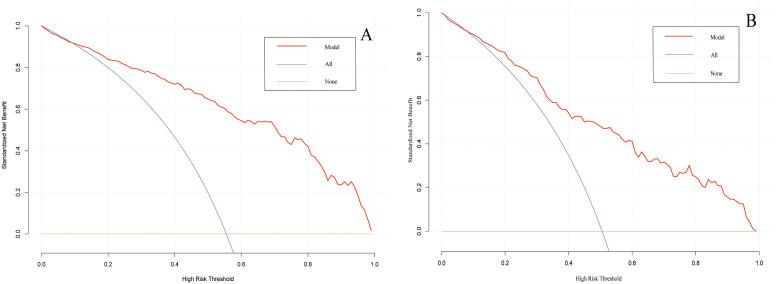
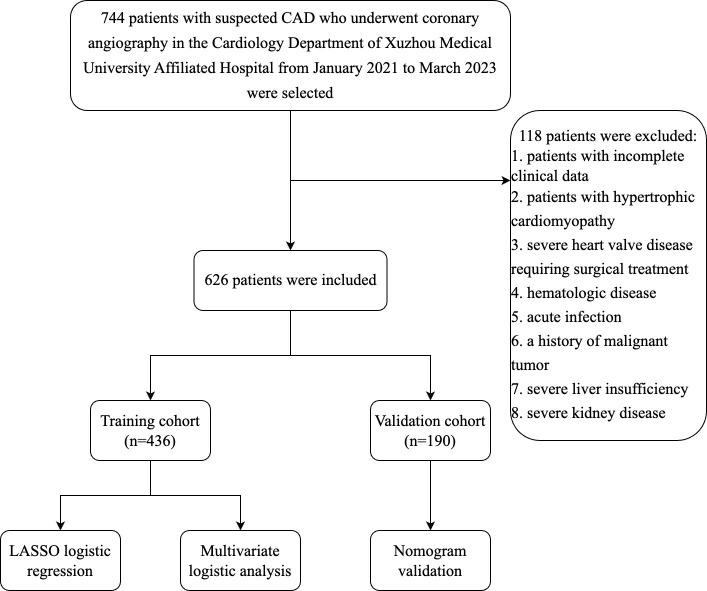
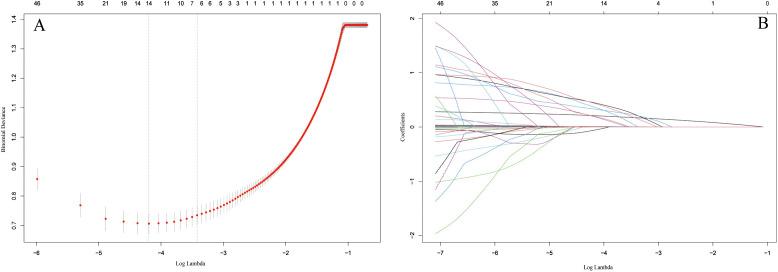
A total of 626 patients with CAD at the Affiliated Hospital of Xuzhou Medical University were enrolled in this study. The patients were divided into the calcification group and the non-calcification group based on the assessment of coronary calcification. We constructed a training set and a validation set through random assignment. The least absolute shrinkage and selection operator (LASSO) regression and multivariate analysis were performed to identify independent risk factors of CAC in patients with CAD. Based on these independent predictors, we developed a web-based dynamic nomogram prediction model. The area under the receiver operating characteristic curve (AUC-ROC), calibration curves, and decision curve analysis (DCA) were used to evaluate this nomogram.
RESULTS
Age, smoking, diabetes mellitus (DM), hyperlipidemia, the serum level of nucleotide-binding oligomerization domain (NOD)-like receptor protein 1 (NLRP1), alkaline phosphatase (ALP) and triglycerides (TG) were identified as independent risk factors of CAC. The AUC-ROC of the nomogram is 0.881 (95% confidence interval (CI): 0.850-0.912) in the training set and 0.825 (95% CI: 0.760-0.876) in the validation set, implying high discriminative ability. Satisfactory performance of this model was confirmed using calibration curves and DCA.
CONCLUSIONS
The serum NLRP1 level is an independent predictor of CAC. We established a web-based dynamic nomogram, providing a more accurate estimation and comprehensive perspective for predicting the risk of CAC in patients with CAD.
背景
探讨炎性小体与冠状动脉钙化(CAC)之间的相关性,并开发和验证一种用于预测冠心病(CAD)患者CAC风险的列线图。
方法
本研究纳入了徐州医科大学附属医院的626例CAD患者。根据冠状动脉钙化评估将患者分为钙化组和非钙化组。通过随机分配构建训练集和验证集。采用最小绝对收缩和选择算子(LASSO)回归及多变量分析来确定CAD患者CAC的独立危险因素。基于这些独立预测因素,我们开发了一种基于网络的动态列线图预测模型。采用受试者操作特征曲线下面积(AUC-ROC)、校准曲线和决策曲线分析(DCA)来评估该列线图。
结果
年龄、吸烟、糖尿病(DM)、高脂血症、核苷酸结合寡聚化结构域(NOD)样受体蛋白1(NLRP1)、碱性磷酸酶(ALP)和甘油三酯(TG)的血清水平被确定为CAC的独立危险因素。列线图在训练集中的AUC-ROC为0.881(95%置信区间(CI):0.850-0.912),在验证集中为0.825(95%CI:0.760-0.876),表明具有较高的判别能力。使用校准曲线和DCA证实了该模型的良好性能。
结论
血清NLRP1水平是CAC的独立预测因素。我们建立了一种基于网络的动态列线图,为预测CAD患者的CAC风险提供了更准确的估计和全面的视角。


 Zotero 插件