
用于向孕妇部署行为激活干预的聊天机器人(朱诺)原型:基于多案例研究的定性评估
A Chatbot (Juno) Prototype to Deploy a Behavioral Activation Intervention to Pregnant Women: Qualitative Evaluation Using a Multiple Case Study.
作者信息
Mancinelli Elisa, Magnolini Simone, Gabrielli Silvia, Salcuni Silvia
机构信息
Department of Developmental and Socialization Psychology, University of Padova, Padova, Italy.
Digital Health Lab, Centre for Digital Health and Wellbeing, Fondazione Bruno Kessler, Povo, Trento, Italy.
出版信息
JMIR Form Res. 2024 Aug 14;8:e58653. doi: 10.2196/58653.
BACKGROUND
Despite the increasing focus on perinatal care, preventive digital interventions are still scarce. Furthermore, the literature suggests that the design and development of these interventions are mainly conducted through a top-down approach that limitedly accounts for direct end user perspectives.
OBJECTIVE
Building from a previous co-design study, this study aimed to qualitatively evaluate pregnant women's experiences with a chatbot (Juno) prototype designed to deploy a preventive behavioral activation intervention.
METHODS
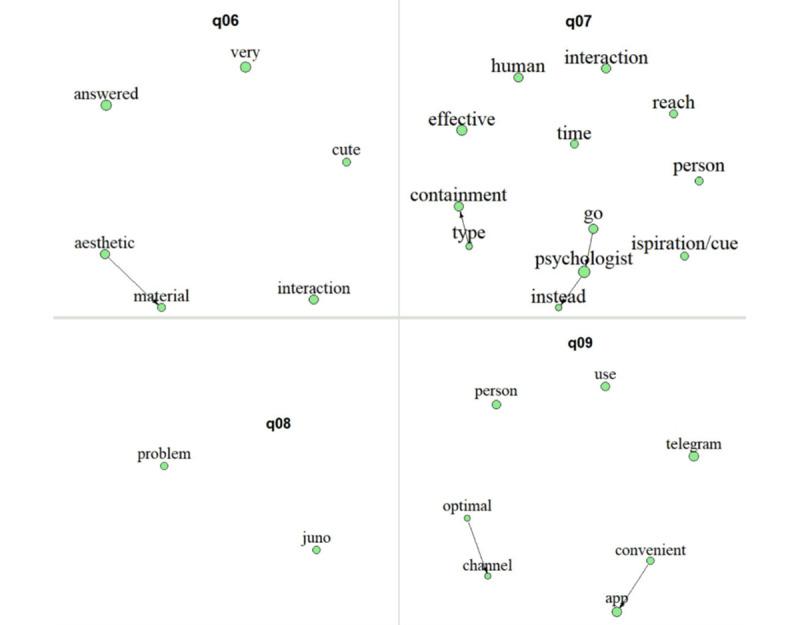
Using a multiple-case study design, the research aims to uncover similarities and differences in participants' perceptions of the chatbot while also exploring women's desires for improvement and technological advancements in chatbot-based interventions in perinatal mental health. Five pregnant women interacted weekly with the chatbot, operationalized in Telegram, following a 6-week intervention. Self-report questionnaires were administered at baseline and postintervention time points. About 10-14 days after concluding interactions with Juno, women participated in a semistructured interview focused on (1) their personal experience with Juno, (2) user experience and user engagement, and (3) their opinions on future technological advancements. Interview transcripts, comprising 15 questions, were qualitatively evaluated and compared. Finally, a text-mining analysis of transcripts was performed.
RESULTS
Similarities and differences have emerged regarding women's experiences with Juno, appreciating its esthetic but highlighting technical issues and desiring clearer guidance. They found the content useful and pertinent to pregnancy but differed on when they deemed it most helpful. Women expressed interest in receiving increasingly personalized responses and in future integration with existing health care systems for better support. Accordingly, they generally viewed Juno as an effective momentary support but emphasized the need for human interaction in mental health care, particularly if increasingly personalized. Further concerns included overreliance on chatbots when seeking psychological support and the importance of clearly educating users on the chatbot's limitations.
CONCLUSIONS
Overall, the results highlighted both the positive aspects and the shortcomings of the chatbot-based intervention, providing insight into its refinement and future developments. However, women stressed the need to balance technological support with human interactions, particularly when the intervention involves beyond preventive mental health context, to favor a greater and more reliable monitoring.
背景
尽管对围产期护理的关注日益增加,但预防性数字干预措施仍然很少。此外,文献表明,这些干预措施的设计和开发主要通过自上而下的方法进行,这种方法很少考虑最终用户的直接观点。
目的
基于之前的联合设计研究,本研究旨在定性评估孕妇使用旨在实施预防性行为激活干预的聊天机器人(朱诺)原型的体验。
方法
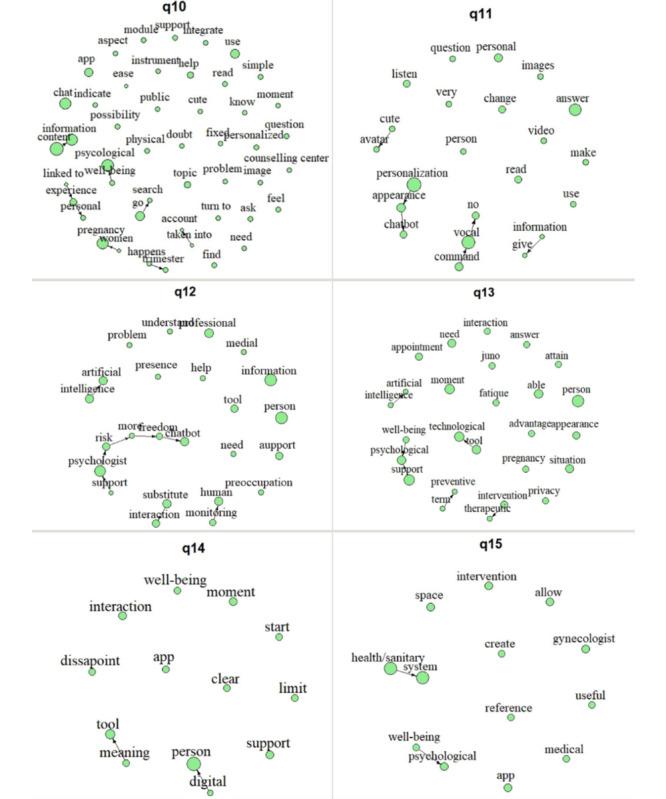
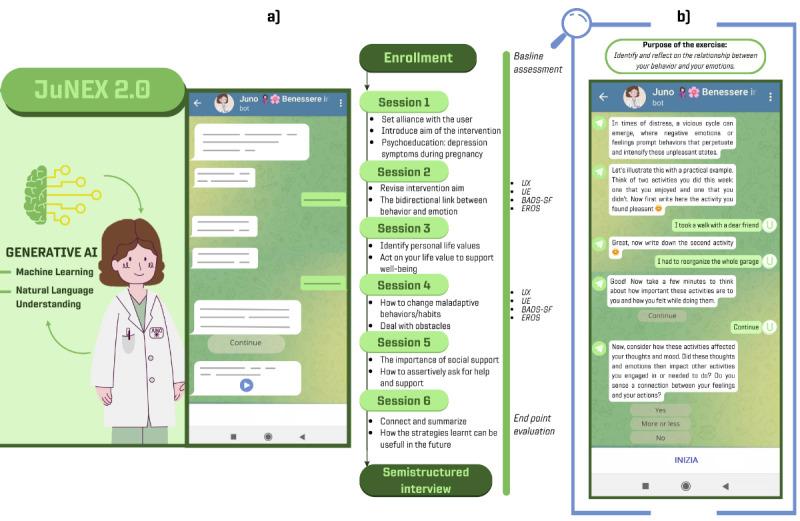
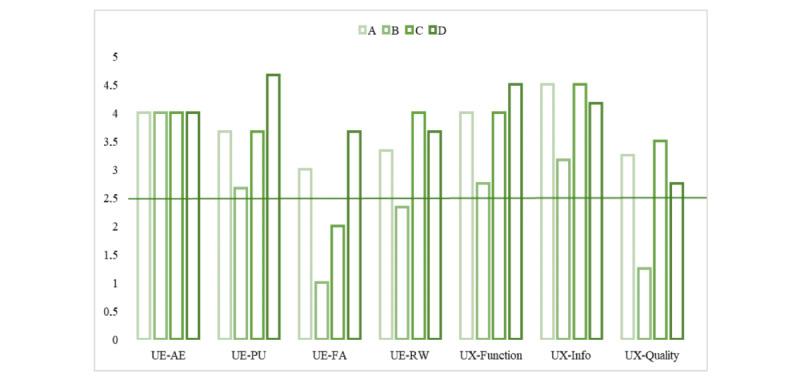
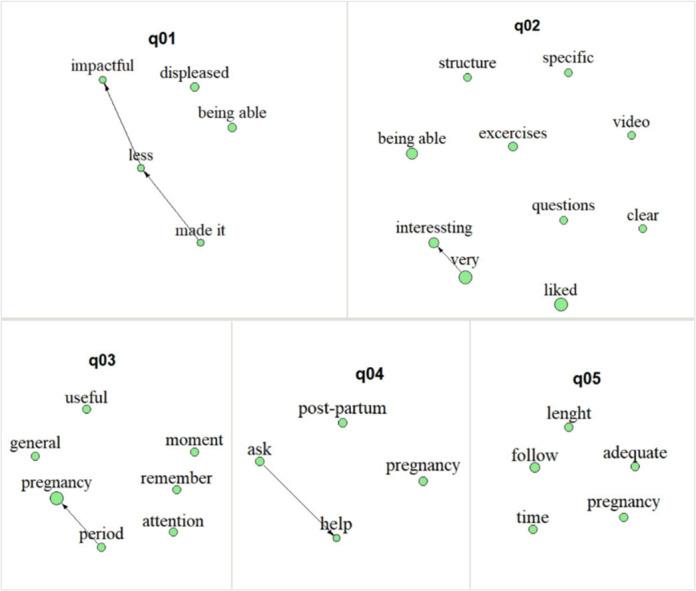
采用多案例研究设计,该研究旨在揭示参与者对聊天机器人看法的异同,同时探索女性对围产期心理健康中基于聊天机器人的干预措施改进和技术进步的期望。五名孕妇在为期6周的干预期间,每周与在Telegram上运行的聊天机器人进行互动。在基线和干预后时间点进行自我报告问卷调查。在与朱诺的互动结束后约10 - 14天,女性参与了一次半结构化访谈,访谈重点围绕:(1)她们与朱诺的个人经历;(2)用户体验和用户参与度;(3)她们对未来技术进步的看法。对包含15个问题的访谈记录进行定性评估和比较。最后,对记录进行文本挖掘分析。
结果
女性在使用朱诺的体验方面出现了异同,她们欣赏其美观性,但也强调了技术问题,并希望得到更清晰的指导。她们发现内容对孕期有用且相关,但对于何时认为内容最有帮助存在分歧。女性表示有兴趣获得越来越个性化的回复,并希望未来能与现有医疗保健系统整合以获得更好的支持。因此,她们总体上认为朱诺是一种有效的即时支持,但强调在心理保健中需要人际互动,特别是在需要越来越个性化的情况下。进一步的担忧包括在寻求心理支持时过度依赖聊天机器人,以及明确向用户说明聊天机器人局限性的重要性。
结论
总体而言,结果突出了基于聊天机器人的干预措施的积极方面和不足之处,为其改进和未来发展提供了见解。然而,女性强调需要在技术支持和人际互动之间取得平衡,特别是当干预涉及预防性心理健康背景之外的情况时,以利于进行更全面、更可靠的监测。

 Zotero 插件