
光和多巴胺作用于两个生物钟神经元以促进早晨清醒。
Light and dopamine impact two circadian neurons to promote morning wakefulness.
机构信息
Howard Hughes Medical Institute and Department of Biology, Brandeis University, Waltham, MA 02453, USA.
Howard Hughes Medical Institute and Department of Biology, Brandeis University, Waltham, MA 02453, USA; Interdisciplinary Research Center on Biology and Chemistry, Shanghai Institute of Organic Chemistry, Chinese Academy of Sciences, Shanghai 201210, China.
出版信息
Curr Biol. 2024 Sep 9;34(17):3941-3954.e4. doi: 10.1016/j.cub.2024.07.056. Epub 2024 Aug 13.
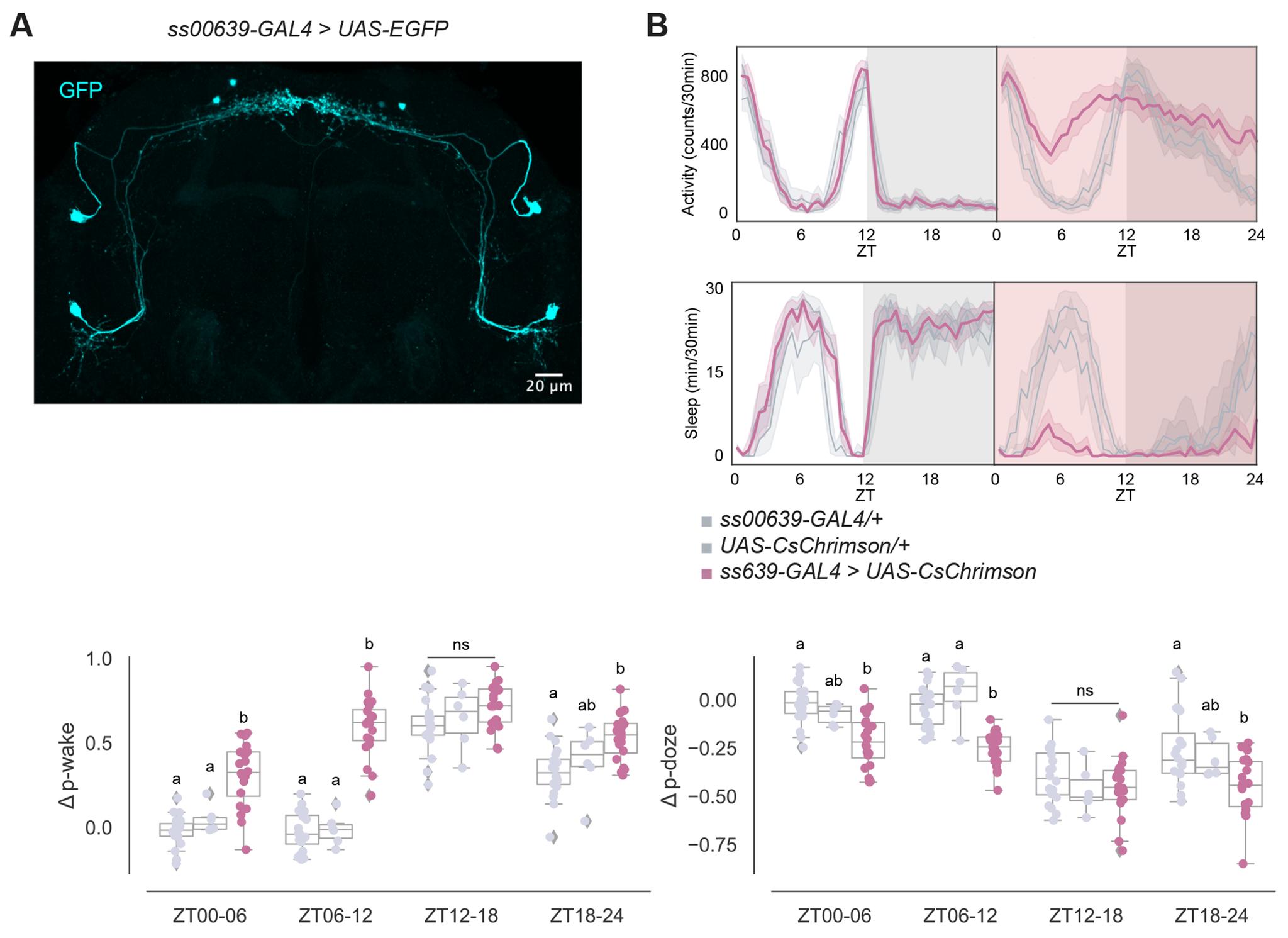
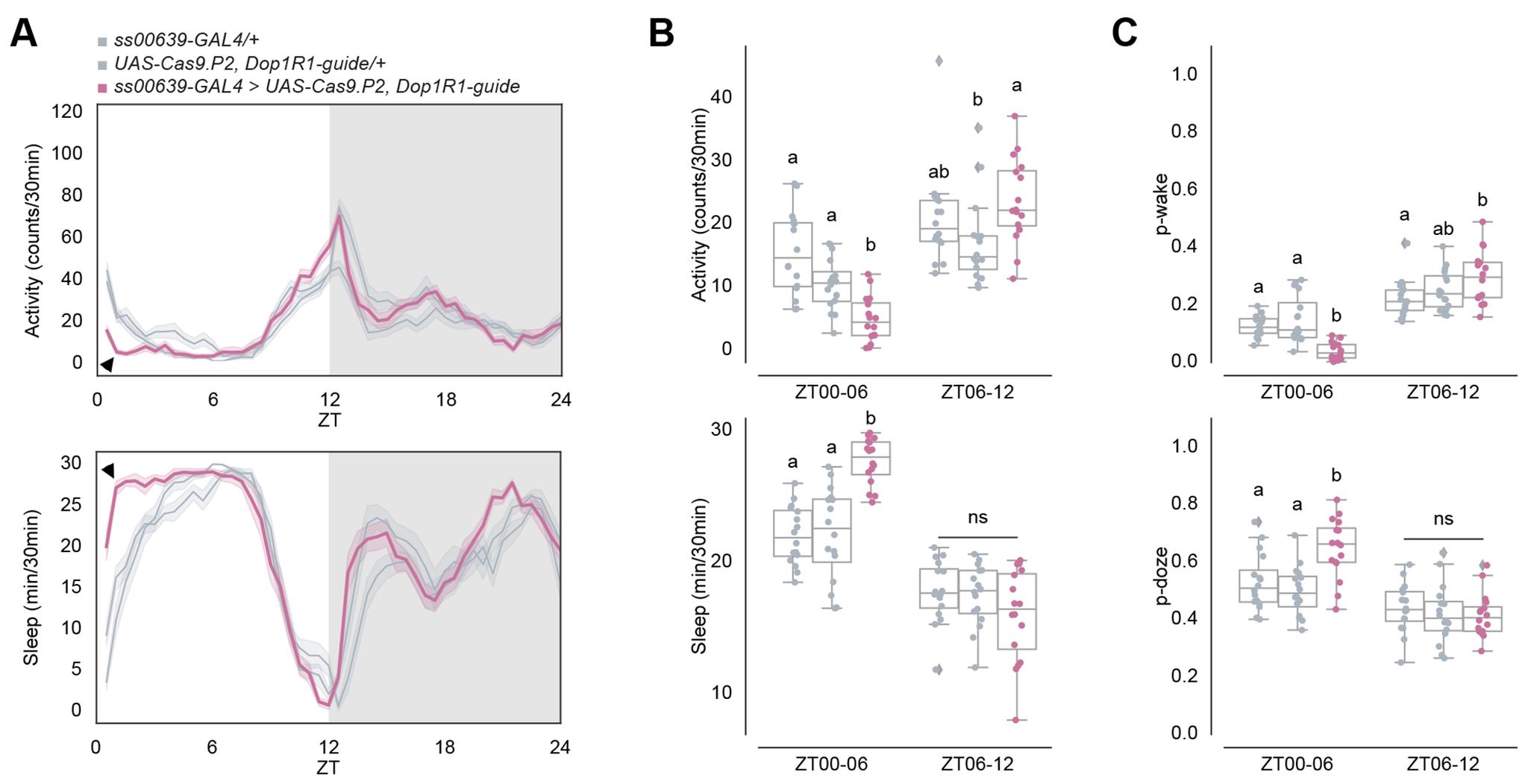
In both mammals and flies, circadian brain neurons orchestrate physiological oscillations and behaviors like wake and sleep-these neurons can be subdivided by morphology and by gene expression patterns. Recent single-cell sequencing studies identified 17 Drosophila circadian neuron groups. One of these includes only two lateral neurons (LNs), which are marked by the expression of the neuropeptide ion transport peptide (ITP). Although these two ITP LNs have long been grouped with five other circadian evening activity cells, inhibiting the two neurons alone strongly reduces morning activity, indicating that they also have a prominent morning function. As dopamine signaling promotes activity in Drosophila, like in mammals, we considered that dopamine might influence this morning activity function. Moreover, the ITP LNs express higher mRNA levels than other LNs of the type 1-like dopamine receptor Dop1R1. Consistent with the importance of Dop1R1, cell-specific CRISPR-Cas9 mutagenesis of this receptor in the two ITP LNs renders flies significantly less active in the morning, and ex vivo live imaging shows Dop1R1-dependent cyclic AMP (cAMP) responses to dopamine in these two neurons. Notably, the response is more robust in the morning, reflecting higher morning Dop1R1 mRNA levels in the two neurons. As mRNA levels are not elevated in constant darkness, this suggests light-dependent upregulation of morning Dop1R1 transcript levels. Taken together with the enhanced morning cAMP response to dopamine, the data indicate how light and dopamine promote morning wakefulness in flies, mimicking the important effect of light on morning wakefulness in humans.
在哺乳动物和果蝇中,生物钟脑神经元协调生理振荡和行为,如觉醒和睡眠——这些神经元可以根据形态和基因表达模式进行细分。最近的单细胞测序研究鉴定了 17 个果蝇生物钟神经元群。其中之一只包括两个侧神经元 (LNs),它们由神经肽离子转运肽 (ITP) 的表达标记。尽管这两个 ITP LN 长期以来一直与其他五个生物钟傍晚活动细胞分组,但单独抑制这两个神经元会强烈降低早晨的活动,表明它们也具有突出的早晨功能。由于多巴胺信号在果蝇中像在哺乳动物中一样促进活动,我们认为多巴胺可能会影响这种早晨活动功能。此外,ITP LN 表达的 mRNA 水平高于 1 型多巴胺受体 Dop1R1 的其他类型 LN。与 Dop1R1 的重要性一致,对这两个 ITP LN 中该受体的特定细胞 CRISPR-Cas9 诱变使果蝇在早晨的活动显著减少,并且离体活体成像显示 Dop1R1 依赖的环腺苷酸 (cAMP) 对这些两个神经元中的多巴胺的反应。值得注意的是,这种反应在早晨更为强烈,反映了这两个神经元中早晨 Dop1R1 mRNA 水平更高。由于在持续黑暗中 mRNA 水平没有升高,这表明光依赖性上调早晨 Dop1R1 转录物水平。综合增强的早晨多巴胺对 cAMP 的反应表明,光和多巴胺如何促进果蝇的早晨觉醒,模拟光对人类早晨觉醒的重要影响。





 Zotero 插件