
Ag/CuS 掺杂矿物磁铁矿纳米复合材料的合成及其对四环素和双氯芬酸污染物的光催化活性的提高。
Synthesis of Ag/CuS doped mineral magnetite nanocomposite with improved photocatalytic activity against tetracycline and diclofenac pollutants.
机构信息
Department of Chemistry, Faculty of Sciences, University of Gonabad, Gonabad, Iran.
出版信息
Sci Rep. 2024 Aug 16;14(1):19009. doi: 10.1038/s41598-024-69644-5.
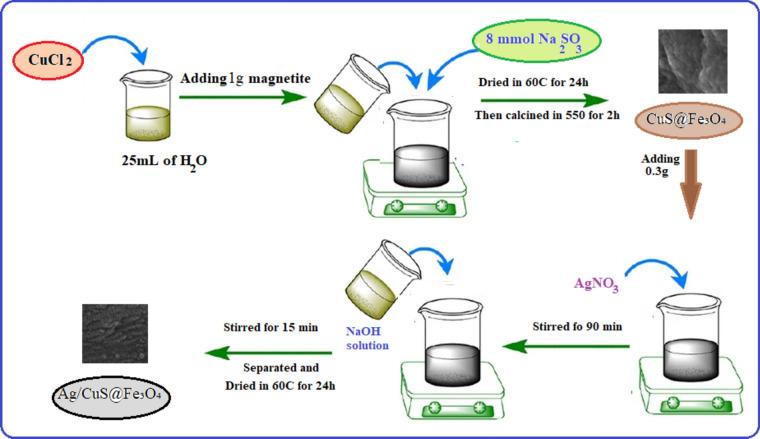
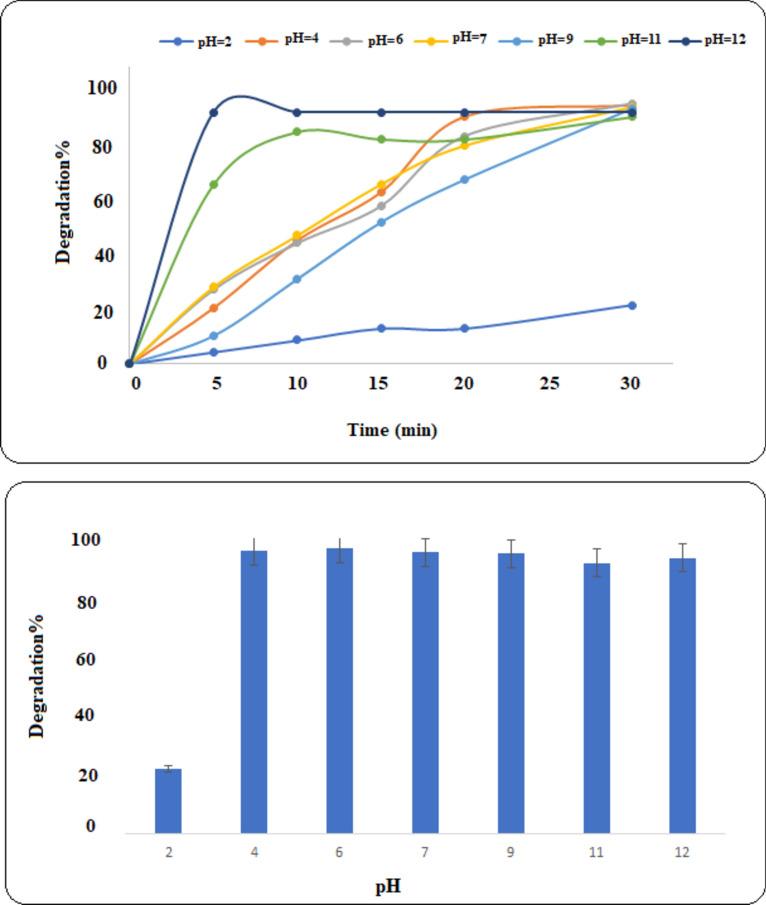
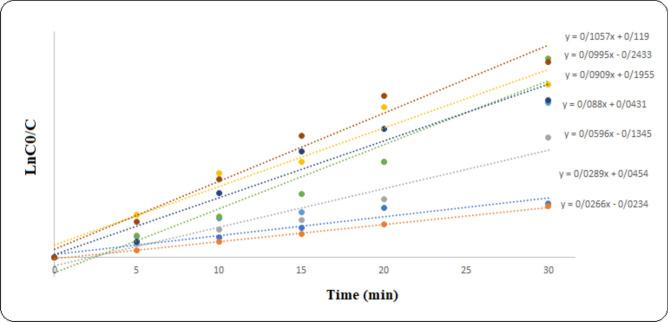
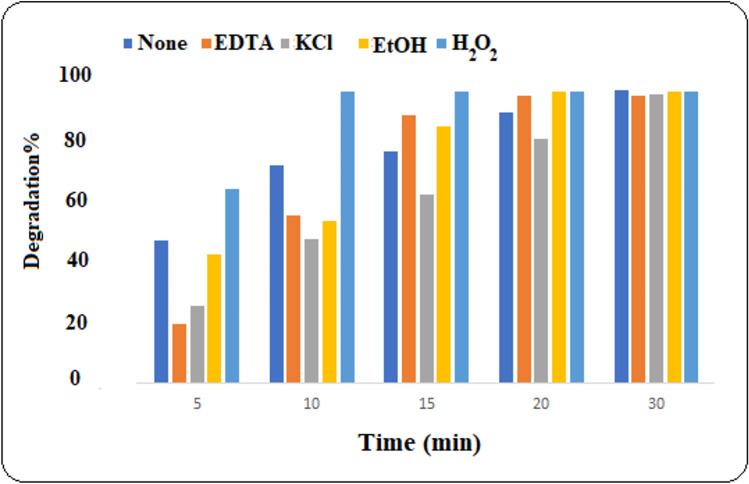
The contamination of water sources by pharmaceutical pollutants presents significant environmental and health hazards, making the development of effective photocatalytic materials crucial for their removal. This research focuses on the synthesis of a novel Ag/CuS/Fe₃O₄ nanocomposite and its photocatalytic efficiency against tetracycline (TC) and diclofenac contaminants. The nanocomposite was created through a straightforward and scalable precipitation method, integrating silver nanoparticles (AgNPs) and copper sulfide (CuS) into a magnetite framework. Various analytical techniques, including X-ray diffraction (XRD), scanning electron microscopy (SEM), Fourier transform infrared spectroscopy (FTIR),ultraviolet-visible spectrophotometry (UV-Vis) and energy-dispersive X-ray spectroscopy (EDS), were employed to characterize the structural and morphological properties of the synthesized material. The photocatalytic activity was tested by degrading tetracycline and diclofenac under visible light. Results indicated a marked improvement in the photocatalytic performance of the Ag/CuS/Fe₃O₄ nanocomposite (98%photodegradation of TC 60 ppm in 30 min) compared to both pure magnetite and CuS/Fe₃O₄. The enhanced photocatalytic efficiency is attributed to the synergistic interaction between AgNPs, CuS, and FeO, which improves light absorption and charge separation, thereby increasing the generation of reactive oxygen species (ROS) and promoting the degradation of the pollutants. The rate constant k of photodegradation was about 0.1 min for catalyst dosages 0.02 g. Also the effect of photocatalyst dose and concentration of TC and pH of solution was tested. The modified photocatalyst was also used for simultaneous photodegradation of TC and diclofenac successfully. This study highlights the potential of the Ag/CuS/Fe₃O₄ nanocomposite as an efficient and reusable photocatalyst for eliminating pharmaceutical pollutants from water.
水中药物污染物的污染对环境和健康构成了重大威胁,因此开发有效的光催化材料对于去除这些污染物至关重要。本研究专注于合成一种新型的 Ag/CuS/Fe₃O₄ 纳米复合材料,并研究其对四环素(TC)和双氯芬酸污染物的光催化效率。该纳米复合材料通过简单且可扩展的沉淀方法合成,将银纳米粒子(AgNPs)和硫化铜(CuS)集成到磁铁矿框架中。采用 X 射线衍射(XRD)、扫描电子显微镜(SEM)、傅里叶变换红外光谱(FTIR)、紫外可见分光光度法(UV-Vis)和能谱(EDS)等多种分析技术对合成材料的结构和形态特性进行了表征。通过可见光降解四环素和双氯芬酸来测试光催化活性。结果表明,与纯磁铁矿和 CuS/Fe₃O₄ 相比,Ag/CuS/Fe₃O₄ 纳米复合材料的光催化性能显著提高(60ppmTC 在 30 分钟内降解 98%)。增强的光催化效率归因于 AgNPs、CuS 和 FeO 之间的协同相互作用,这提高了光吸收和电荷分离,从而增加了活性氧物种(ROS)的生成,并促进了污染物的降解。对于催化剂剂量为 0.02g,光降解的速率常数 k 约为 0.1min。还测试了光催化剂剂量、TC 浓度和溶液 pH 值的影响。改性后的光催化剂也成功地用于同时光降解 TC 和双氯芬酸。本研究强调了 Ag/CuS/Fe₃O₄ 纳米复合材料作为一种高效且可重复使用的光催化剂,用于从水中去除药物污染物的潜力。



 Zotero 插件