
评估欠发达地区公立医院在不同阶段的疫情风险状态及其变化趋势。
Assessment of epidemic risk state and its change trend of public hospital in underdeveloped area in different stages.
机构信息
School of Information, Yunnan University of Finance and Economics, Kunming, China.
Yunnan Key Laboratory of Service Computing, Kunming, China.
出版信息
Front Public Health. 2024 Aug 6;12:1384118. doi: 10.3389/fpubh.2024.1384118. eCollection 2024.
OBJECTIVE
Epidemics are sudden and rapidly spreading. Hospitals in underdeveloped areas are particularly vulnerable in case of an outbreak. This paper aims to assess the epidemic risk state and its change trend of hospitals in different epidemic stages, identify the key factors affecting hospital epidemic risk change, provide priority reference for hospital epidemic risk control, and enhance the hospital's ability to respond to sudden epidemics.
METHODS
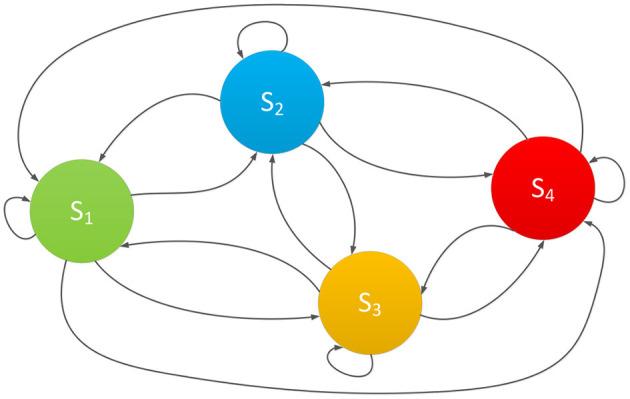
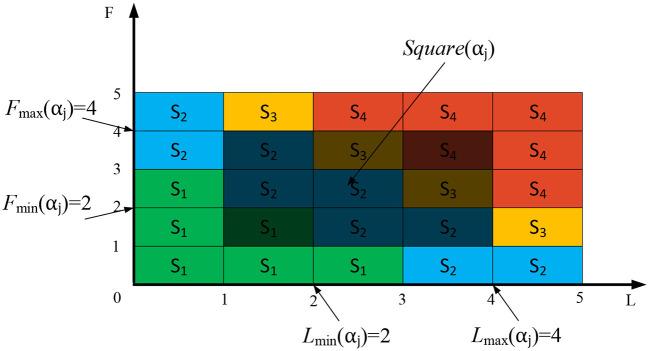
Based on Grounded theory, the epidemic risk indicators that affect hospital safety are summarized. The concept of epidemic risk state and its random state space is proposed according to Markov chain theory. The impact of each indicator on the random risk state and its change is comprehensively assessed from two aspects: risk occurrence probability and risk loss. Finally, the assessment of the hospital epidemic risk state and its change at different stages is achieved.
RESULTS
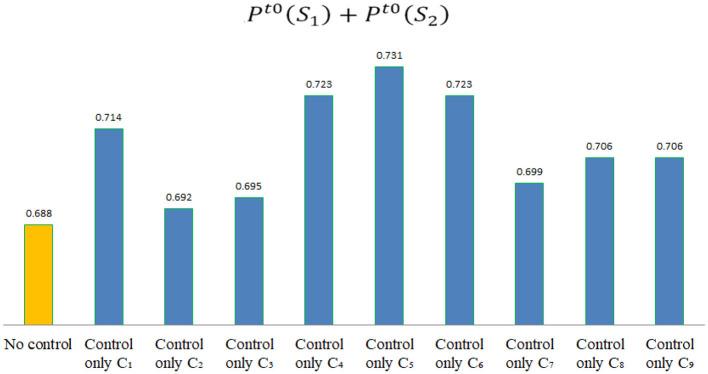
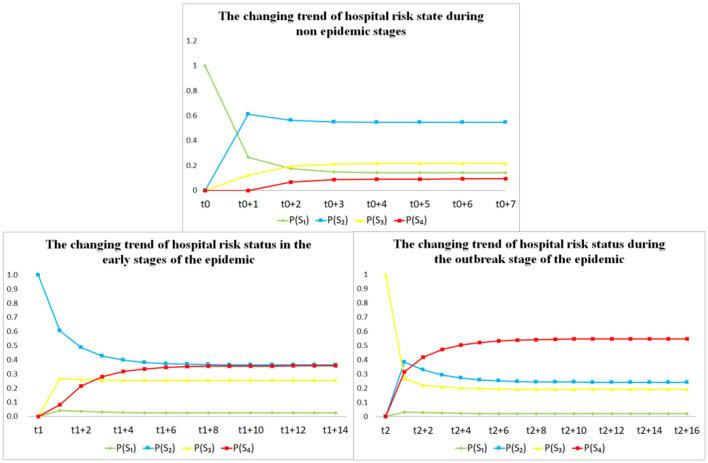
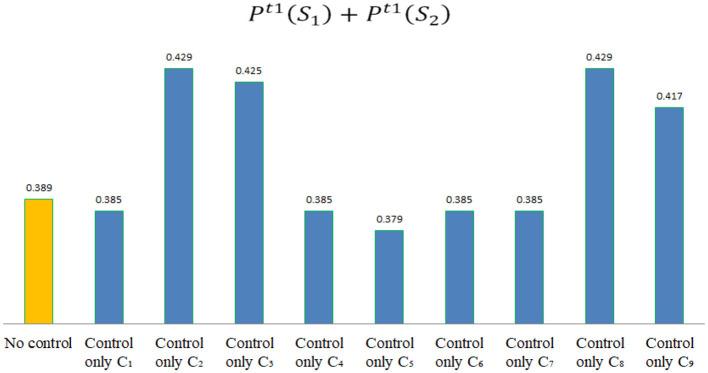
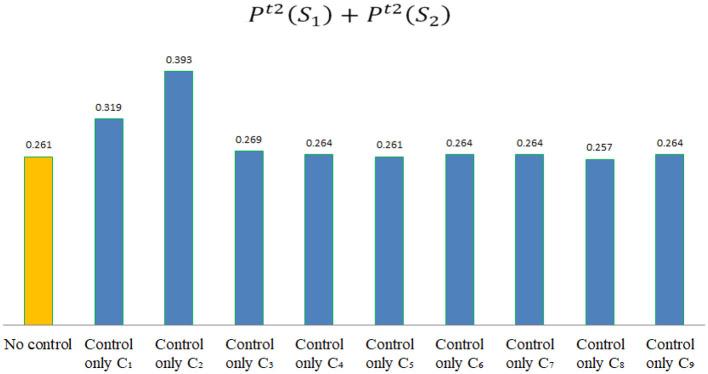
The stable risk states of public hospitals in underdeveloped areas in non-epidemic stage 0, early epidemic stage 1, and outbreak stage 2 are , , and , respectively. In non-epidemic stage, the key factor in improving the hospital epidemic risk state is emergency funding. In early epidemic stage, the key factors in improving the hospital epidemic risk state are the training of medical staff in epidemic prevention skills and the management of public health. In outbreak state, the key factor in improving the hospital epidemic risk state is the training of medical staff in epidemic prevention skills and psychological awareness.
CONCLUSION
This paper proposes the concept of epidemic risk state, providing an effective assessment method for the epidemic risk state and its change trend in public hospitals. According to the assessment, public hospitals in underdeveloped areas in different epidemic stages should adopt different risk control strategies to improve their current risk state. Blind risk control is inefficient and may even cause the epidemic risk to transition toward a more dangerous state.
目的
疫情具有突发性和快速传播性。在疫情爆发时,欠发达地区的医院尤其脆弱。本文旨在评估不同疫情阶段医院的疫情风险状态及其变化趋势,识别影响医院疫情风险变化的关键因素,为医院疫情风险控制提供优先参考,增强医院应对突发疫情的能力。
方法
基于扎根理论,总结影响医院安全的疫情风险指标。根据马尔可夫链理论,提出疫情风险状态及其随机状态空间的概念。从风险发生概率和风险损失两个方面,综合评估各指标对随机风险状态及其变化的影响。最后,实现对不同阶段医院疫情风险状态及其变化的评估。
结果
欠发达地区公立医院在非疫情阶段 0、早期疫情阶段 1 和疫情爆发阶段 2 的稳定风险状态分别为 、 和 。在非疫情阶段,提高医院疫情风险状态的关键因素是应急资金。在早期疫情阶段,提高医院疫情风险状态的关键因素是医务人员传染病防控技能培训和公共卫生管理。在疫情爆发阶段,提高医院疫情风险状态的关键因素是医务人员传染病防控技能培训和心理意识。
结论
本文提出了疫情风险状态的概念,为公立医院的疫情风险状态及其变化趋势提供了有效的评估方法。根据评估,不同疫情阶段的欠发达地区公立医院应采取不同的风险控制策略,以改善其当前的风险状态。盲目进行风险控制效率低下,甚至可能导致疫情风险向更危险的状态转变。
 Zotero 插件