
使用可解释的随机森林模型预测上皮性卵巢癌患者的无进展生存期。
Predicting progression-free survival in patients with epithelial ovarian cancer using an interpretable random forest model.
作者信息
Jian Lian, Chen Xiaoyan, Hu Pingsheng, Li Handong, Fang Chao, Wang Jing, Wu Nayiyuan, Yu Xiaoping
机构信息
Department of Radiology, The Affiliated Cancer Hospital of Xiangya School of Medicine, Central South University/Hunan Cancer Hospital, Changsha, Hunan, China.
Department of Pathology, The Affiliated Cancer Hospital of Xiangya School of Medicine, Central South University/Hunan Cancer Hospital, Changsha, Hunan, China.
出版信息
Heliyon. 2024 Jul 26;10(15):e35344. doi: 10.1016/j.heliyon.2024.e35344. eCollection 2024 Aug 15.
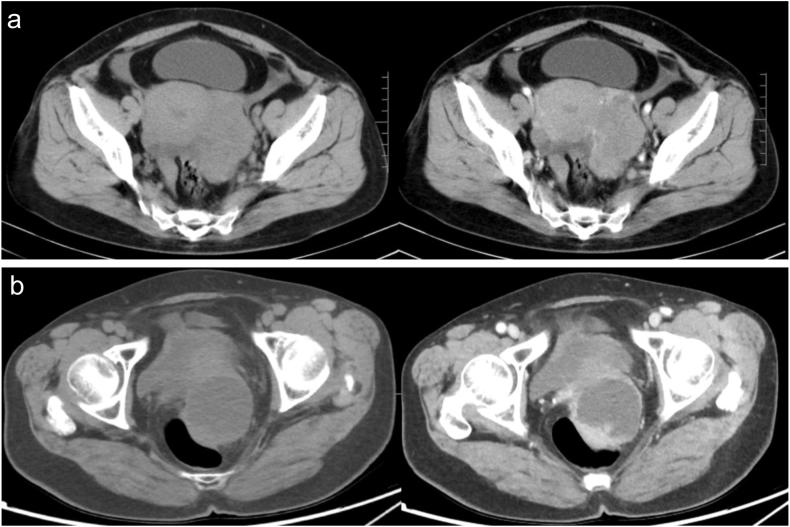
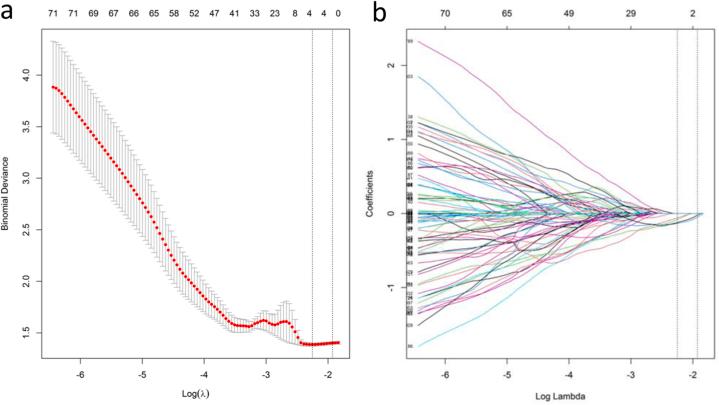
Prognostic models play a crucial role in providing personalised risk assessment, guiding treatment decisions, and facilitating the counselling of patients with cancer. However, previous imaging-based artificial intelligence models of epithelial ovarian cancer lacked interpretability. In this study, we aimed to develop an interpretable machine-learning model to predict progression-free survival in patients with epithelial ovarian cancer using clinical variables and radiomics features. A total of 102 patients with epithelial ovarian cancer who underwent contrast-enhanced computed tomography scans were enrolled in this retrospective study. Pre-surgery clinical data, including age, performance status, body mass index, tumour stage, venous blood cancer antigen-125 (CA125) level, white blood cell count, neutrophil count, red blood cell count, haemoglobin level, and platelet count, were obtained from medical records. The volume of interest for each tumour was manually delineated slice-by-slice along the boundary. A total of 2074 radiomic features were extracted from the pre- and post-contrast computed tomography images. Optimal radiomic features were selected using the Least Absolute Shrinkage and Selection Operator logistic regression. Multivariate Cox analysis was performed to identify independent predictors of three-year progression-free survival. The random forest algorithm developed radiomic and combined models using four-fold cross-validation. Finally, the Shapley additive explanation algorithm was applied to interpret the predictions of the combined model. Multivariate Cox analysis identified CA-125 levels (P = 0.015), tumour stage (P = 0.019), and Radscore (P < 0.001) as independent predictors of progression-free survival. The combined model based on these factors achieved an area under the curve of 0.812 (95 % confidence interval: 0.802-0.822) in the training cohort and 0.772 (95 % confidence interval: 0.727-0.817) in the validation cohort. The most impactful features on the model output were Radscore, followed by tumour stage and CA-125. In conclusion, the Shapley additive explanation-based interpretation of the prognostic model enables clinicians to understand the reasoning behind predictions better.
预后模型在提供个性化风险评估、指导治疗决策以及为癌症患者提供咨询方面发挥着关键作用。然而,先前基于影像的上皮性卵巢癌人工智能模型缺乏可解释性。在本研究中,我们旨在开发一种可解释的机器学习模型,利用临床变量和放射组学特征预测上皮性卵巢癌患者的无进展生存期。本项回顾性研究共纳入了102例行增强计算机断层扫描的上皮性卵巢癌患者。术前临床数据,包括年龄、体能状态、体重指数、肿瘤分期、静脉血癌抗原125(CA125)水平、白细胞计数、中性粒细胞计数、红细胞计数、血红蛋白水平和血小板计数,均从病历中获取。沿边界逐片手动勾勒出每个肿瘤的感兴趣体积。从增强前后的计算机断层扫描图像中提取了总共2074个放射组学特征。使用最小绝对收缩和选择算子逻辑回归选择最佳放射组学特征。进行多变量Cox分析以确定三年无进展生存期的独立预测因素。随机森林算法使用四折交叉验证开发了放射组学模型和联合模型。最后,应用Shapley加性解释算法来解释联合模型的预测结果。多变量Cox分析确定CA-125水平(P = 0.015)、肿瘤分期(P = 0.019)和Radscore(P < 0.001)为无进展生存期的独立预测因素。基于这些因素的联合模型在训练队列中的曲线下面积为0.812(95%置信区间:0.802 - 0.822),在验证队列中的曲线下面积为0.772(95%置信区间:0.727 - 0.817)。对模型输出影响最大的特征是Radscore,其次是肿瘤分期和CA-125。总之,基于Shapley加性解释的预后模型解释使临床医生能够更好地理解预测背后的推理。



 Zotero 插件