
基于药效团的虚拟筛选、分子对接和 MD 模拟研究库斯氏菌 ATP 合酶抑制剂。
Insilico exploration C. koseri ATP synthase inhibitors by pharmacophore-based virtual screening, molecular docking and MD simulation.
机构信息
Department of Pharmacognosy, College of Pharmacy, King Saud University, Riyadh, Saudi Arabia.
Department of Pharmacology and Toxicology, College of Pharmacy, King Saud University, Riyadh, Saudi Arabia.
出版信息
PLoS One. 2024 Aug 22;19(8):e0308251. doi: 10.1371/journal.pone.0308251. eCollection 2024.
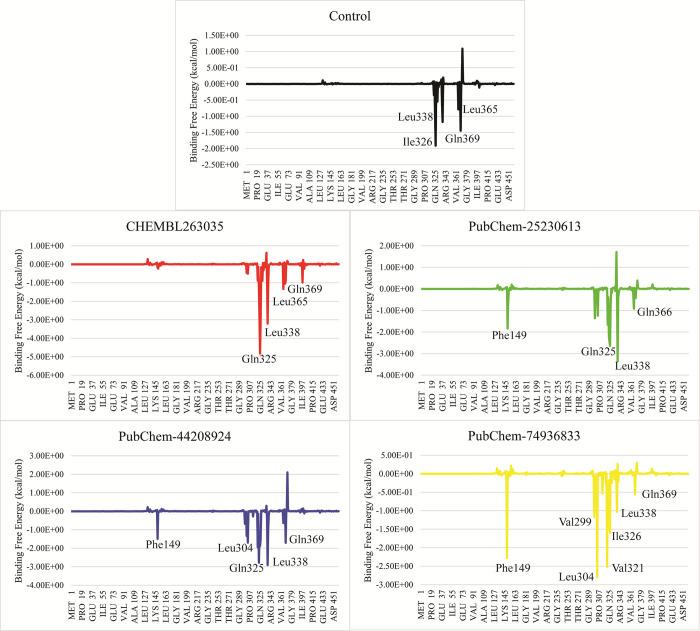
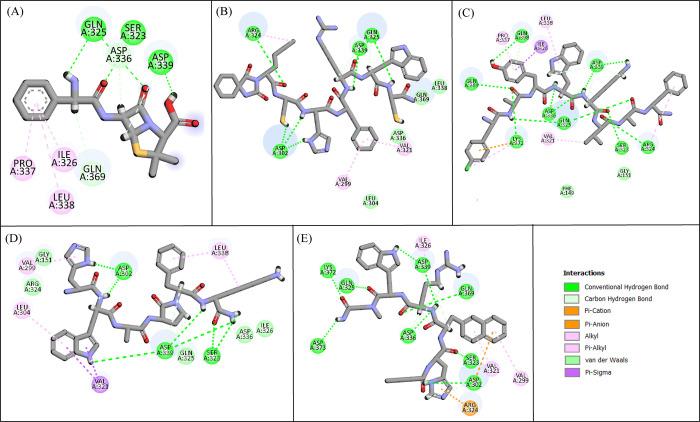
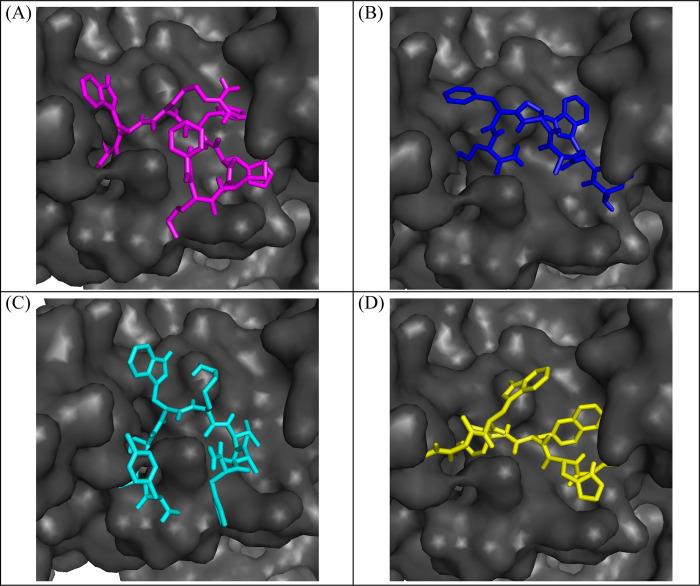
Citrobacter koseri is a gram-negative rod that causes infections in people who have significant comorbidities and are immunocompromised. Antibiotic-resistant strains are becoming more common, which complicates infection treatment and highlights the need for innovative, effective drugs to fight these resistant strains. The enzyme complex ATP synthase participates in the adenosine triphosphate (ATP) synthesis, the fundamental energy currency of cells. This study used Computer-Aided Drug Design approaches to identify potential inhibitors of C. koseri ATP synthase. SWISS-MODEL was used to predict the 3D structure of C. koseri ATP synthase. A ligand-based pharmacophore model was developed using chemical features of ampicillin. Following ligand-based virtual screening across nine databases, the 2043 screened hits were docked to the ATP synthase active site using the standard precision mode of the glide tool. Based on their binding affinities, the top ten compounds were selected for additional investigation. The binding affinities of the chosen compounds ranged from -10.021 to -8.452 kcal/mol. The top four compounds (PubChem-25230613, PubChem-74936833, CHEMBL263035, PubChem-44208924) with the best ADMET characteristics and binding modes were chosen. Thus, the feasible binding mechanisms of the selected compounds were subjected to stability analysis using the MD Simulation study, which revealed the compounds' stability as potent inhibitors within the protein binding pocket. This computational approach provides important insights into the rational design of novel therapeutics and emphasizes the importance of targeting essential metabolic pathways when combating antibiotic-resistant pathogens. Future experimental validation and optimization of the identified inhibitors is required to determine their efficacy and safety profiles for clinical use.
柠檬酸杆菌是一种革兰氏阴性杆菌,会导致患有严重合并症和免疫功能低下的人群感染。具有抗生素耐药性的菌株越来越常见,这使得感染的治疗变得复杂,并凸显出需要创新、有效的药物来对抗这些耐药菌株。酶复合物 ATP 合酶参与三磷酸腺苷(ATP)的合成,是细胞的基本能量货币。本研究使用计算机辅助药物设计方法来鉴定柠檬酸杆菌 ATP 合酶的潜在抑制剂。SWISS-MODEL 用于预测柠檬酸杆菌 ATP 合酶的 3D 结构。使用氨苄西林的化学特征开发了基于配体的药效团模型。在跨 9 个数据库进行基于配体的虚拟筛选后,使用 glide 工具的标准精度模式将 2043 个筛选出的命中物对接至 ATP 合酶的活性位点。根据它们的结合亲和力,选择了前 10 个化合物进行进一步研究。所选化合物的结合亲和力范围为-10.021 至-8.452 kcal/mol。选择了前 4 种具有最佳 ADMET 特性和结合模式的化合物(PubChem-25230613、PubChem-74936833、CHEMBL263035、PubChem-44208924)。使用 MD 模拟研究对所选化合物的可行结合机制进行了稳定性分析,结果表明这些化合物在蛋白质结合口袋中作为有效的抑制剂是稳定的。这种计算方法为新型治疗药物的合理设计提供了重要的见解,并强调了在对抗抗生素耐药病原体时靶向关键代谢途径的重要性。需要进行进一步的实验验证和优化,以确定所鉴定的抑制剂的疗效和安全性,以便将其用于临床。



 Zotero 插件