
基于多模态数据预测胃癌对抗 HER2 治疗或抗 HER2 联合免疫治疗的反应。
Predicting gastric cancer response to anti-HER2 therapy or anti-HER2 combined immunotherapy based on multi-modal data.
机构信息
Center for Data Science, Peking University, Beijing, China.
Department of Gastrointestinal Oncology, Key Laboratory of Carcinogenesis and Translational Research (Ministry of Education), Peking University Cancer Hospital and Institute, Beijing, China.
出版信息
Signal Transduct Target Ther. 2024 Aug 26;9(1):222. doi: 10.1038/s41392-024-01932-y.
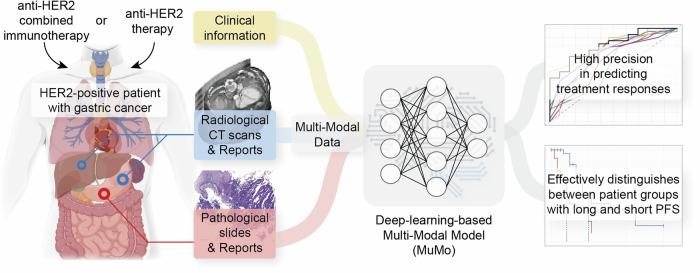
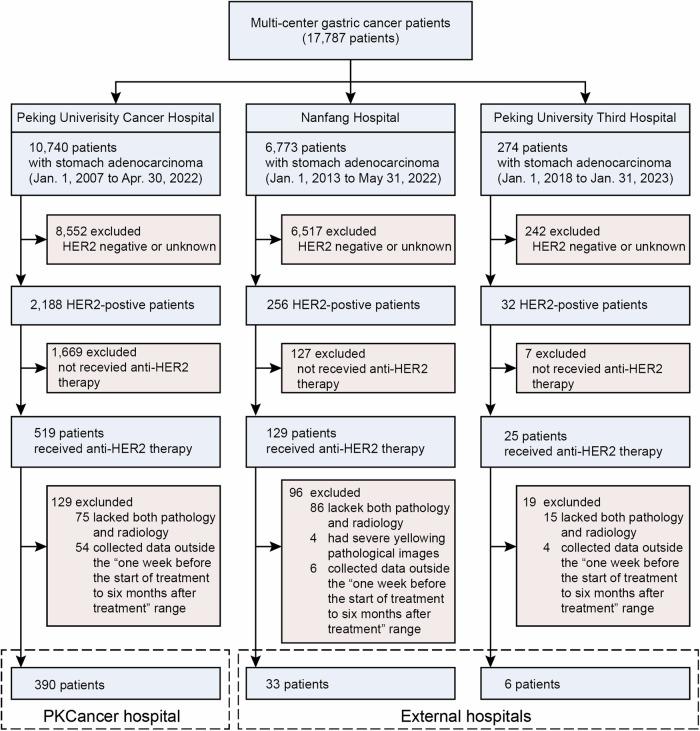
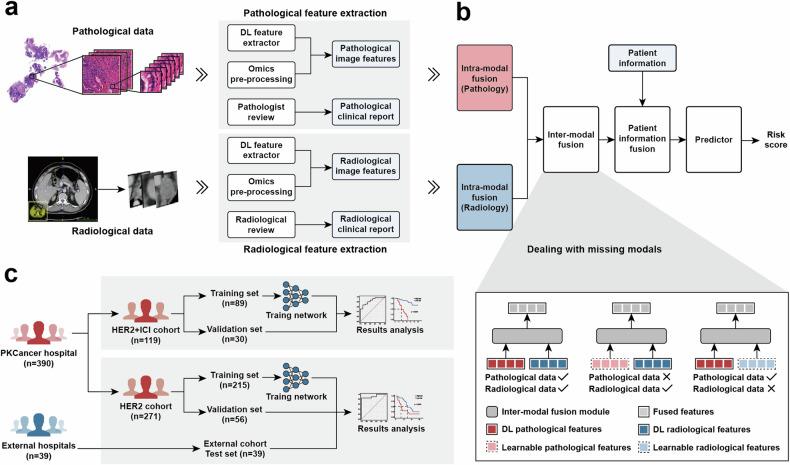
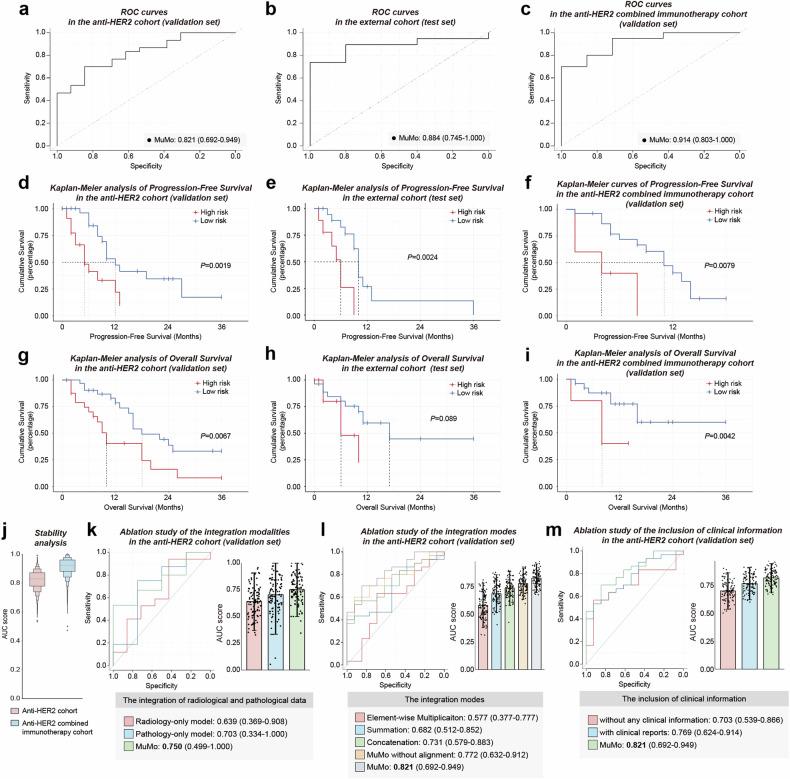
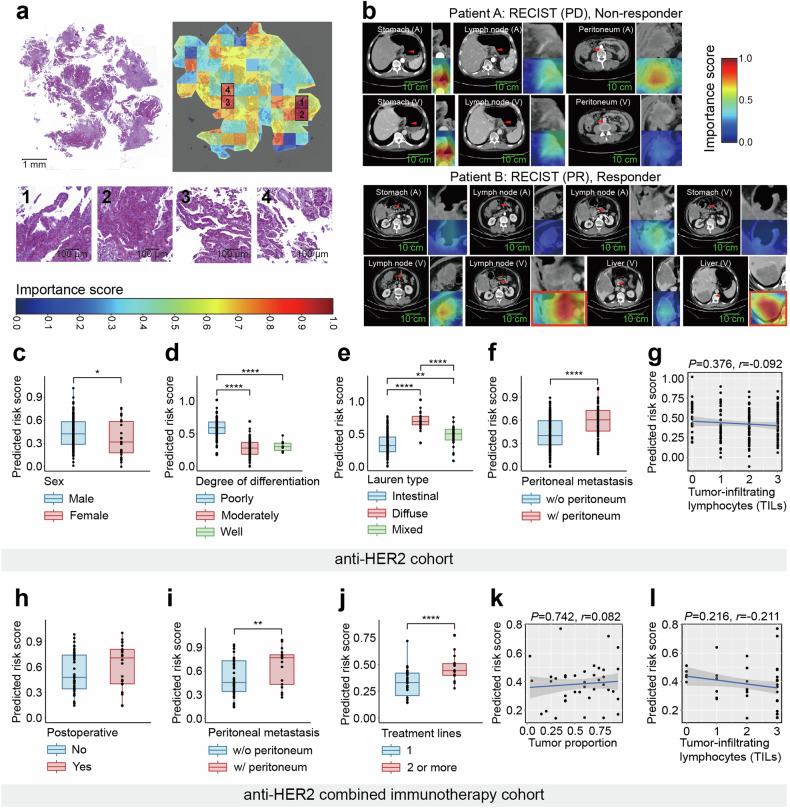
The sole use of single modality data often fails to capture the complex heterogeneity among patients, including the variability in resistance to anti-HER2 therapy and outcomes of combined treatment regimens, for the treatment of HER2-positive gastric cancer (GC). This modality deficit has not been fully considered in many studies. Furthermore, the application of artificial intelligence in predicting the treatment response, particularly in complex diseases such as GC, is still in its infancy. Therefore, this study aimed to use a comprehensive analytic approach to accurately predict treatment responses to anti-HER2 therapy or anti-HER2 combined immunotherapy in patients with HER2-positive GC. We collected multi-modal data, comprising radiology, pathology, and clinical information from a cohort of 429 patients: 310 treated with anti-HER2 therapy and 119 treated with a combination of anti-HER2 and anti-PD-1/PD-L1 inhibitors immunotherapy. We introduced a deep learning model, called the Multi-Modal model (MuMo), that integrates these data to make precise treatment response predictions. MuMo achieved an area under the curve score of 0.821 for anti-HER2 therapy and 0.914 for combined immunotherapy. Moreover, patients classified as low-risk by MuMo exhibited significantly prolonged progression-free survival and overall survival (log-rank test, P < 0.05). These findings not only highlight the significance of multi-modal data analysis in enhancing treatment evaluation and personalized medicine for HER2-positive gastric cancer, but also the potential and clinical value of our model.
单一模态数据的单独使用往往无法捕捉到患者之间的复杂异质性,包括对抗 HER2 治疗的耐药性和联合治疗方案的结果的变异性,用于治疗 HER2 阳性胃癌 (GC)。在许多研究中,这种模态缺陷尚未得到充分考虑。此外,人工智能在预测治疗反应中的应用,特别是在 GC 等复杂疾病中,仍处于起步阶段。因此,本研究旨在使用综合分析方法准确预测 HER2 阳性 GC 患者接受抗 HER2 治疗或抗 HER2 联合免疫治疗的治疗反应。我们从一个由 429 名患者组成的队列中收集了多模态数据,包括放射学、病理学和临床信息:310 名接受抗 HER2 治疗,119 名接受抗 HER2 和抗 PD-1/PD-L1 抑制剂免疫治疗联合治疗。我们引入了一种名为多模态模型 (MuMo) 的深度学习模型,该模型集成了这些数据以进行精确的治疗反应预测。MuMo 对抗 HER2 治疗的曲线下面积评分为 0.821,对联合免疫治疗的曲线下面积评分为 0.914。此外,MuMo 分类为低风险的患者表现出明显延长的无进展生存期和总生存期(对数秩检验,P < 0.05)。这些发现不仅突出了多模态数据分析在增强 HER2 阳性胃癌治疗评估和个性化医学方面的重要性,还突出了我们模型的潜力和临床价值。

 Zotero 插件