
黄芩苷改善心血管疾病的药理机制。
Pharmacological mechanisms by which baicalin ameliorates cardiovascular disease.
作者信息
Si Lujia, Lai Yu
机构信息
Acupunture and Tuina School, Chengdu University of Traditional Chinese Medicine, Chengdu, China.
School of Basic Medicine, Chengdu University of Traditional Chinese Medicine, Chengdu, China.
出版信息
Front Pharmacol. 2024 Aug 9;15:1415971. doi: 10.3389/fphar.2024.1415971. eCollection 2024.
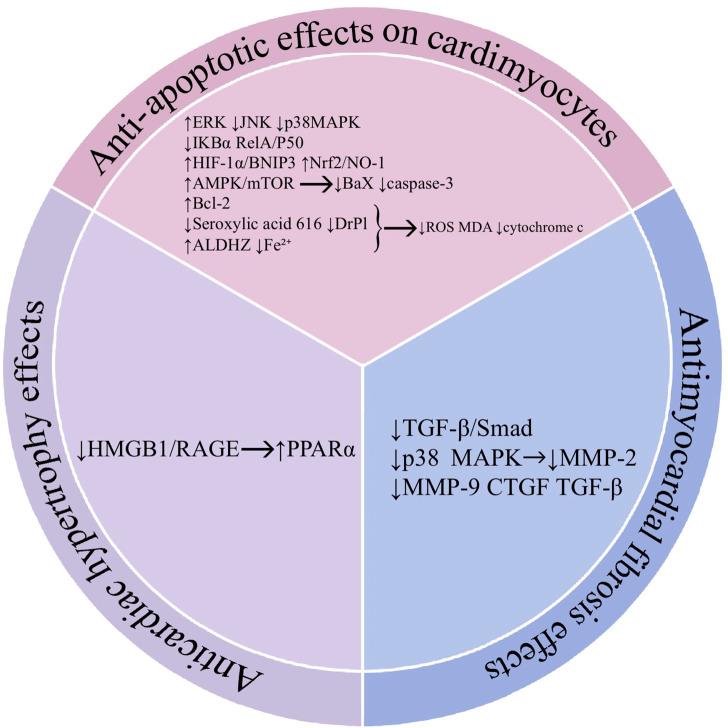
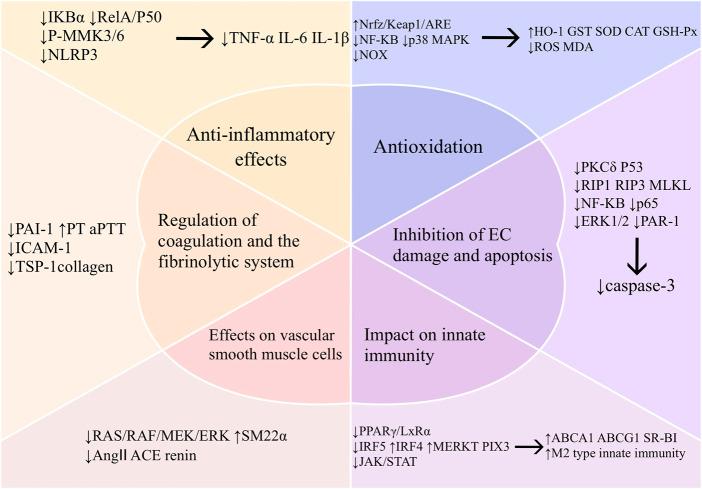
Baicalin is a flavonoid glycoside obtained from the dried root of Georgi, which belongs to the Labiatae family. Accumulating evidence indicates that baicalin has favorable therapeutic effects on cardiovascular diseases. Previous studies have revealed the therapeutic effects of baicalin on atherosclerosis, myocardial ischemia/reperfusion injury, hypertension, and heart failure through anti-inflammatory, antioxidant, and lipid metabolism mechanisms. In recent years, some new ideas related to baicalin in ferroptosis, coagulation and fibrinolytic systems have been proposed, and new progress has been made in understanding the mechanism by which baicalin protects cardiomyocytes. However, many relevant underlying mechanisms remain unexplained, and much experimental data is lacking. Therefore, further research is needed to determine these mechanisms. In this review, we summarize the mechanisms of baicalin, which include its anti-inflammatory and antioxidant effects; inhibition of endothelial cell apoptosis; modulation of innate immunity; suppression of vascular smooth muscle cells proliferation, migration, and contraction; regulation of coagulation and fibrinolytic systems; inhibition of myocardial hypertrophy; prevention of myocardial fibrosis; and anti-apoptotic effects on cardiomyocytes.
黄芩苷是从唇形科植物黄芩的干燥根中提取的一种黄酮苷。越来越多的证据表明,黄芩苷对心血管疾病具有良好的治疗作用。以往的研究已经揭示了黄芩苷通过抗炎、抗氧化和脂质代谢机制对动脉粥样硬化、心肌缺血/再灌注损伤、高血压和心力衰竭的治疗作用。近年来,关于黄芩苷在铁死亡、凝血和纤溶系统方面提出了一些新观点,在理解黄芩苷保护心肌细胞的机制方面取得了新进展。然而,许多相关的潜在机制仍未得到解释,且缺乏大量实验数据。因此,需要进一步研究来确定这些机制。在这篇综述中,我们总结了黄芩苷的作用机制,包括其抗炎和抗氧化作用;抑制内皮细胞凋亡;调节固有免疫;抑制血管平滑肌细胞增殖、迁移和收缩;调节凝血和纤溶系统;抑制心肌肥大;预防心肌纤维化;以及对心肌细胞的抗凋亡作用。


 Zotero 插件