
促进越南移民妇女宫颈癌筛查干预措施的系统评价
A Systematic Review of Interventions to Promote Cervical Cancer Screening among Immigrant Vietnamese Women.
作者信息
Hua Jacqueline, Jackson Kristopher
机构信息
Cancer Prevention Fellowship Program, Division of Cancer Prevention, National Cancer Institute, 9609 Medical Center Dr, Rockville, MD, 20850, USA.
School of Public Health, University of California, Berkeley, CA, USA.
出版信息
J Community Health. 2025 Feb;50(1):187-198. doi: 10.1007/s10900-024-01395-w. Epub 2024 Aug 26.
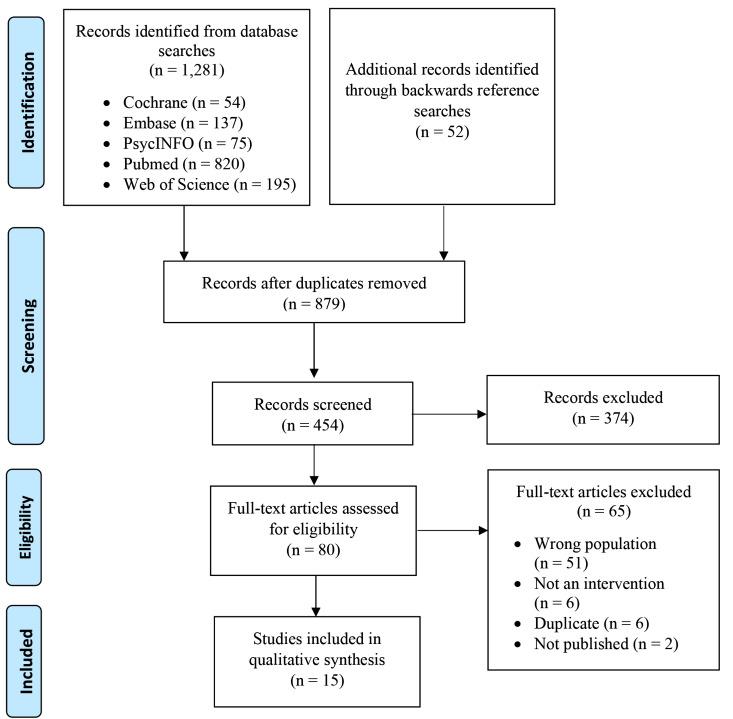
Vietnamese women have a higher incidence rate of cervical cancer and are less likely to have ever been screened for cervical cancer than their White counterparts in the US. This review synthesizes findings from published interventions to promote cervical cancer screening in this vulnerable population. Articles were identified through a systematic search of PsycInfo, Embase, Pubmed, Web of Science, and the Cochrane Register of Controlled Trials in October 2022. Articles were included if they were published in a peer-reviewed journal, written in English, included one or more interventions promoting cervical cancer screening, assessed at least one outcome relevant to screening, and included a sample of ≥ 70% Vietnamese participants. Quality assessment scores were computed using the Downs and Black Checklist. Fifteen articles met review inclusion criteria. Studies were, on average, of good quality. Most studies were conducted in the US (n = 12), used a quasi-experimental design (n = 9), and employed multiple intervention strategies (n = 12). Intervention strategies included educational sessions, lay health worker (LHW) outreach, small media, mass media, patient navigation, and community or healthcare-based strategies. The most common study outcomes were screening intention and receipt. All but two studies reported improved cervical cancer screening outcomes following intervention. Findings support the effectiveness of multicomponent culturally tailored interventions to improve cervical cancer screening outcomes in immigrant Vietnamese women. Further research is needed to determine whether these interventions will be as successful in non-US countries and to address broader community- and healthcare-based factors in screening.
与美国的白人女性相比,越南女性宫颈癌发病率更高,且接受宫颈癌筛查的可能性更低。本综述综合了已发表的关于促进这一弱势群体进行宫颈癌筛查的干预措施的研究结果。通过在2022年10月系统检索PsycInfo、Embase、Pubmed、Web of Science和Cochrane对照试验注册库来识别相关文章。如果文章发表在同行评审期刊上、用英文撰写、包含一项或多项促进宫颈癌筛查的干预措施、评估了至少一项与筛查相关的结果且越南参与者样本比例≥70%,则纳入该文章。使用唐斯和布莱克清单计算质量评估分数。15篇文章符合综述纳入标准。研究质量总体良好。大多数研究在美国进行(n = 12),采用准实验设计(n = 9),并采用了多种干预策略(n = 12)。干预策略包括教育课程、外展社区健康工作者、小型媒体、大众媒体、患者导航以及基于社区或医疗保健的策略。最常见的研究结果是筛查意愿和筛查接受情况。除两项研究外,所有研究均报告干预后宫颈癌筛查结果有所改善。研究结果支持多成分文化定制干预措施在改善越南移民女性宫颈癌筛查结果方面的有效性。需要进一步研究以确定这些干预措施在非美国国家是否同样成功,并解决筛查中更广泛的社区和医疗保健相关因素。
 Zotero 插件